
Shubham Sangodkar's journey in motorsports has taken him from Goa, India's smallest state, to the heart of Formula One. After completing his master's in racing car design at Brunel University, he joined Red Bull Racing as an aerodynamicist, winning two championships with the team in 2021 and 2022. Driven by a desire to address the gaps he experienced early in his own career, Sangodkar returned to India and founded the Indian Motorsports Academy, now operating as its founder and CEO, alongside running his own motorsport consultancy. Through the academy's education and hands-on experience programmes, including the MEGA initiative with the Indian F4 Championship and Levitas Cup, he has built merit-based pathways for engineers, mechanics, and management students into Indian motorsport. He was also a key figure behind the execution of the Goa Street Circuit, a milestone he counts among his proudest achievements.
In conversation with Hairpin Media, Shubham Sangodkar talks about his path from Red Bull Racing to building the Indian Motorsports Academy, the unique challenges of working in Indian motorsport, executing the Goa Street Circuit, and his advice for anyone looking to break into the industry.
Hairpin Media: Could you briefly introduce yourself and share your journey into motorsport?
Shubham Sangodkar: Hello, I'm Shubham. My journey in motorsports starts from going from the smallest state of India, Goa, all the way into Formula One. During my Master’s in Racing Car Design at Brunel [University], which has now become quite famous since it received the formal FIA scholarship for motorsport engineering, [is how I started my career].
Since then, I [worked] with Red Bull Racing, won two championships with them in 2021-22, working as an aerodynamicist. After that, I decided to come back to India because I wanted to look for other things in life, in a way. And that's where I found two things.
One was, I was going around giving a lot of lectures at universities around motorsports, and the problem that I faced 10 years ago still exists. I [asked myself], “what can I do, how can I take a small step to solve it?” That's where I started doing career counselling online, and I started to take the first steps towards creating a pathway for students to get into real motorsport experiences. Because what I felt was lacking in this modern world, where knowledge is somehow accessible, is the ability to showcase that knowledge and apply it in a real motorsport experience.
Following that, I took up this programme in Europe, in which we build educational ecosystems focused around motorsports. What we ended up doing was trying to find win-win-win partnerships with a university, a motorsport team, and a government organisation, to create formal pathways into motorsports in Europe. And that's where I also [thought], “If I'm doing this for Europe, why not try and do it in India as well?” After a couple of years of working with the Indian F4 Championship and IRL (Indian Racing League), we formalised the arrangements with Indian Motorsport Academy, which is currently what I do at the moment.
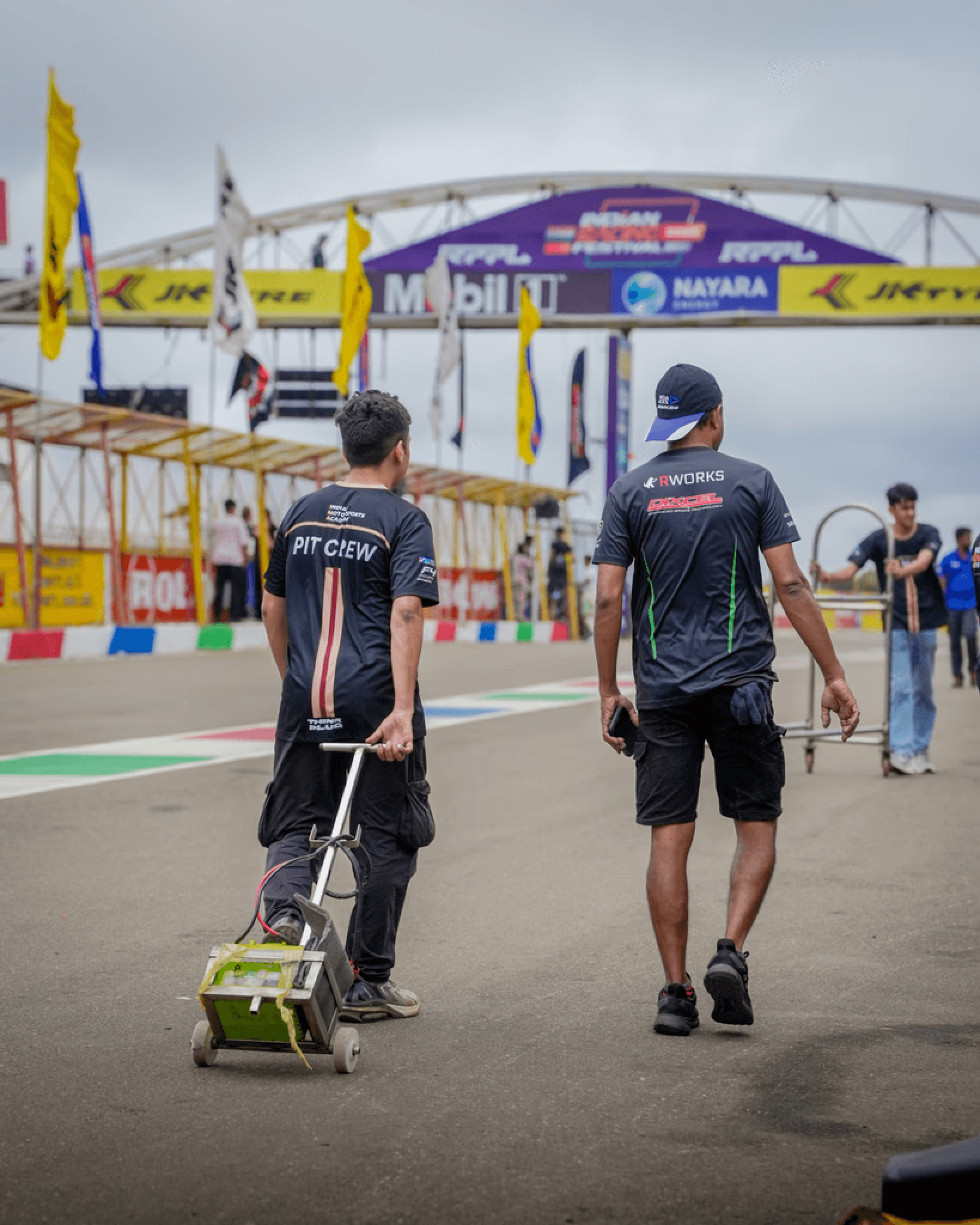
So now I'm back to India, with my own consultancy firm, in which I work with motorsport projects as a consultant. The product side of the business is mostly the academy, where the focus is always to try and provide world-class education at an affordable price for motorsports in India. One is the education vertical, the second is the hands-on experience vertical, wherein we try and identify, through certain programmes — this year we call it the MEGA programme — to create a merit-based pathway for a student in India to get a hands-on opportunity in racing championships.
Over the last couple of years, we were working exclusively with the Indian F4 Championship and IRL, because they were the biggest supporters and promoters of our vision. But this year, looking at the success and impact it's having, we've expanded to other championships in India, such as the Levitas Cup, and we're talking to other championships as well, both in four-wheel and two-wheel, to provide more opportunities in India. This year, we're doing engineers, mechanics, and management students to create as many opportunities as possible.
The third vertical, which we're going to launch soon, is called the IMA Experiences programme. What we realised last year was that a lot of students, even though they weren't getting selected through a programme, still wanted to come trackside. When the sport is closer to you, you feel more aspirational and closer to it, and it really gives you that boost to work harder towards achieving that dream. So we want to bring Indian motorsports closer to students who aspire to be in this industry.
HM: What does your current role involve?
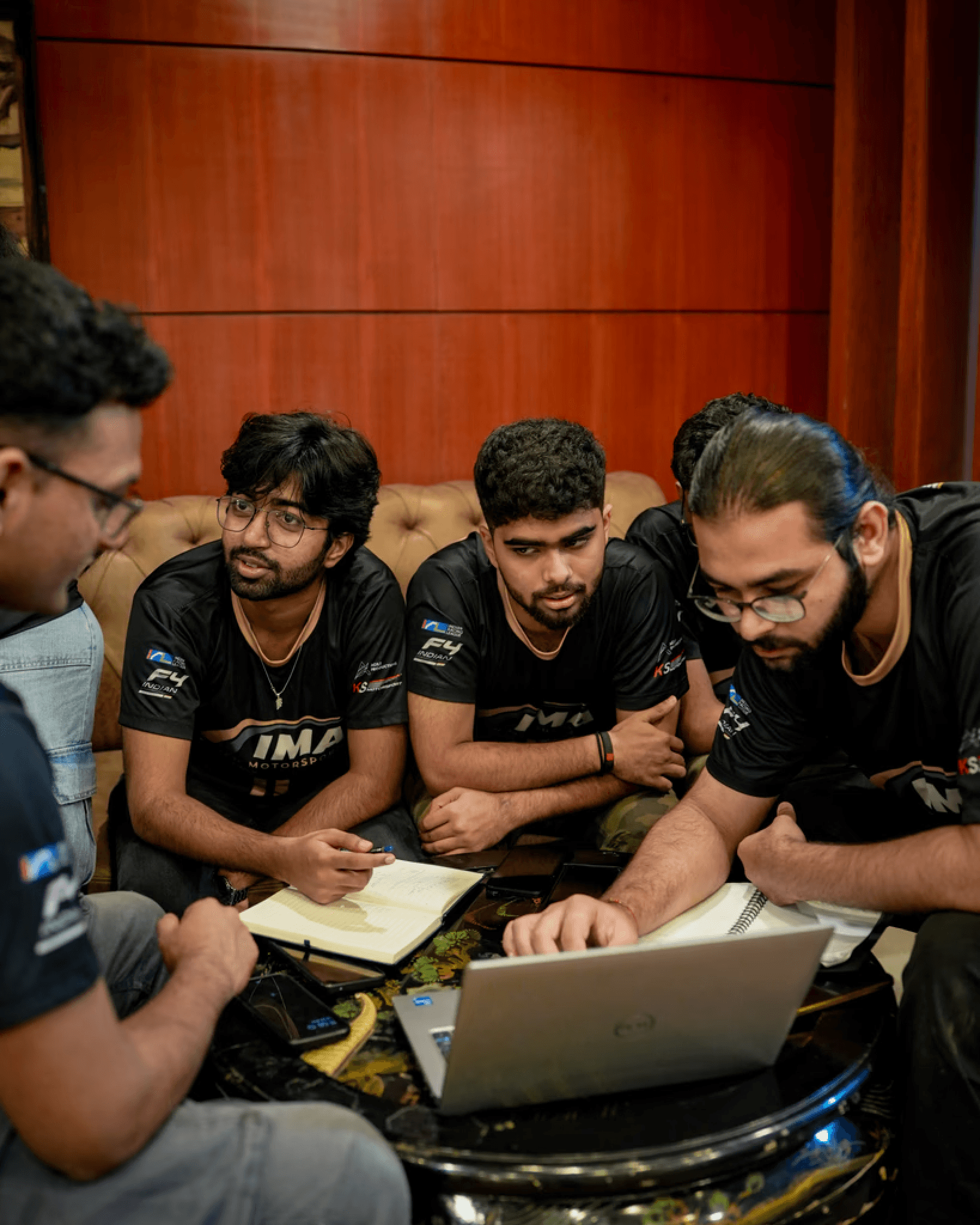
SS: Currently, I'm the founder and director of Indian Motorsports Academy. Half of my time goes into my service business, where I'm working with European clients on projects in a techno-managerial role. Mostly trying to find ways of producing certain types of high-performance cars, and managing some teams, again in a techno-managerial role. The other half of the time, I look at building the motorsport ecosystem in India.
My focus is purely on engineers, mechanics, and management students. I don't focus on drivers at the moment, because I feel there are enough people trying to target or solve that problem at various levels: at a karting level, at a slightly more professional level, all put together. So that's my role.
I work with a small, lean team. I have a company secretary, a person looking after my marketing, and a lot of people who help me — some of my former students and people I've worked with — who help [with] content curation, strategy, and community management. Together, we try to achieve this goal. And I try my best to give them the perks of being involved in motorsports, as and when I can.
HM: Having worked across Europe and Asia, what unique challenges have you faced as an Indian professional in the motorsport industry?
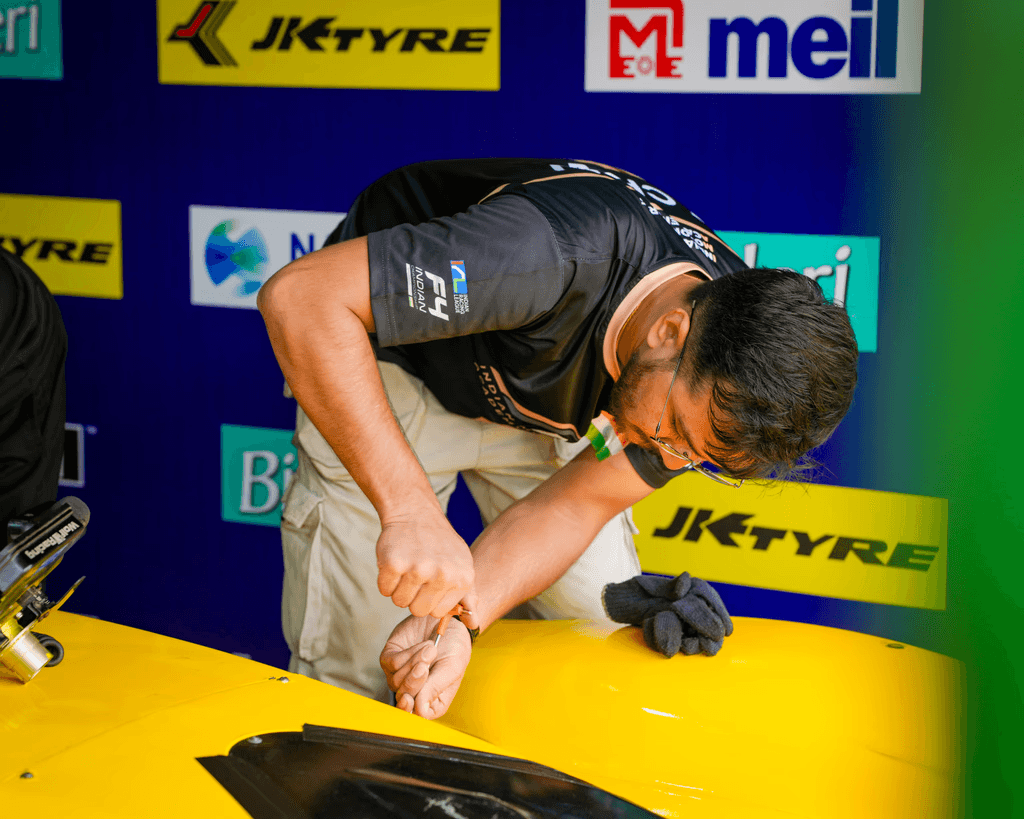
SS: One of the biggest challenges in India is schedules and timing. In Europe, when something related to motorsports is bound to happen, it's bound to happen. In India, things are flexible with time and dates. That's one challenge.
Second, I feel like in India, motorsports is still very risk-averse, which makes us commit verbally but not contractually. That's a challenge. And as much as you don't like to adopt that philosophy, you kind of have to play along with the game.
The third is — and I think it's changing — people take motorsports not as seriously, and not as professionally, as I've seen in Europe. But ever since I entered the India system back in 2022, there's definitely been a huge amount of change. I think the sport is gaining momentum, and it's reaching a tipping point in terms of viewership. I feel it's two or three milestones away from becoming a more sustainable business.
The last one, as a consequence of viewership, is sponsorships. At the same time, what I've seen since last year is that there's a unique opportunity for storytelling. If you look at sponsorships in big sports in India, it's all about eyeballs. Very few people do good storytelling. For example, Nayara was a brand last year on F4, and I personally feel they did a really cool campaign around the F4 championship to show that their fuel is related to performance, even though nobody thinks about Nayara and performance at the same time.
So there are unique opportunities to talk about how you connect motorsport stories to brand stories, and if you find that connection, there's a very low-hanging fruit you can pitch to someone. The sponsorships are limited, and most importantly, they're not consistent. Somebody comes in one year and then doesn't show up the next, because they didn't find enough value, or whatever the reason is.
HM: What's been the most defining moment in your career so far?
SS: Definitely winning the championship with Red Bull Racing. Nothing beats that adrenaline. The Red Bull after-parties were a lot of fun.
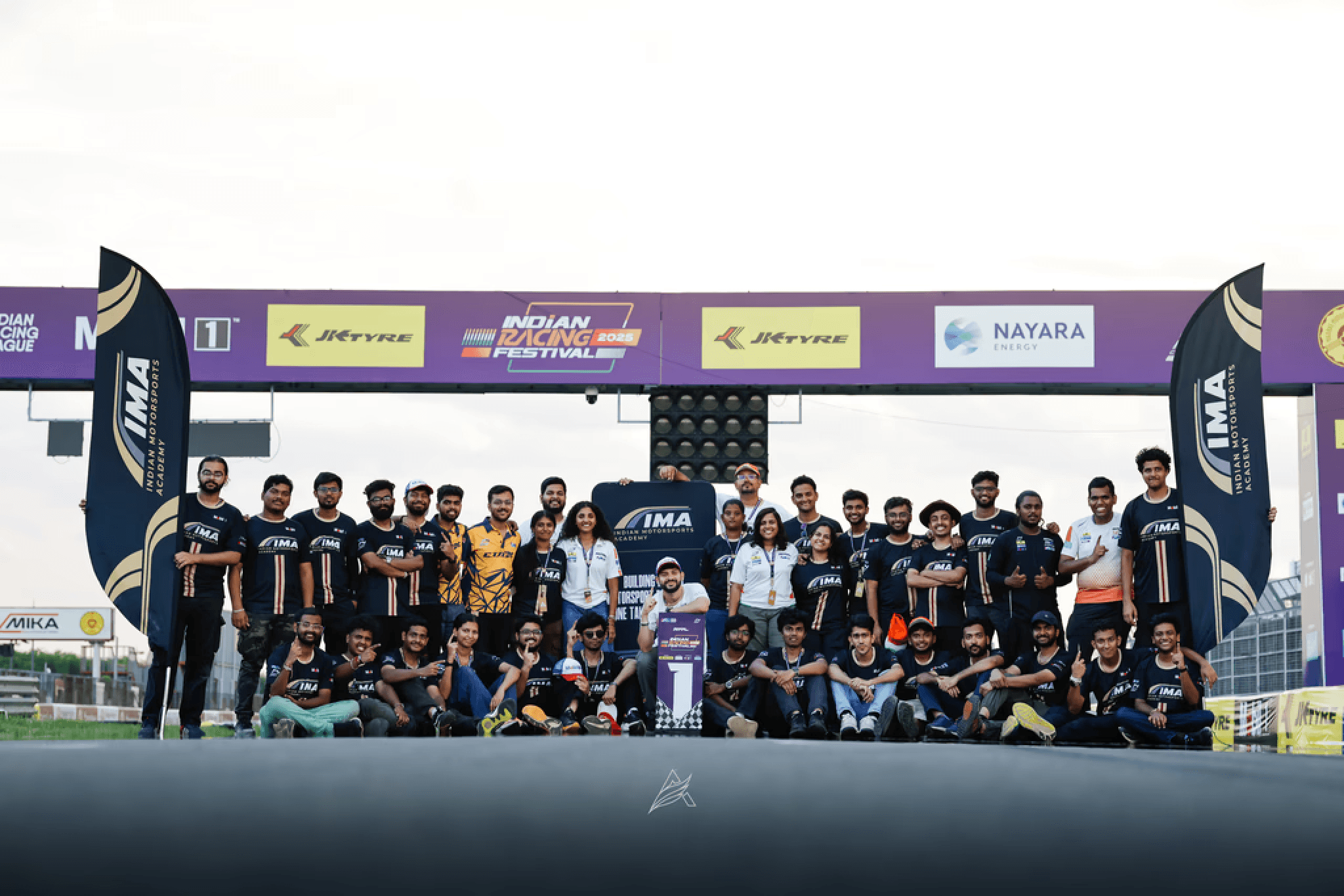
But since I moved back to India, there's one memorable moment I can't mention because of confidentiality. With respect to Indian Motorsports Academy, I think last year was pretty memorable, because it was a high point for me. It was the first time our students from the last couple of years got hired into the [Indian F4] championship. I still remember the vision, still remember the struggle of the first couple of years, where I was always fighting for students trying to get an opportunity. You always get some pushback. Not a lot, but some, at multiple places. But last year, finally, the championship saw the fruits, because now it's an independent championship, where we can arrange our own track days and training sessions, because we have the people in India to execute an event. Seeing some of our alumni hired into the championship and working there was really cool. And then last year, just the expansion of the roles we had.
[Another one in India, and] the most memorable moment by far is executing the Goa Street Circuit. As a kid, you can always imagine wanting to someday work in a Formula One team and trying to get to that goal. But never in my wildest dreams would I have thought there'd be a Goa Street Circuit in my own hometown, and that I'd be one of the key people trying to execute that: walking with ministers, commissioners and secretaries, fighting everything in the system to make that event happen. So my most honest, probably proudest moment would be having worked to execute the Goa Street Circuit against all odds. Hopefully we can do it again this year.
HM: What's a common misconception about building a motorsport business?
SS: I think the misconception about pretty much all founders' roles, starting out, is that things look quite easy, and very chill at the topmost layer. The amount of grind, the amount of sacrifice, the number of times you have to follow up on things with people. It can be heartbreaking sometimes. You ask yourself, is it really worth it? But then you remember the kind of difference you're making, and the question answers itself.
I think the hardest part is to keep going. The hardest part is to wake up every day, believe in your purpose and why you started, and keep going, and somehow things fall in place, the dots connect without you really knowing how. You just need to create enough dots as you go along.
Last year was my first year fully in India during the full spectrum of the Indian F4 Championship and the Indian Racing League. I realised that being on track [and] speaking to different types of people makes a big difference. So the biggest misconception is that you're sitting somewhere ideating something, when the reality is you're grinding it out every day trying to make things happen.
HM: What advice would you give to someone looking to build a career in motorsport or start something of their own?
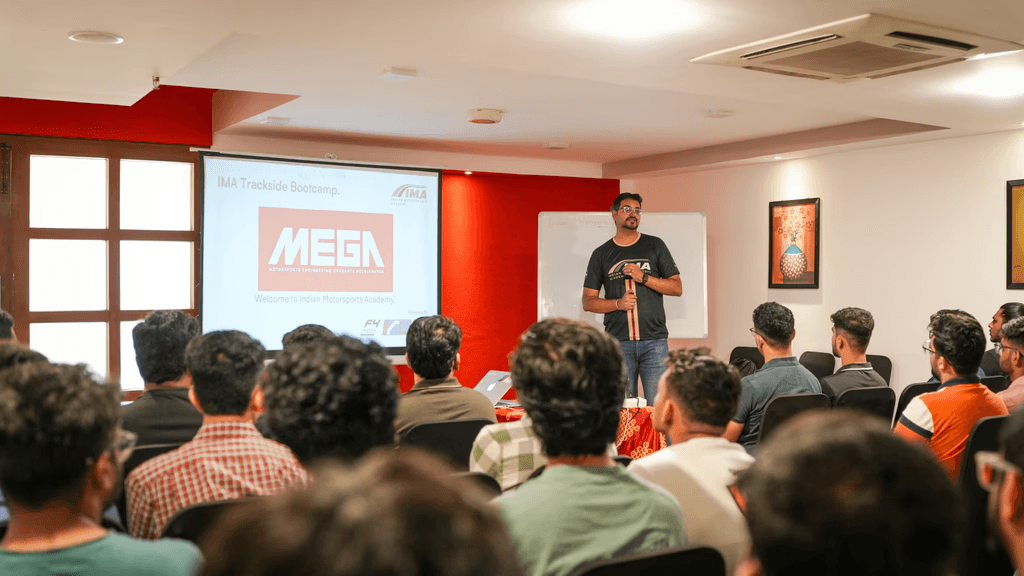
SS: First of all, anybody who wants to do something related to motorsport in India, I'd highly encourage them. It's going to be a difficult journey, but the sport is definitely on the rise.
[For skills,] I'd say people skills. I've seen a lot of people get ahead without sound backing, but with genuine passion, [so] credit to them. They're able to get into the right places to speak to the right people. So before you get in, experiment yourself into the sport. Go visit a race weekend, have a hypothetical idea, and see if it's really a pain point the industry wants to solve.
Talk to people. One of the best things about motorsports is that people are really open and would mostly like to grab a chat, because everybody's suffering from something or the other in the sport. So get in with people, speak with them, understand what the pain point is, and then try to find the right partners to solve that pain point. That's really the mantra one should follow.
In terms of skills, it will definitely help if you do something accredited to the FIA or FMSCI, more the FIA than the FMSCI. If you can do a leadership programme with them, or get some kind of technical education, it definitely helps, because people recognise you for that. And I'd say, working with people who are already in the system and understanding the space before you dive in, because it's a very unconventional space in its own right.
Your assumptions might be truly challenged quite a lot, and it might be heartbreaking sometimes. So get into the system, understand the space, because the rules of the game are slightly different from everything else.
—
Throughout the conversation, Sangodkar repeatedly returned to the importance of building systems rather than simply creating opportunities. Whether through education, hands-on experience, or partnerships across the industry, his focus has been on making motorsport careers more accessible for the next generation of Indian engineers, mechanics, and motorsport professionals.
For Sangodkar, developing Indian motorsport extends far beyond the race track. It means creating sustainable pathways, connecting the right people, and solving the industry's long-standing challenges one step at a time. As the sport continues to grow in India, he believes its future will depend not only on talented drivers, but also on the ecosystem of people working behind the scenes to support them.


