
In Japanese motorsport, the question is no longer whether Japan can produce another Formula 1-calibre driver. The real question is how quickly Honda can push one there. That is the purpose of the Honda Formula Dream Project, better known as HFDP. Launched as a structured junior program to turn karting talent into factory race winners, HFDP now moves drivers from Suzuka school races into European single-seater series and back into top Japanese categories such as Super Formula and Super GT.
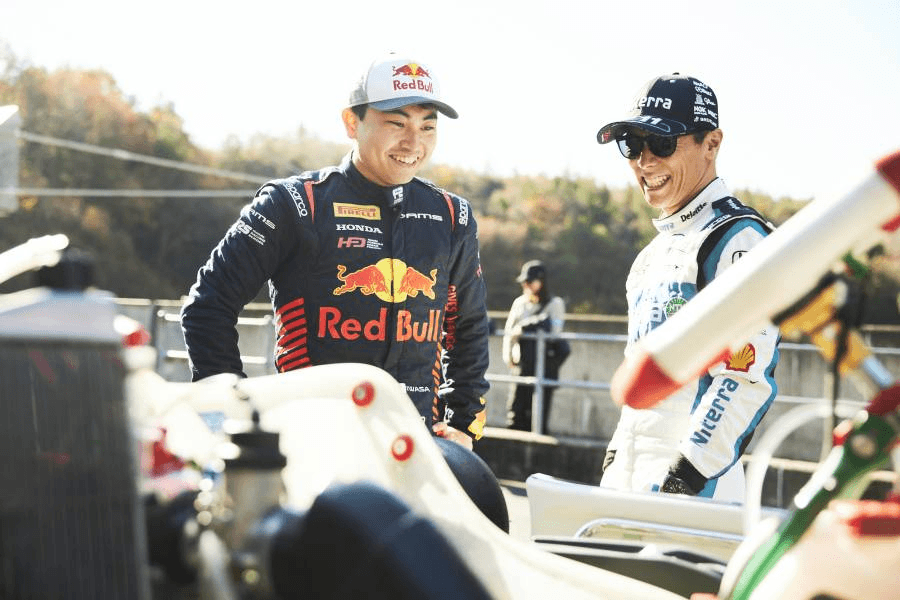
Image: Honda Racing
If you want to see that system working as planned, you just have to look at Ayumu Iwasa. The Osaka-born driver is a graduate of Honda Racing School Suzuka, an HFDP scholarship winner, a French F4 champion, a Red Bull junior, a Formula 2 race winner, a Super Formula front runner and a Formula 1 reserve. He has done all of that without ever stepping outside the support structure that HFDP built around him.
From Formula Dream to HFDP
Honda’s focus on growing its own drivers began with Formula Dream in 1999, a one-make series and scholarship program designed to put promising Japanese talent into a professional environment with controlled costs. In the mid-2000s, Honda consolidated this into the Honda Formula Dream Project, defined as a complete development program designed to discover, nurture, and place young drivers in top domestic and international series.
The structure is simple: Honda Racing School Suzuka is the gateway. The best graduates receive HFDP backing and seats in junior series such as FIA F4 Japan, Super Formula Lights and selected overseas F4 championships like French F4. The long-term aim is to feed talent into Honda-aligned top categories such as Super GT and Super Formula and, when possible, into series like FIA Formula 2 and Formula 1 through partner teams.
How the pipeline works: the Ayumu Iwasa case study
HFDP looks like a neat pyramid on paper, but in practice, it is a constant balance between potential, budget, and timing. Many prospects start in domestic karting, then enter Honda Racing School Suzuka, where they learn formula car driving, racecraft, and engineering basics. The best of them receive HFDP scholarships and placements in single-seater championships.
Ayumu Iwasa shows how powerful that can be. In 2019, he topped his class at Suzuka, earned HFDP support, and was sent to the 2020 French F4 Championship, his first season racing in Europe. He responded with nine wins and fifteen podiums, took the title at his first attempt and promptly attracted interest from the Red Bull Junior Team.
Red Bull and Honda then combined to move him through FIA Formula 3 and into FIA Formula 2, where he became a multiple race winner and finished in the top five twice in the championship. For 2024, he returned to Japan as a Honda-supported Super Formula driver with Team Mugen and made his Formula 1 free practice debut at Suzuka for a Honda-powered team. He now combines Super Formula with Formula 1 reserve duties, sitting one step away from a full-time Grand Prix seat.
The current HFDP ladder, from Formula 3 to Super Formula
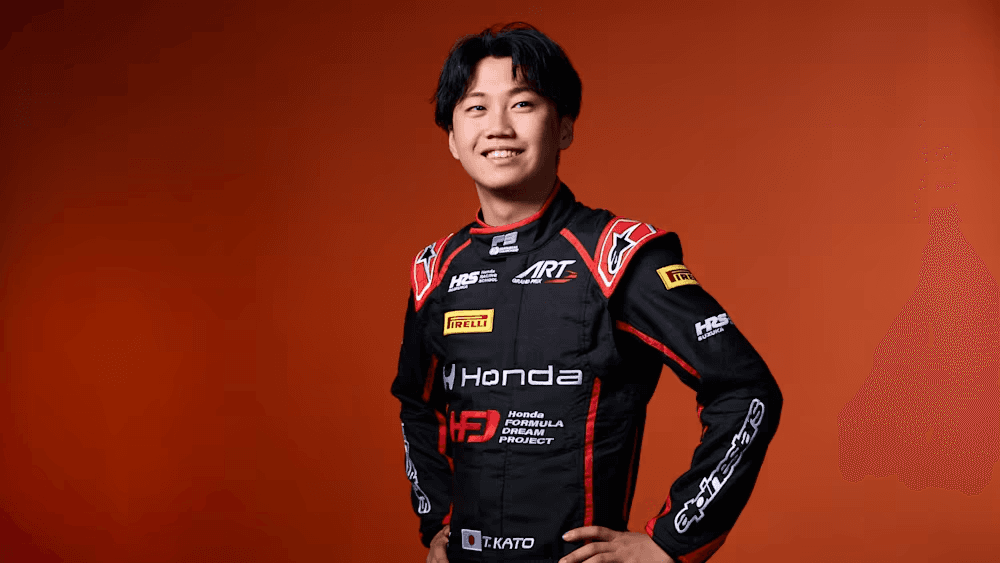
Image: F2
Right now, Honda’s junior focus is centred on drivers such as Taito Kato and Rintaro Sato. Kato, a former French F4 champion, is an HFDP driver in FIA Formula 3 with ART Grand Prix and also raced in the Formula Regional Middle East Trophy to add mileage between European rounds. He came into Formula 3 after a strong rookie season in the Formula Regional European Championship by Alpine, where he finished seventh overall and established himself as one of the most promising Japanese drivers in Europe.
Rintaro Sato, son of Takuma Sato, followed a similar route. He is a Honda Racing School Suzuka graduate who earned his French F4 seat through an HFDP scholarship, then took his first win at Ledenon in 2025. He is now closely linked to a full Formula Regional European campaign, which would place him on the same development path that Kato used to reach Formula 3.
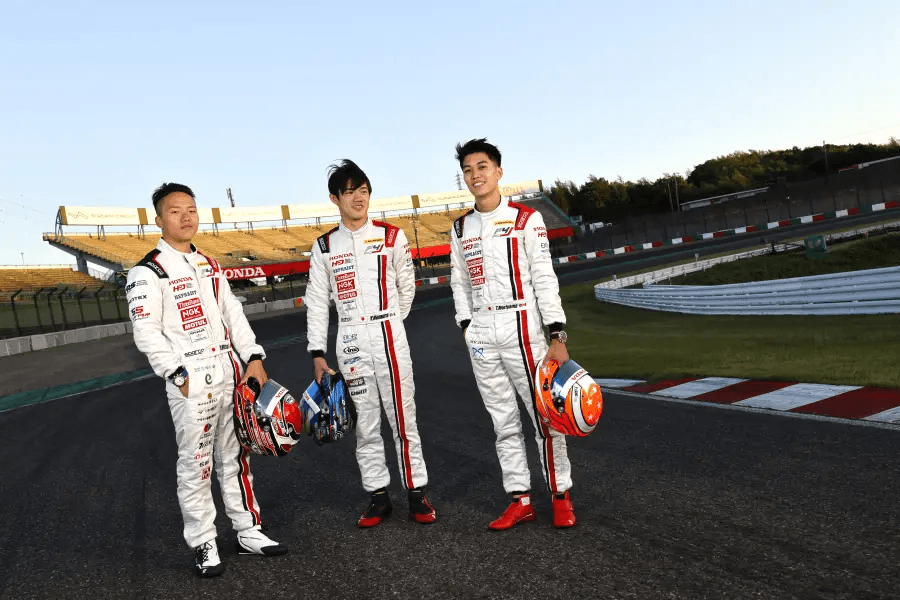
In Japan, HFDP’s immediate proving ground is the Super Formula Lights Championship. Kotaro Shimbara stepped up directly from a top-four finish in the 2025 Japanese F4 standings and has quickly become a regular at the sharp end of the Lights field. Another HFDP driver, Yusuke Mitsui, opened the 2026 season with multiple wins at Fuji and Okayama and now leads the Lights points table for DELiGHTWORKS Racing, underlining how strong Honda’s current crop is at that level.
At the top of the domestic ladder, the Super Formula grid has become a showcase for HFDP graduates who have completed the journey from prospects to factory race winners. Yuto Nomura, an F4 champion and former Lights front runner, has been promoted into the main Super Formula Championship with San Ei Gen with B Max as one of the headline rookies.
Kakunoshin Ohta, another former HFDP junior, is leading the Super Formula drivers’ championship for Docomo Team Dandelion Racing after a series of podiums and wins.
Ayumu Iwasa, fresh from Formula 2, is now a Honda-supported Super Formula race winner with Team Mugen and the most clearly Formula 1-ready driver to come through the HFDP system so far.
More than a development programme
A junior programme is ultimately judged by one thing: where its drivers end up. Today, HFDP graduates can be found throughout the Japanese motorsport pyramid, from Super Formula Lights to Super Formula, while drivers such as Taito Kato and Rintaro Sato continue to climb the international ladder. At the front of the queue sits Ayumu Iwasa, whose journey from Honda Racing School Suzuka graduate to Formula 1 reserve driver represents exactly what the programme was designed to achieve.
Honda's commitment to the pathway remains clear. Alongside its continued presence in Formula 1, Super Formula and Super GT, the manufacturer is also helping shape the future of the sport through initiatives such as carbon-neutral fuel development in Japan's premier championships. That means the next generation of HFDP drivers will not only be competing at the highest levels of motorsport but doing so in categories that are helping define where the industry goes next.
For nearly two decades, HFDP has operated with a simple objective: identify talent early, give it the tools to develop, and create a route to the top. As Iwasa's rise and the current crop of Honda-backed juniors demonstrate, the programme is no longer just a development system. It is one of the most proven driver pipelines in Asian motorsport.


