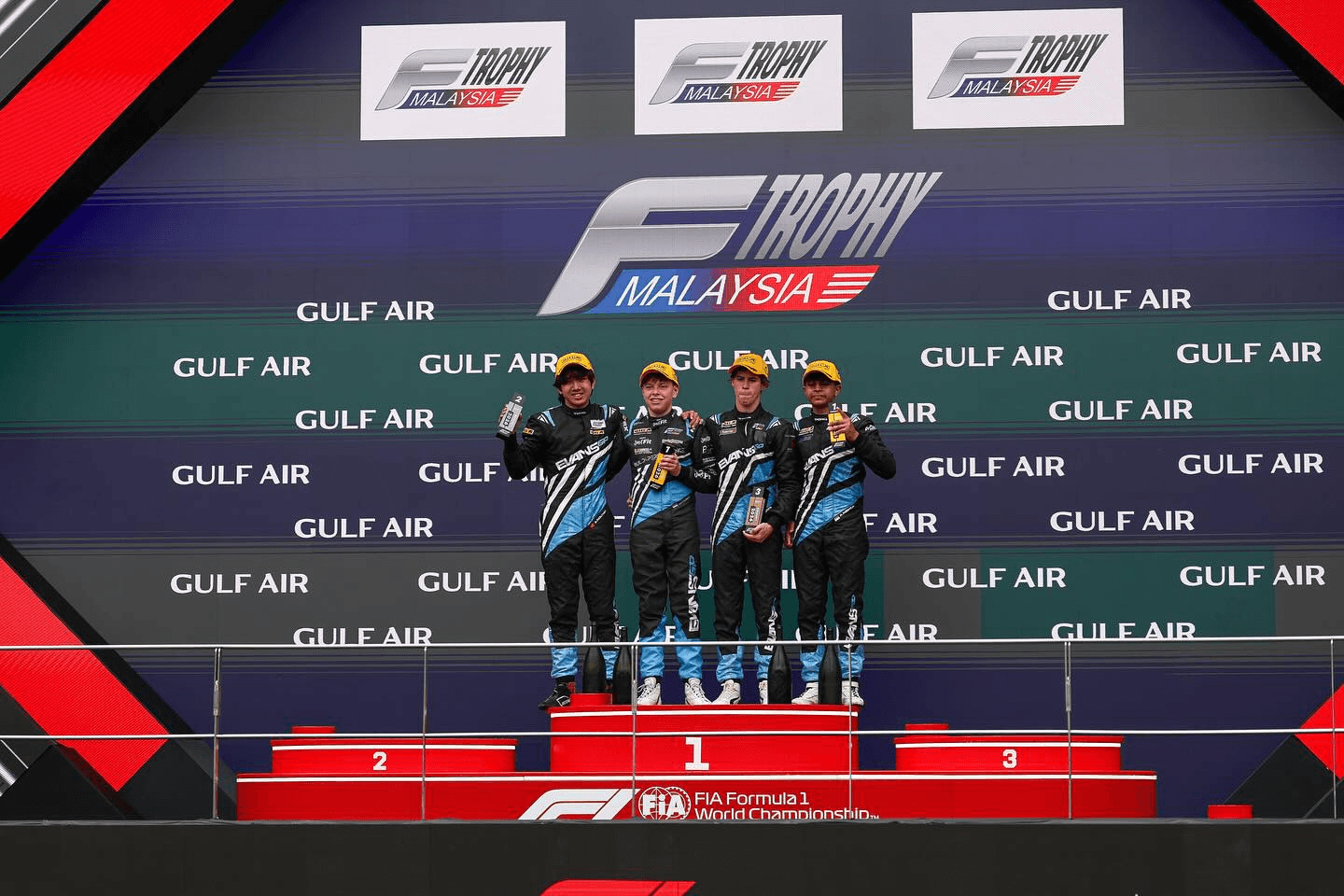
For decades, motorsport has celebrated what happens on track. Pole positions, podiums and championship titles have long defined success, while the countless hours of preparation behind the scenes have remained largely invisible. Yet as the sport has become more competitive and technologically sophisticated, producing a successful racing driver has evolved into a multidisciplinary process that extends well beyond natural talent.
Today's young drivers are expected to master far more than racecraft. They must learn to interpret data, communicate effectively with engineers, understand vehicle dynamics, manage nutrition and physical conditioning, develop mental resilience, and extract meaningful performance gains from simulators long before arriving at the circuit.
Few people understand that journey from both perspectives better than Sarah Moore. After making history as the first female driver to win a TOCA-sanctioned race, becoming the first woman to claim the overall Britcar Endurance Championship, competing in W Series, and later becoming the first female race winner in the Indian Racing League, Moore has shifted her focus from competing to helping develop the next generation as a driver coach at More Than Equal.
In conversation with Hairpin Media, Moore shares what modern driver coaching really looks like, why every athlete requires an individual approach, and how building a complete racing driver now demands far more than simply teaching someone how to drive quickly.
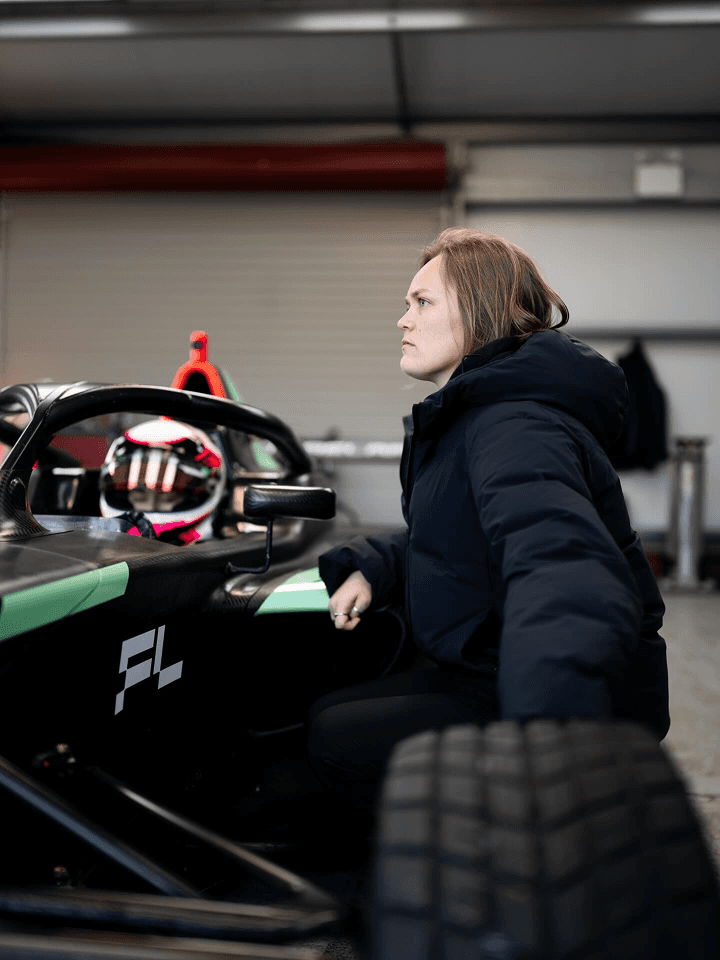
Image rights: More Than Equal
Hairpin Media: Could you introduce yourself and share your journey as a racing driver and driver coach at More Than Equal?
Sarah Moore: I'm Sarah Moore. My current role is driver coach for More Than Equal. I've been involved in motorsport pretty much my whole life. My dad used to race, so I was born into it.
I started my first go-kart when I was four years old and then raced right up until the end of 2022, and then had a small comeback in 2023 in India. Throughout that, I've raced in every type of motorsport that there is, on track at least. So go-karting, sports cars, endurance racing, single-seaters, and [I] ended my professional career for now, at least, in the W Series at the end of 2022.
[I’ve had] plenty of racing experience, and now leaned more into the coaching side. It's something I really enjoy, especially with More Than Equal, giving back to the females coming up through the sport and trying to help them to progress and learn themselves.
HM: What does your role as a driver coach involve, and what are your core responsibilities?
SM: Many, many different jobs, but I would say mostly supporting the drivers from the technical side. Teaching them everything that they need to learn and understand to keep building themselves as a driver from a technical standpoint, supporting them at the circuits, on their test days, [and] on their race weekends.
In terms of the More Than Equal side, I build the schedules for any of our driving camps that we do [and] any of the F4 testing camps that we do. They tend to be individualised for each driver's needs, because each of the drivers on the programme are at slightly different stages of their development. We always tailor it to what they need so that we're getting the best out of our events for them.
As I say, supporting them across their own individual test days and race weekends, sitting in on their debriefs, working on the feedback side, making sure that the drivers are communicating well with the teams around them, giving the kind of feedback that they need to be giving around the car handling, what they're feeling, making sure that we can read data and get the information that they need from any of the data and the video analysis, and then making plans ready for the next test, the next race, or the next race weekend.
HM: What does a typical race weekend look like when you're coaching drivers?
SM: No week ever looks the same for me. There's definitely no Monday to Friday, 9 till 5, that's for sure. I'd say when I'm more based at home, it tends to be more meetings and scheduling. So meetings around the drivers that we have on programme, making sure that we're all happy where they're at, plans for what it is we want next for them, what it is they may need to work on, and scheduling for any events that we have coming up. That's usually my Monday to Friday if I'm at home.
If I'm away on a race weekend, [I’m] supporting the driver in any way they need. It can be anything from helping with their warm-ups if the physical coach isn't there, to supporting them with their feedback, and having conversations around the technical side, what they're feeling with the car, is there anything that they need changing, going through the data in detail, going through the video in detail to work on the areas that we need to work on.
Most importantly, just making sure that the driver has a good solid plan in place, and just being there to support them as a whole in whatever area they may need in across the weekend. That can look different from one weekend to the next, but mainly there for support and learning.
HM: Beyond raw speed, what qualities make the best young drivers?
SM: Every driver is always going to be slightly different, and every driver's qualities are always going to be different, but it's trying to make the driver the best all-around driver possible. We work on them as a whole in every area, from the technical side – which is my speciality – to working with them on nutrition, so understanding how to fuel their bodies to get the best out of their performance, but also to build strength. That's one of the key areas, especially as they're moving from karting into F4, and then every step from there.
The psychological side of things has become very, very important in any sport now, so the driver just understanding what's going on in their own minds and how to manage that as well.
It's just building those up to try and get the best in every area. Every driver has strengths and weaknesses. Even if you look into their physical side, some drivers might have slightly better upper body than lower body, but in terms of becoming an F4 driver, we have our own standards, and we're aiming for the drivers to push towards those F4 standards. Along with their physical coach, that is what they work towards. Every quarter we set individual goals for them to aim towards.

Image rights: More Than Equal
HM: As both a racing driver and coach, what are the most important aspects of nutrition and physical preparation for young female drivers?
SM: I don't think it matters much whether you're male or female. I think as an athlete in general, it's just understanding how to fuel your body correctly for events you have coming up. How you would feel on a day at home looks very different to how you would feel at a racetrack.
When you're at a racetrack, you're burning a lot more calories than you would be if you were just having a day at home. So it's trying to fuel your body correctly, and giving them an understanding of how to do that, and the support they need to be able to learn and develop. It's a difficult one, getting the drivers to understand that to have more energy you need to eat more food.
Every driver takes that slightly differently, and it's definitely a journey, but the drivers tend to all lean into that, and they all want to become the best driver possible. They realise that they need to put the work in, put the effort in, and do whatever it is they need to do.
HM: What does race preparation look like, both on and off the track?
SM: From the technical side, I always have a preparation call with the drivers at least two days before any event, especially a race weekend, just so that we can make sure we've got a good solid plan in place. On those preparation calls, we will run through the driver's notes for the race weekend, which will include all of the specifics around their braking points, their gears, their lines of the corners, how much kerb they can use, the runoff on the exit, all of the fine details, to make sure that they're as prepared as possible before they turn up to the circuit.
Sometimes we will try and fit some simulator sessions in. One of our other coaches, Adam, luckily has a simulator at home, so we use [that] to put some simulator time in with our drivers, just to help a little bit more with preparation in the week leading up to the event.
As I said before, the most important thing that we do is make sure the driver has set themselves aims and goals for what they're wanting to achieve from that weekend. Every driver wants to win, but behind that win comes the small individual goals and steps that a driver needs to take to reach that point, and those are the things that we try and focus on, rather than the big outcome. That's usually the lead-up to it.
Then the race itself, from the technical side, it's very much the analysis of data and video, and they would have the physical coach there to help support them with their warm-ups. The physical coaches actually put together a physical schedule for the weekend. [This] will include when they need to warm up, when they need to make sure that they're staying hydrated, when to take their snacks, their lunch, and then also a cool down at the end of the day.
Then after the race weekend, I will have a catch-up call with the driver a couple of days after, once they've processed everything in their own head after the race weekend. We'll [talk about] how the weekend went, what they feel went well, what they feel we need to work on, and any further conversations that they feel they need to have with us, to try and make a plan off the back of that, for whatever may be next.
HM: How do you help drivers recover mentally after setbacks during a race weekend?
SM: That can be quite challenging sometimes. Every driver is quite different with how they react to that, and a lot of that learning is done away from the race weekend. You can't always control it much [in the moment], because sometimes the emotions do get the better of the drivers. So it's just trying to sit down with them and have those conversations.
It's almost like, we call it, trying to have a reset. If something like that happens, it's reminding them of a time when things went well, and reminding them that they are capable of doing it, just to try and get what has happened out of the brain and move forward onto the next thing, and set some new goals for the next race or the next practice session, and turn the focus to that, rather than having the conversation about what's happened.
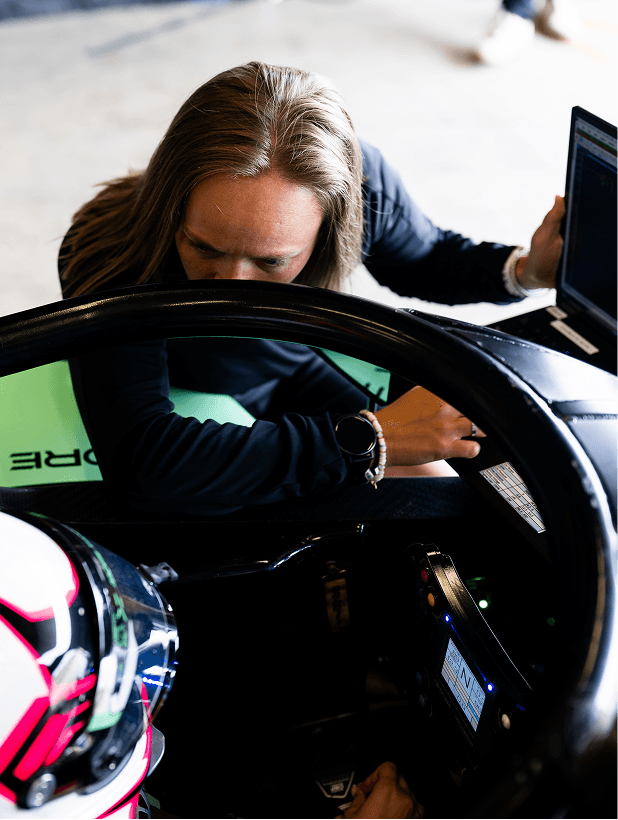
Image rights: More Than Equal
HM: Every driver learns differently. How do you tailor your coaching to each athlete in a cohort like More Than Equal?
SM: That's been something that I've been working quite hard on myself as a coach, especially this year. I became [a] full-time coach with More Than Equal towards the end of last year, and I did that because I wanted to be more involved in the coaching side. Previously, I had three jobs, and it was a little bit hard to balance, and this was something that really excited me, that I really wanted to do.
That's something that I've learned a lot about, that not every driver can fit into a box. You can't teach them all to work in the same way. You even look at F1, and all those drivers drive in a different way. They work in a different way, and there is very much the coach has to have a little bit of give and take, and the driver also has to have a little bit of give and take, and meet in the middle with how they work.
You tend to find that a lot of drivers [are] quite visual. But then, you also have the drivers that will sit down and write you a full page of feedback, which isn't always necessary, but sometimes can be useful, and it's just a way of them [unloading] their brain. Then you have other drivers that are of few words, and so it's trying to get the important bits of information that you need from them.
What I've done quite well, with the two drivers that I'm working with, is create a feedback document that is tailored to them, depending on where they're at for their stage of development. Depending on how much feedback they're currently able to give, I'll tailor the document to them.
With one of my drivers, it's quite simple at the moment, just to meet where she's at. That is very much what went well for your session, what things do you need to improve on for the next session, [and] how the car balance [was]. Then, as the driver learns to work with that feedback and is able to build more on that, we'll change the form accordingly.
Whereas with one of the other drivers, we've got a lot more detail with our form, around making sure we've got three things set before the session has started, so we know what it is we're going out on the track to work on. Then when they come in from the session, they just put whether they achieved or didn't achieve. They [also] have a form that is to do with car balance, whether the car was understeered, neutral, or oversteer[ed] for every corner of the circuit, so they can tick that accordingly, and then a section where they can write their feedback from the data engineer.
You can go into so much detail with feedback. You've got drivers that will sit there and really analyse the data, like myself, I get quite carried away with that. But I think when the drivers are at this stage of development, it's trying to keep it simple and make sure that they understand it and go off the data point.
HM: How important are simulators and technology in modern driver development? How do they complement your coaching on track?
SM: Everyone uses simulators in different ways, and it does depend slightly on what simulator you're able to use. If you've got a basic simulator at home, it's quite different to AVL Tech, who we work with and take our drivers to their simulator, which is a very high-end simulator that even the F1 teams use. There's a big difference between the data that we're able to pull from that.
But again, I think with where the drivers are at in terms of their stage of development at this point, it's keeping the data quite basic. You have your brake trace, your throttle trace, your steering trace, your gears, and your speed, and then if you're comparing to another driver, you'd have the delta, so you can see the time loss or gain.
It's just getting them to really understand and be able to read the basics to start off with, and then when they move further up into [Formula] Regional, GB3, F3, F2, then the data becomes a little bit heavier at that point.
But really, the basics [are] just being able to understand the simple stuff. The engineers behind the scenes usually go into a lot more detail and can feed back anything that is important.
[From there,] we have a good idea of what we're aiming for with the drivers. One of the most important things for drivers, when they're moving from karting into F4, is the brake pressure. That relates to strength as well, so it does give us a good indication of where the driver is at physically. In terms of brake pressure, you're aiming for around 60 bar in an F4 car. That's the first thing that we try and aim for, and also the shape of the brake as well – making sure that the driver is getting a good peak and then is able to control how they bleed off the brake.
That's something we have a lot of conversations around. Depending on the style of corner as well, it does change slightly. The same with the throttle input as well, just making sure that the throttle input is nice and smooth. Otherwise, it's going to unsettle the balance of the car.
The data is really helpful for getting the driver to learn and understand what is important around what it takes to become fast in an F4 car. As I said, we can talk in quite a lot of detail around all of those areas, because every input that the driver gives – whether it's through the brake, the accelerator, the steering, the gear changes – affects how the car balance reacts, and that can affect the driver's confidence levels as well. All those things added together affect the overall outcome, which is the lap time.
HM: Having experienced both sides of the pit wall, what lessons from your racing career have shaped your coaching philosophy?
SM: I always say that the biggest thing is just leaning on the team that is around you. I don't think drivers, especially in their early days, do that enough. They don't realise how much experience the people that they're surrounded by actually have, and those people are always wanting to help.
I think, from my experience, both as a driver and having worked as an engineer, I would say to a driver, just sit down and have conversations: ask questions to your driver coach, ask questions to your team, so you can understand every aspect of what it takes to be a driver. Even understanding the mechanical side of a car. If you sit down with the mechanics, or just watch [them], it's an amazing thing to learn and understand as much as you can, and you'll be amazed [at] how much of that can help you as a driver.
I think it's difficult when you're young. When I was younger, I was quite a shy person, it took quite a long time for me to come out of my shell, which can be difficult, and everyone is different with that. But I would say, just try and lean on the people that are around you, because [they] are the ones that believe in you. They will support you and do what they can to help you develop, and to help you succeed.
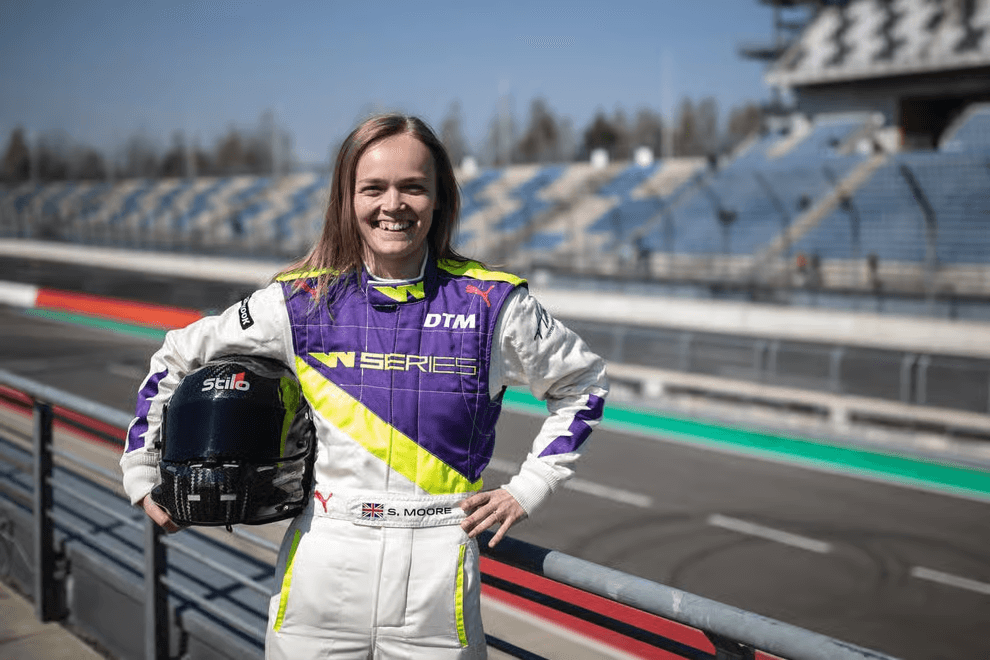
Image rights: Getty
HM: Looking back on your career as both a driver and coach, what has been your most memorable moment?
SM: Oh, that's a good question. I think, as a driver, the first win and the first championship win is always going to be a standout. For me, my first standout was when I won the Ginetta Junior Championship, which is a long time ago now, in 2009.
I've also created history a couple of times. I was the first female to win the Ginetta Junior Championship. I was the first openly LGBTQ+ driver to stand on an F1 podium, and then I was the first female to win a race in India as well.
Outside of that, I'd say one of my favourite moments was probably 2024, when I engineered for Alisha Palmowski, and we had our first win as a female driver and a female engineer. For me, that meant quite a lot. I'd watched Alisha come through Ginetta Juniors and cheered her on, really wanted her to win. Unfortunately she didn't, but when I got a chance to engineer for her when she moved into GB4, that was quite a special year.
HM: What advice would you give aspiring drivers looking to maximise their potential?
SM: I think being in charge of your schedule, or at least knowing what is going on day-to-day. There's a mix of drivers now, especially in the teenage years. Some still go to school, some are online schooled, so everyone is in a slightly different situation.
But I think understanding your schedule, leaning into the nutrition, the fitness, the psychological, and also having a technical coach, just so you can continue to learn in every area, is super important.
Fitness is probably the most important one, at least from my experience. You can never be over-prepared fitness-wise. You always want to be prepared for the next step. If you're racing at a karting level, you want to be at the fitness level that it takes to be in F4. When you're racing in F4, you want to be working towards the fitness level of GB3, Formula Regional, and then so on. You're always one step ahead, so that if the opportunity comes around, the year that you're racing F4, to jump into a GB3 or a Formula Regional car, then you're physically at a point where you're able to deal with those demands.
For Moore, developing racing drivers is not about searching for a single defining quality or chasing immediate results. It is about creating an environment where technical understanding, physical preparation, psychological resilience and effective communication grow together over time. The fastest drivers are rarely those with the greatest raw talent alone, but those who continually learn, adapt and maximise every resource around them.
As organisations like More Than Equal continue investing in structured, evidence-based driver development, the future of motorsport may be shaped as much by the quality of its coaching as the talent behind the wheel. Moore's own journey, from pioneering racing driver to mentor for the next generation, reflects a broader shift within the sport: success is no longer built by individuals alone, but by the systems that help them reach their potential.