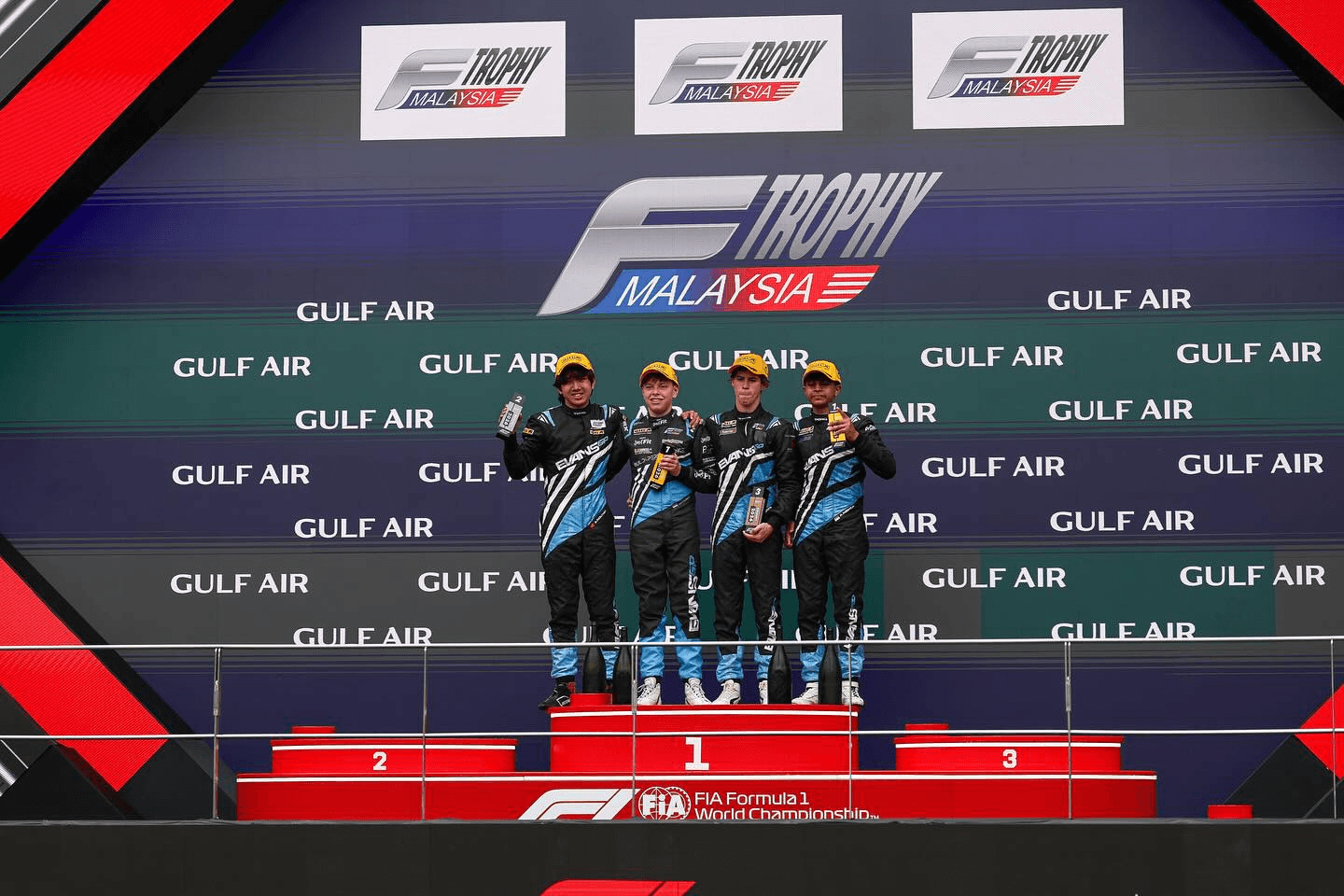
At just 21, Nida Anis splits her time between the pit wall and planning meetings, working as both a motorsport engineer and a technical coordinator. Over the last four years, she has built trackside experience across Asia and Europe while studying and helped shape team operations and new programs behind the scenes.
In conversation with Hairpin Media, she talks about what her dual role actually involves, how Asian paddocks feel different, and why getting uncomfortable and doing hard things matters more than a perfect CV.
Hairpin Media: Could you introduce yourself and share your journey into motorsport?
Nida Anis: Hi, my name is Nida. I am a 21-year-old motorsport engineer and technical coordinator. I have been working in motorsport for about four years now.
Alongside my trackside work as a data and race engineer, I have also done a lot of work behind the scenes as a technical coordinator, helping teams with things like management work and the administration that you do not usually see. That has really helped me become a very well rounded woman in motorsport.
HM: What does your role involve, and what are your core responsibilities?
NA: I think I will split this into two categories.
First, you have the trackside work, which is essentially being an engineer in charge of the car, working with the driver and the crew of the car, as well as with the wider team to extract performance and see how we can make good steps forward and improve. This involves lots of travel, because motorsport is a very dynamic sport.
On a day-to-day level, that means setting and checking tyre pressures, working with the other engineers on things like setup, working with the drivers, analysing data to see where they could improve, and doing a lot of reliability and health checking as well.
As a technical coordinator, that is another hat I wear. When I am working trackside, alongside the engineering work, I also liaise with championship organisers, attend team manager meetings, and make sure the team processes are above board.
That includes designing the processes that team members will follow, from mechanics to engineers to drivers, making sure we have all the paperwork submitted on time, and reviewing how we are doing as a team with management. I work with them to identify opportunities that might benefit us, help design and shape our programs and projects, and evaluate whether they are feasible, suitable and sustainable for the team.
HM: How do your engineering and technical coordinator roles complement each other?
NA: They are two different skills, but they can be quite complementary. Working as an engineer and having a technical focus is good, but it is also good to take a step back and look at the wider picture. [This typically includes] understanding how a racing season works, how much cost is involved, how much time and overhead is involved, where we are getting staff from, and how we design programs that are both sustainable and attractive to clients.
Taking that step back and looking at things from a different perspective does not necessarily make you better technically, but you become more aware of what you are doing and the role you play inside the wider team. That is important.
HM: What has your experience been like as an Asian professional in motorsport?
NA: [Currently,] I do a lot of my work in motorsport in Asia. That will change towards the end of this year and through most of next year as I move back to the United Kingdom for a year as part of a new role, but honestly it has been great.
I have developed a strong network of like-minded fellow Asians within the motorsport scene. I was part of the crew that set up Asian Motorsport, and that has been a really good platform that shows there are platforms covering motorsport in Asia. I think that is very important.
I would not say I found it particularly hard at first because I am Asian. I faced other challenges when I began in motorsport, but being Asian and living and working in Asia, where I spend a good part of my year, has been fantastic. There is so much growth potential here.
You see how many drivers from Asian backgrounds are now going into FIA Formula 2, Formula 3, Formula 4, whereas five or ten years ago that number was much lower and mostly from countries like Japan. Now, we have drivers from Singapore, South Korea, and quite a few from Thailand which has drivers in Formula 1, 2 and 3.
The momentum is really there with motorsport in Asia, and it will continue to grow. There is massive growth potential and I think it is only a matter of time before that trickles down and affects the whole ecosystem.
HM: How important is media in improving representation for Asian motorsport?
NA: It is very big. In Europe and the United States, you have websites like Motorsport.com, Crash[.net], Racer, The Race. They predominantly cover European or American content. You rarely get agencies covering motorsport in Asia, which is a shame because there are so many cool events.
I recently found an Instagram account of someone in Thailand who covers local car meets in and around Bangkok. These events are not publicised anywhere, and it is hard to find information even if you speak Thai or are Thai. I am Thai myself and it is still difficult to know what is going on.
With the rise of motorsport in Asia and more Asian drivers progressing to higher categories, there is now more media focus on drivers from Asia. A big example is Bianca Bustamante, who has a big media presence and a large following in Asia and especially in the Philippines.
When there is an Asian driver or team doing really well, it is something you can capitalise on. Asia is a huge demographic, most of the world’s population lives here. So it is about how we maximise that.
HM: How does working in Asian paddocks compare with Europe and the UK?
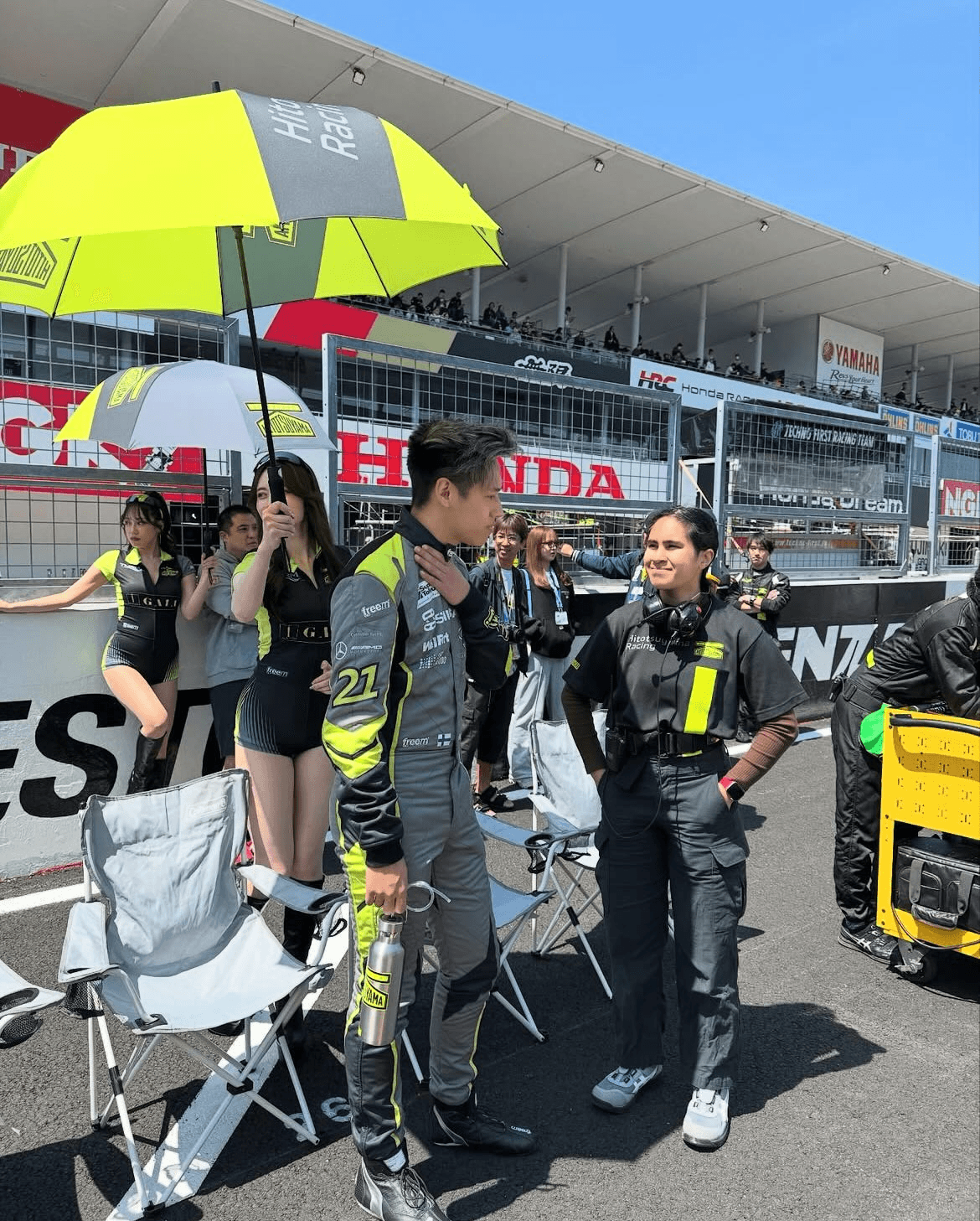
NA: I think each country and each team I have worked with is different culturally. I spent most of last year working in Japan and that was a very different experience compared to the rest of Asia and to Europe. They are all different, [but that] does not mean one is better. They all have their strengths and weaknesses.
In general, Asian paddocks are very welcoming. There are people from many different backgrounds, Malaysians, Filipinos, people from Thailand, Japan, South Korea and others, and they all work together in one team or one paddock. There is a lot of camaraderie in the Asian motorsport paddock.
That is not to say you do not get it in Europe, but in Asia, it is particularly strong and it is a real strength. The main goal is to compete on track, but there is a sense of community that you do not really get anywhere else. That reflects Asian culture more broadly. I think that is what sets it apart.
HM: What has been the highlight of your career so far?
NA: I get asked this a lot. That is a hard question because there are lots of incredibly cool moments and it is difficult to pick one.
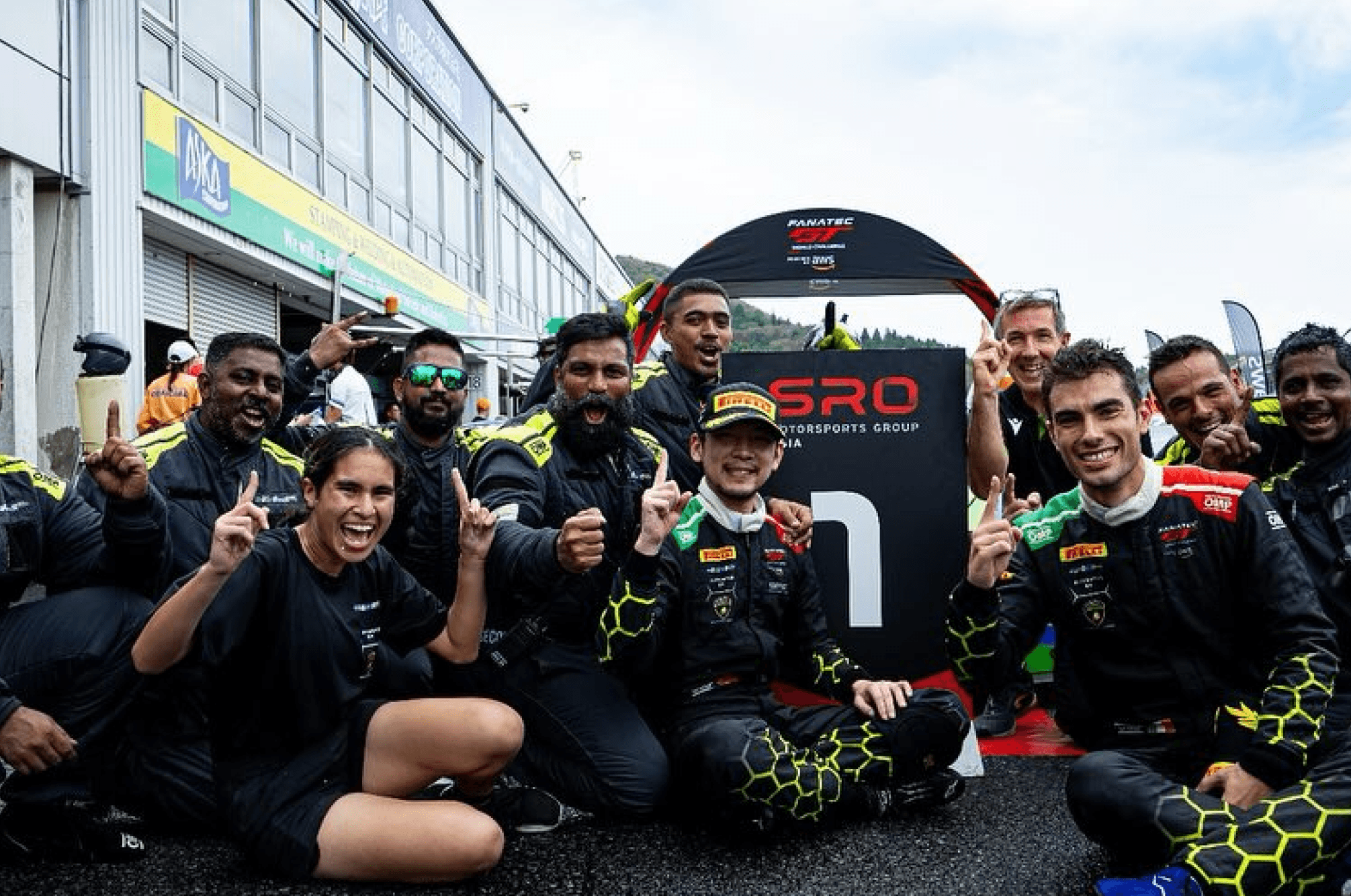
I was part of a team that won an overall race in GT World Challenge Asia in 2024 at Okayama. To have that race win was very special and I was glad to have played a part in it. It is one of my best memories in motorsport.
Another strong moment was doing the [MSF] Merdeka 111 race. We won in class and came third overall and had a very strong finish in our first endurance race with that team.
Working in Japan was also a highlight. Even though it was very different culturally and socially, I really enjoyed the experience. Doing a 24-hour race, even though it did not go the way we hoped, was a very strong and character building experience.
Getting to do events like the 2025 Abu Dhabi Grand Prix Formula Trophy Formula 4 support race and the Macau Grand Prix last year were also incredibly special and unique.
HM: What's a common misconception about your role?
NA: A lot of people, and I know this from university as well, think it is easier than it is. It is not. It is quite demanding mentally and physically.
You need to put in the hours. There will be times where it is hard and difficult and really challenging. But ultimately, if you put your mind to anything, you can do it. That is how I have always viewed it.
One misconception with trackside work is that because you travel a lot, it is like a constant trip. In reality, most of your time is at the track working. It should not put people off, but people need to understand that both the trackside role and the technical coordinator role need a lot of grit, determination and commitment. It is not something you prove in one moment, it takes months and years to show it.
HM: How do you balance being a student with working in motorsport?
NA: I would say my work commitments are closer to a full time job than a part time one. Around now, it has been more part time for a number of reasons, but last year at some points, my work was very much a full time role and then I would fly back and do university on the side.
It is challenging, but it is possible to balance both. I was fortunate that I did my role for just over two years before starting university. That gave me a leg up on what to expect.
University is very different. You focus on theoretical fundamentals rather than the skills you use and develop at work. They are two different things.
Ultimately it is about allocating blocks of time. I block out time for work, time for myself and time for university assignments. Right now I only have one assignment left this year, and then I should have nothing for the next one and a half years before I return for at least one more year at university. It is a challenge, but not impossible. You just need to block out your time and use it efficiently so you do not fall behind.
I want to add [another thing]. I have made a lot of sacrifices in my personal life.
I come from a relatively disadvantaged family. I was lucky to have had the opportunity to travel a lot as a child because of something we had as a family that we benefited from, but apart from that my family was not particularly wealthy. I grew up as a young carer for my father, who was deaf and blind.
Since I started in motorsport in my last year of high school, I missed out on a lot of things. The typical friendships you make in your first or second year of university, I did not have much time for. But I am extremely happy in the role and position I am in. I love my discipline, I love doing the work, I love being part of something that makes a real difference and being part of a cause I believe in. I would not have it another way.
HM: How did working before university shape your career?
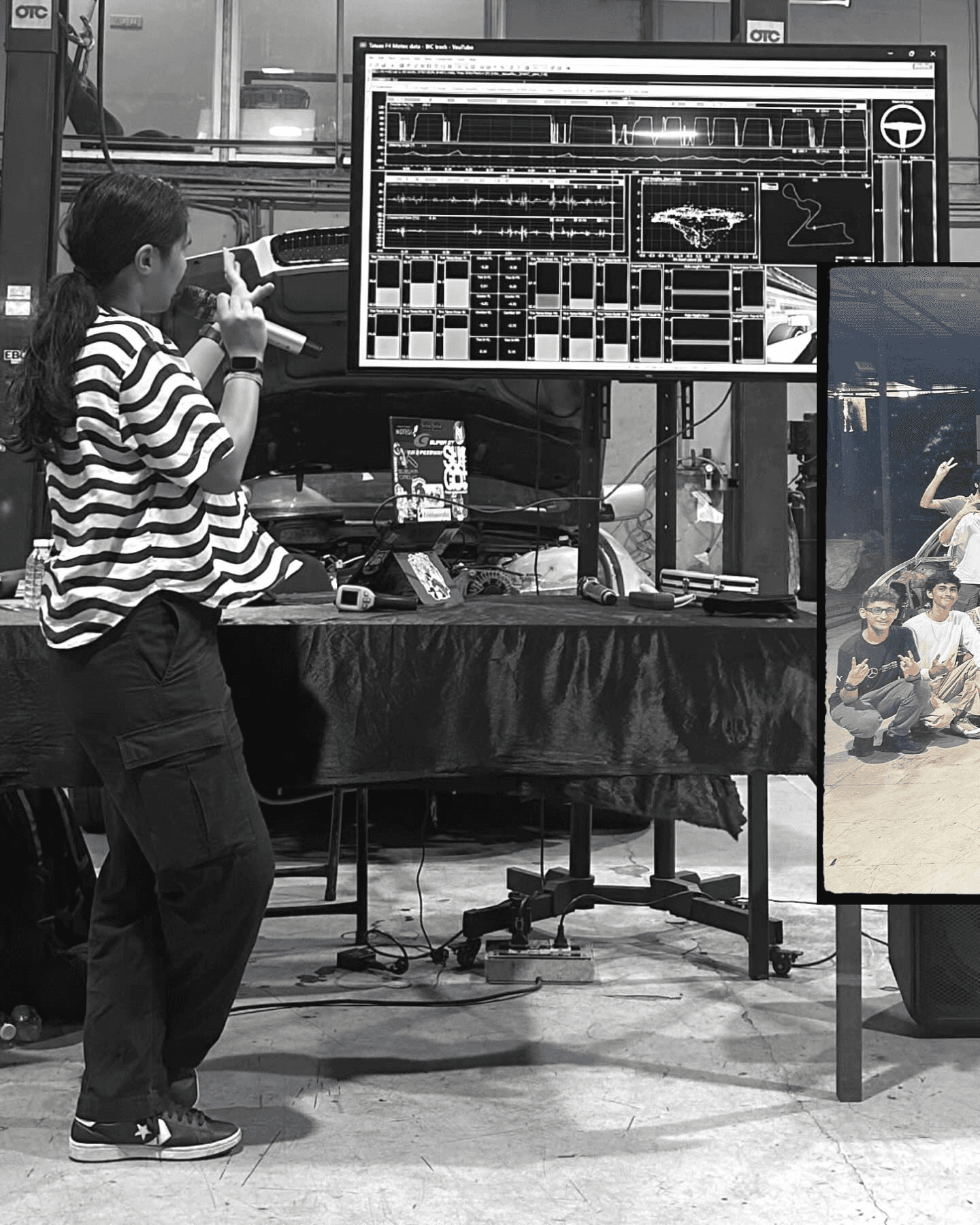
NA: In my last year of high school, Year 13 in the United Kingdom, I started doing work experience with a couple of race teams. I thought it was just work experience but it progressed into a bigger role as a junior engineer. I had just turned eighteen and was doing my A-levels at the same time.
Looking back, that was one of the steepest learning curves of my life. It is so different from being in school with peers who are just turning from teenagers to adults and focusing on exams, to being in a world where you have to focus on precision, where every second matters, and where even small things you do can have a big impact.
You have to present yourself as a professional rather than a student, even as a junior engineer. That was challenging. I went through a lot during that time that was hard to deal with, but I came out of it far stronger personally and professionally. I developed grit and resilience that I do not think I would have developed if I had just stayed in school and gone straight to university, which was my original plan.
Taking a gap year and focusing on work also allowed me to become financially independent. Coming from a disadvantaged family, it allowed me to provide for [them], enjoy things I would not have otherwise enjoyed, and put me in a strong position now. I am glad I focused on work at such a young age, it really set me up.
HM: What advice would you give to students or young professionals looking to build a career in motorsport?
NA: If I were to do things again, I would focus on getting practical and hands-on experience from a young age. I would emphasise vocational qualifications, things that give you hands-on experience. Take things apart, do a degree apprenticeship, do something that brings you beyond the classroom.
There are so many university courses now that just keep you in a classroom, and life is not about that. Life is about pushing yourself to do things that make you uncomfortable, not in a bad way but in a growth way. If you push yourself out of your comfort zone, you will gain more.
I tell younger students and professionals to focus on getting hands-on experience, and if that is hard to get, build your own projects, whether in software or hardware. Be as hands-on as possible, live as much as possible.
Focus on meeting people, maintaining and building friendships. Soft skills are a big part. They are hard to learn unless you push yourself to meet people and get out there. Asia does this well. There are many cool meetups, for example in Bangkok, where you can meet people and be part of a community. Build your character. Do things that are hard.
A big part of my life now is running. I ran the Oxford half marathon last year. I ran a 10-km race earlier this year, I am running another 10-km at the end of this week and another half marathon soon. I am not fast and my times are not impressive.
I do not run to be the fastest. I run because it is hard and I like doing hard things. You push yourself and the sense of satisfaction you get at the end of doing something hard is so rewarding. You do not get that if you always stay in your comfort zone.
That applies to everyone, whether they pursue engineering or anything else. Get out of your comfort zone, meet people, build your character. That is the main thing I would say.
Throughout the conversation, Nida returned to the importance of constantly learning and stepping outside your comfort zone. Whether discussing engineering, management, studying alongside a near full-time role, or building a career across Asia and Europe, her focus remained on gaining practical experience, developing resilience, and continuously learning.
As Asian motorsport continues to grow, she sees opportunity not only in the drivers on track, but in the engineers, coordinators, media professionals, and countless others working behind the scenes. For Nida, success comes from being willing to do the hard things, because that is where both personal growth and meaningful careers are built.