Across Asia, a new generation of young drivers is finding its way onto the single-seater ladder. From karting and grassroots racing to Formula 4 grids across the region, these juniors are gaining experience, competing internationally, and building towards bigger opportunities in motorsport.
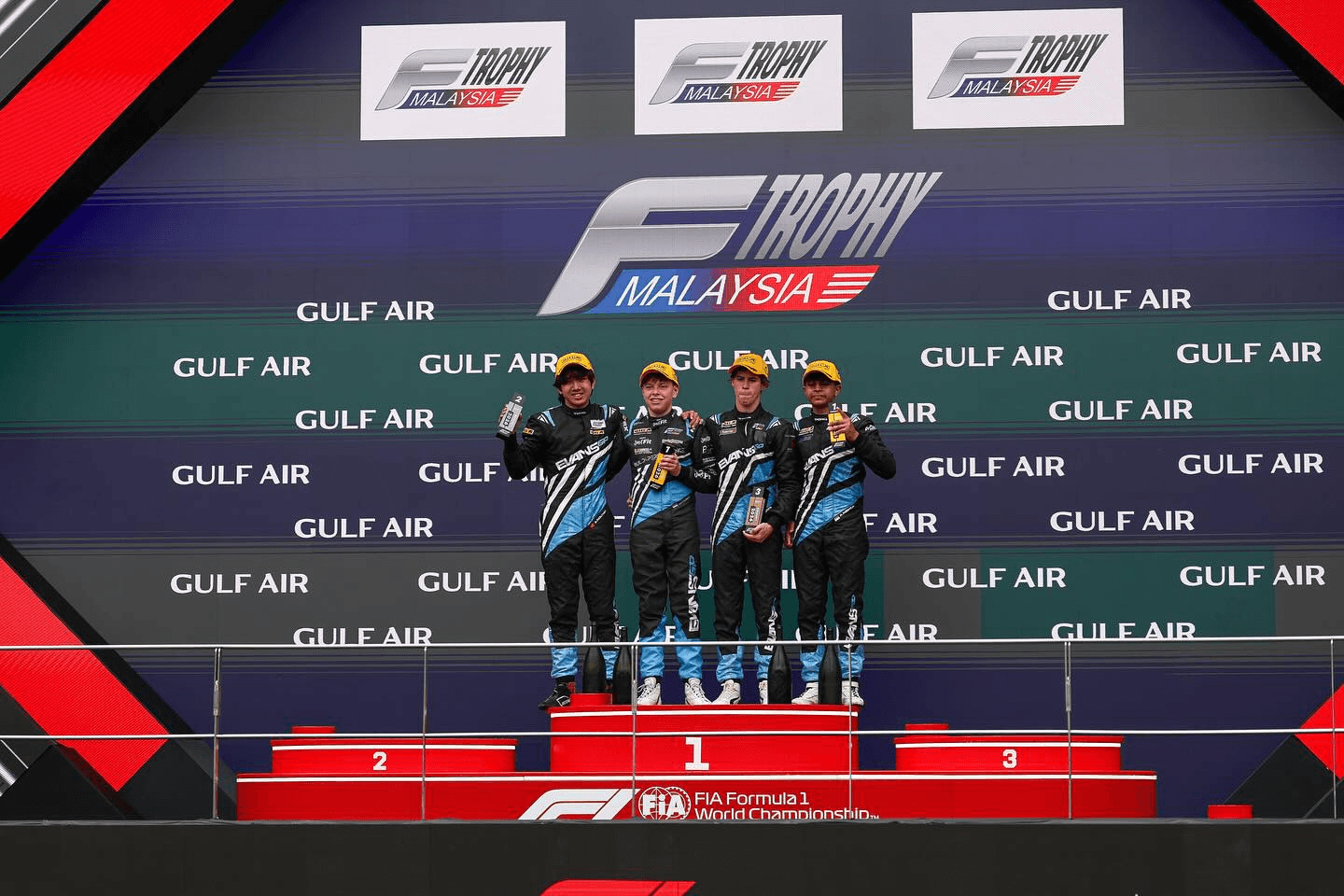
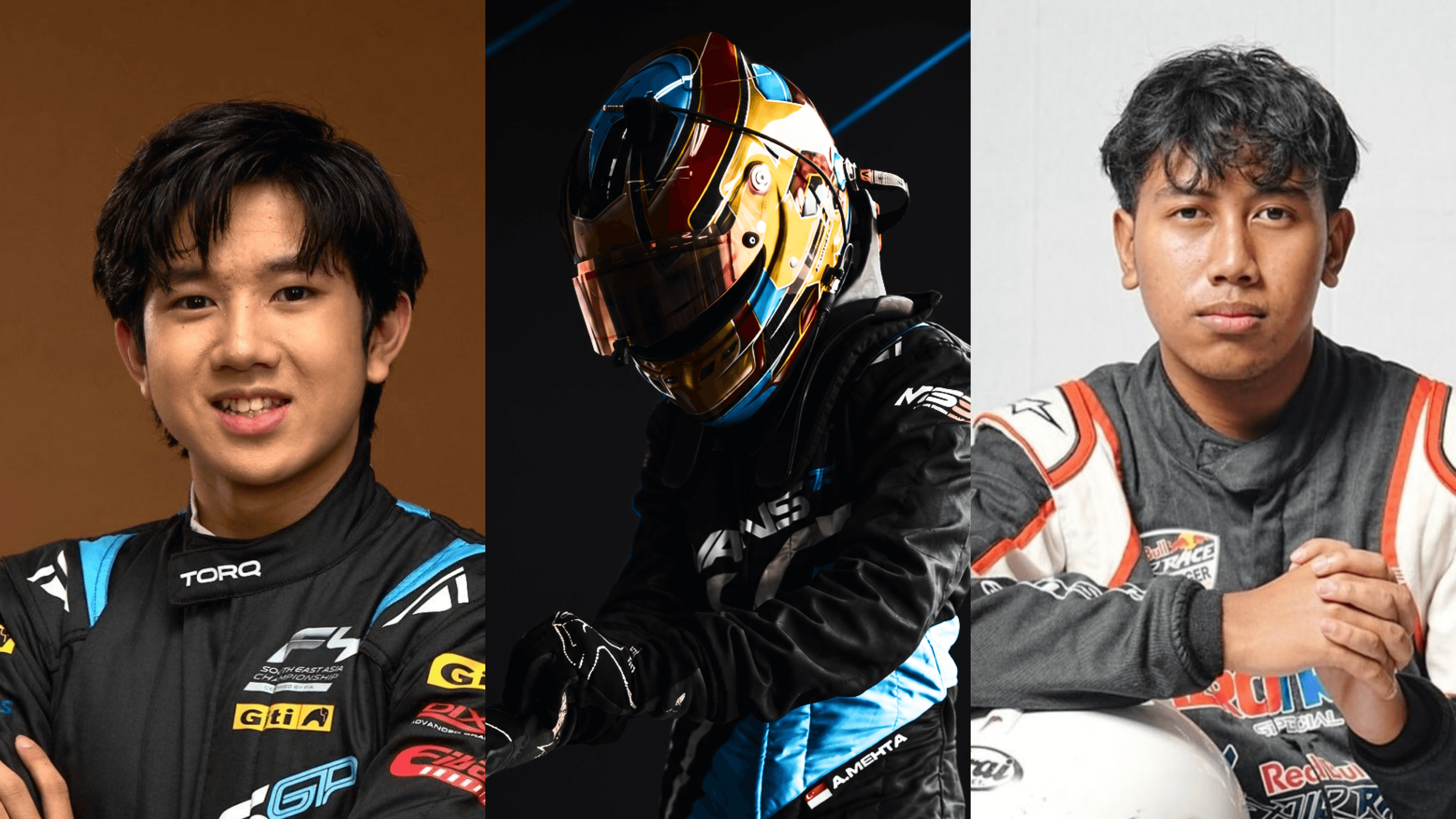
At the Formula Trophy Malaysia season opener at Sepang International Circuit, running alongside the Formula 1 Gulf Air Bahrain Grand Prix in Malaysia, Hairpin Media caught up with three of the region’s emerging talents: Aaron Mehta, Ben Ahn Nguyen and Imran Putera. Their paths into single-seaters may be different, but all three are part of a growing generation of Asian juniors looking to make their mark on the international racing scene.
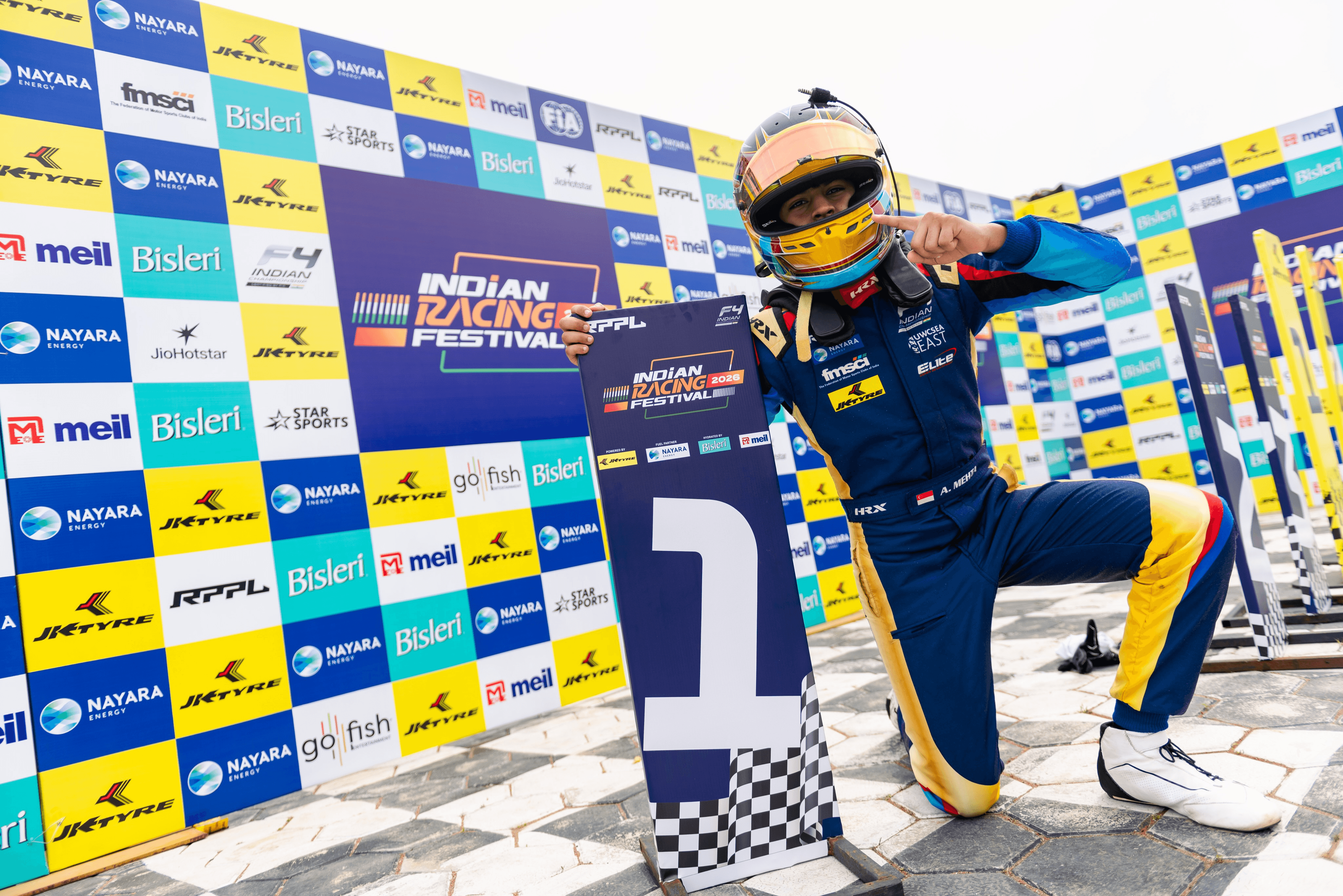
Image: @aaronmehta_racing
Aaron Mehta has had a remarkable introduction to single-seaters. After starting karting at 10, the Singaporean secured his car racing licence soon after turning 15 in April this year and, within weeks, won the Formula Global Shootout in France to earn a fully sponsored seat in the Indian F4 Championship.
His F4 debut was just as eye-catching. Mehta started from pole, led a race and finished on the podium, becoming the youngest pole sitter, podium finisher and race leader in championship history. At Sepang, he stepped into his first F1 weekend with Evans GP, qualifying third and fourth before delivering a P4 overall and a P1 rookie finish in front of the F1 crowd.

Image: Cherry Fan
Hoai Nam Ahn Nguyen, better known as Ben Nguyen, took a much more recent route into racing, starting with sim racing and only beginning his competitive karting career in late 2024. He quickly progressed into single-seaters, making his F4 debut in Southeast Asia in 2025 before joining Evans GP.
Since then, the Vietnamese driver has continued building experience across Formula 4. His 2026 season has brought another step forward, with Nguyen returning to Sepang for Formula Trophy Malaysia and adding more F4 podiums to his growing résumé.

Image: @hani.imrann
Imran Putera has been building towards single-seaters for considerably longer. The Malaysian started racing at 10, competing in karting events at Sepang before progressing through Malaysia’s grassroots scene and eventually making the move into Formula 4.
He made his F4 Southeast Asia debut in 2025, before continuing his development across F4 as well as sports cars and touring cars. Now racing with Pinnacle Motorsport in Formula Trophy Malaysia, Putera brings years of experience on home territory as he continues his progression through the junior single-seater ranks.
Take us back to the beginning. What got you into racing, and what has the journey looked like since?
Aaron Mehta: It all began when I went with my dad to test-drive a car for fun. One of the people helping us noticed my interest in motorsport, particularly Formula 1, and suggested that I try karting. I took his advice, and I haven’t looked back since.
The journey has had its share of ups and downs, as racing naturally does, but it has also been incredibly unpredictable. A year ago, I never would have imagined standing on an F1 podium, celebrating a Formula 4 win alongside the Bahrain Grand Prix. That experience showed me how much faith, commitment and preparation this sport requires. You have to keep working, stay ready for the right opportunity, and then make the most of it when it comes.
My journey began with winning [the] Formula Global Shootout programme in France that allowed me full scholarship for [the] India F4 championship, and has since evolved into securing pole position and a podium in my F4 debut. During [the] Bahrain GP [in Malaysia], I’m happy and proud that I was able to perform in front of such a large F1 crowd and under that level of pressure.
Ben Nguyen: I got into racing quite late, at roughly 15 years old. Compared to most racing drivers, that's very late. So I started off with sim racing.
I really like engineering [and] motorsports, so I thought it was kind of a natural thing [since] I like watching Formula 1. But then, I got a sim rig and I started playing that almost every day.
After a year of sim racing, just for fun, my brother said that there was a karting tournament in Vietnam. It was a small regional thing and he thought it would be fun for me to do. [So] I thought, well it's winter break, I might as well go[,] try it out and see what I can do. So then, come the weekend, I performed much better than I thought I would. I ended up winning the race [on] my first try.
[It was clear that] I actually really love this thing. I was hooked since then and I thought it was just a natural progression from liking the engineering to liking the actual driving side. After that, I started doing more karting and I got reached out to by Black Arts Racing, which are now Axle Sports. They offered me a Formula 4 test, [and the next thing I know,] I was already into Formula 4. It was a very, very compressed career [progress], to say the least.
Imran Putera: Since the beginning, my dad was a pilot. I wanted to fly, but it was too dangerous for me at that time because I was really young so he put me in a kart. And since then, I guess I got the blood from my dad and I like speed.
It wasn't [as] easy as everyone thinks it is because compared to other drivers, I had really less track time in the car so I didn't have much of a practice. But in the end, sometimes in the race, I get to keep up with them. So that was really helpful.
What was the journey from sim racing to real life like?
Ben: It's quite a big step because [in] sim racing, you're taught to feel the car from your vision, your ears, and then your hands. So that's a very limited amount of feedback that you get. Because of that, you're used to these three senses that you rely on.
Then, when you actually step into a Formula 4 car for the first time, you get overwhelmed by all the different feelings and senses that the car actually gives you now. You feel it in your butt, you feel it in your abs, your head, everywhere. It's a bit overwhelming and sometimes you don't know how to react to that. And that's why a lot of sim racers, they often have a slow start to racing.
Once they get more used to it, they have the database of what the car feels like in real life and how that correlates to what they might feel in the sim. It becomes really connected and you can actually use the sim as a great training tool for real life.
What’s it like being the only Malaysian on the grid, especially with F1 back this weekend and the atmosphere being so wild?
Imran: It's very exciting to see this [many] people at the grandstand. So even though they are not here for me, it's good to see Malaysia back alive with F1. Hopefully, [now] Malaysia can keep F1 here for the next few years.
I'm very excited and proud to bring Malaysia with me [on track], since the last F4 Malaysian driver was a really long [time ago]. And to see that a Malaysian can go back into the Formula Series is very good.
For a country with limited representation in international single-seater racing, what does it mean to be one of the drivers carrying that flag forward?
Aaron: Some people might see it as pressure, but I see it as a privilege. I was born and raised in Singapore, and my country plays a huge part in shaping who I am, both on and off the track.
My goal is not only to reach the top of the motorsport world myself, but to bring Singapore with me. I want to inspire more people from my country and show that it is possible to compete on the global stage.
Ben: I'm quite happy about that. Obviously, I want Vietnam to grow more. I don't want to be the only one in the future.
Having that sort of responsibility and knowing that it's up to me to help wave the flag makes me really proud. And being able to do that in front of this huge crowd today has been incredible as well.
I think it's a great responsibility to have. It doesn't pressure me at all; it just makes me more proud whenever I get into a car, and I see everyone else around me looking forward to my racing.
What do you think the next generation of Asian drivers can bring to the global racing scene?
Aaron: Growing up as a racing driver in Asia often comes with a unique set of challenges compared with racing in Europe or America. As a result, Asian drivers remain underrepresented in global motorsport.
In my view, there is an incredible amount of talent across Asia. The biggest challenge is often finding and securing the funding needed to pursue a career in racing. If the support available to Asian drivers continues to grow, I believe we will see a new generation of racers competing at the highest level. Hopefully, a driver from Asia standing on the top step of the podium will become far more common.
Ben: I think there's a bit of discipline. I like to think we're a little bit more analytical. A lot of European drivers race with a lot of feel and brute force in a way. Just drive laps and laps.
I think I bring the experience of having a little bit less amount of testing. That actually makes me value each time I'm on track and learn to be more adaptable and quick to get on pace.
We always have really harsh conditions that change really quickly. Sepang, this is the first track I ever drove on. Obviously, this is the track I'm here at now that I got my two podiums back to back and also my first pole position.
So it's the experience of these changing conditions, how rough the track is on the tyres, how much more you have to take care of the tyres compared to Europe where it's quite cold and the track is quite smooth. So you have a lot of grip without taking away too much from the tyres. I think a lot of drivers come here and sometimes they struggle with tyre degradation, like [in] Formula One for example. Asian drivers were used to that sort of difficulty and limitations.
What’s something about you, your racing, or your journey that the results sheet will never tell you?
Aaron: Part of being an elite athlete means constantly striving to improve. No number of results or wins will ever change that. When you set a goal and achieve it, you do not simply think, “I’ve reached my goal, I can be satisfied now.” You immediately start thinking about what comes next.
That can become a never-ending cycle, and it is something every athlete experiences. That is why it is so important to find enjoyment in the process. Eventually, you stop doing it purely for the results and start doing it because you genuinely love the journey.
One of the biggest lessons I have learned in racing is that enjoyment is essential. Whenever I focus too much on the result instead of the process, that is when mistakes begin to creep in. That mindset, and the work behind it, is something the results sheet will never show.
Imran: They will never know [the] behind-the-scenes [of] what I had to do to get here and what the process to be in F4 [is like.] There's obviously some ups and downs. So that's the thing people don't see.
If we check back in with you a year from now, where do you want to be?
Aaron: I want to be racing in my second year of Formula 4 in Europe, [maybe] few podium wins while potentially testing Formula 3 and Formula Regional cars.
More importantly, I want to be someone who is better every day than I was the day before. That is the standard I set for myself, and it is something I will continue working towards.
Ben: I actually live in the US, so maybe USF 2000, USF Pro, IndyNXT, maybe. Who knows? The future is quite open for me.
If you asked me at the end of 2024 where I thought I'd be by the end of 2025, I would have said maybe karting, maybe moving up to senior karting. But if you actually went and asked me back in 2025, I'd be in Formula 4 already.
It's been quite an unexpected journey for me, and I can't wait to see what other unexpected turns it takes.
Imran: A year from now, I'd like to be in the F3 Series or either a GT Series. Still proud to bring Malaysia with me and hope to be racing next year and a lot more people to recognise me.
These athletes are just getting started. Aaron Mehta will be racing at the Madras International Circuit later this month for Round 3 of his F4 Indian Championship campaign, while Ben Nguyen and Imran Putera head back to Sepang for Formula Trophy Malaysia’s second round in November.
Together, they mark a new generation of young Asian talent gaining experience, chasing opportunities, and making their mark in the motorsport world. But talent alone cannot get a driver to the top step. The opportunities and support they receive along the way help shape just how far they go, both on and off the track.
As this next generation of talent continues to grow, there’s more to look forward to, and even more reason to follow their journeys and share their stories. These could be the names flying their countries’ flags high on the global stage for years to come.