
For many aspiring engineers, motorsport is the ultimate destination, but few understand what it actually takes to build a career in the industry. Beyond the glamour of race weekends lies years of preparation, technical expertise, problem-solving, and constant learning.
In conversation with Hairpin Media, freelance race, data, and performance engineer Kajal Prajapati shares how she carved out a career in motorsport, from Formula Student competitions in India to engineering roles in Germany. She discusses working with drivers, teams, and one-make championships, the realities of race engineering, the challenges of breaking into the sport as an Indian engineer, and the mindset required to succeed in one of the world's most demanding industries.
Hairpin Media: Could you introduce yourself and share your journey into motorsport?
Kajal Prajapati: Hi, I am Kajal Prajapati. I have been working in the motorsport industry for approximately five years now.
I was always fascinated by fast cars and noisy engines. I fell in love with speed, and I wanted to engineer it. My career choices reflected that. Even in school, I selected subjects that would help me reach my goal of working in motorsport, and here I am.
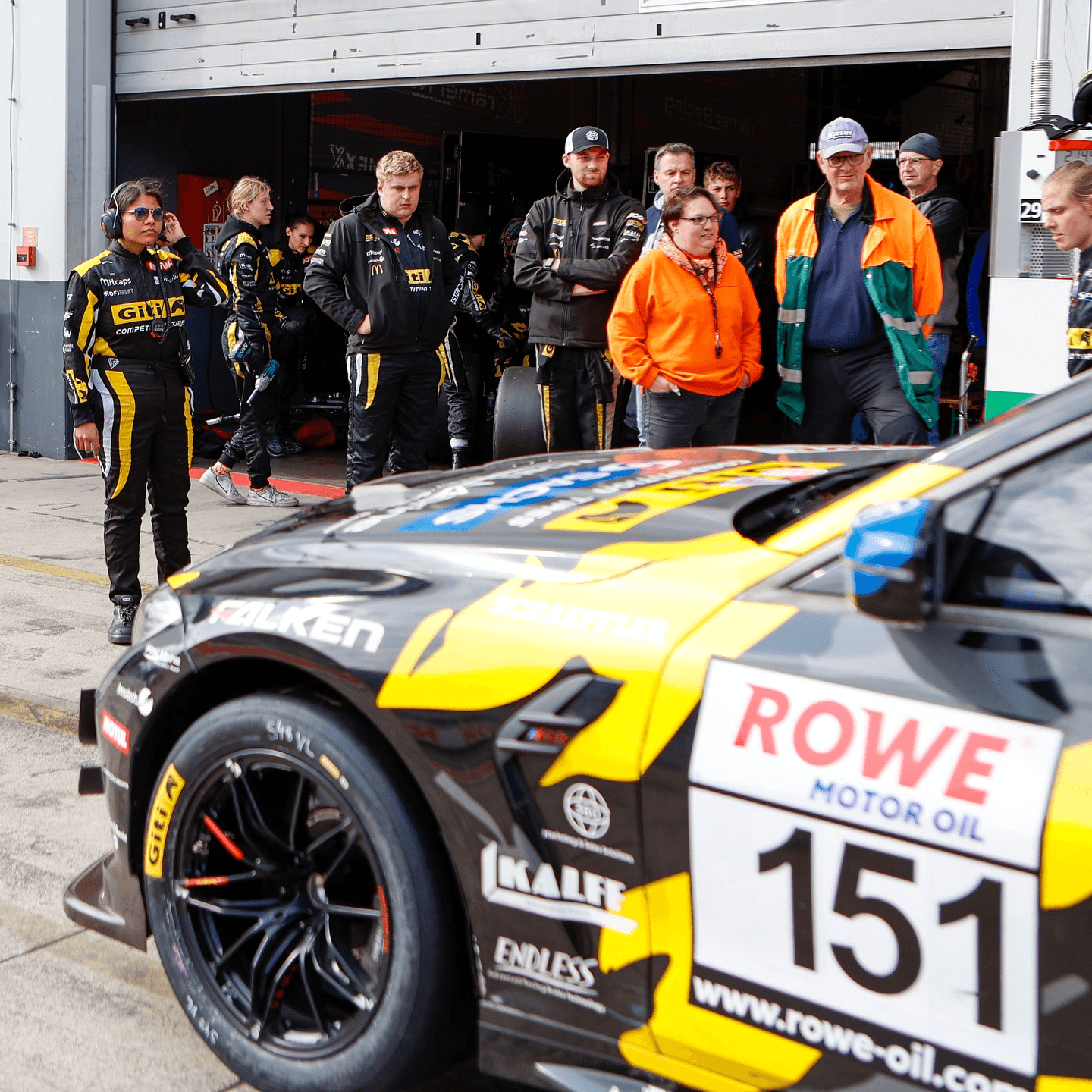
HM: What is your current role and what are your core areas of responsibility?
KP: Currently, I am a freelancer. I offer three services: as a race engineer, a data engineer, and a performance engineer. Many people confuse those three, but they are very distinct roles. Overall, I help drivers get better on track and teams achieve podiums and better results by improving the setup on the cars.
As a race engineer, the role is more hands-on. I am always communicating with the driver. I am the first one to experience if there is something wrong on track. There are decisions involved where I carry the responsibility of taking a call that might be right or wrong. As a race engineer, you have supporting engineers who feed you information, and that helps you [make] better decisions.
As a data engineer, it is almost the opposite. You work more behind the scenes. You are the one doing the deep dives into faults and analysing why the system behaved in a certain way at a certain point, [and y]ou present your findings to the race engineer.
A performance engineer is a bit more layered. Instead of just inspecting, you act as an optimiser. You always want to get better, always looking for that tenth of a second. You work closely with the strategist, you work on both the driver and the car, and you optimise car setups. You even optimise teamwork.
Sometimes, I work directly with drivers, who hire me for their analysis. Mostly, they are very young drivers trying to get a foot into the industry and move up to higher series. I coach them and help with their simulator setups because sim racing is now realistic enough that people can build whole careers from it, so you cannot ignore it.
I also get hired by teams where I am supposed to improve the team as a whole and improve the car from season to season. With the last team I worked for over four seasons, every year we set a target for performance improvement, and almost every year we delivered slightly better than that target, which makes me very happy.
The third layer is working with series. This year, Polo Cup Germany launched for young drivers, and I work with that series. There, I am responsible for data and the ECU. I work closely with Volkswagen Motorsport South Africa and with the Motec system, which is a state-of-the-art ECU and data analysis platform in motorsport.
The whole series runs on e-fuels, so we had to reconfigure the ECU to make the engine work with e-fuels without issues and also restrict a few channels so participants do not find loopholes. That was very fun. It was a different perspective, because I had mostly worked with teams trying to find loopholes, and now I was on the other side, working to prevent that and make sure every team complies.
I also give technical support. If a team has issues with data, faulty sensors, anything, I am the person they call. I look into it and say what needs to be changed. So I usually have a few projects running at a time.
HM: What does a typical day look like working with a young driver versus a series?
KP: In both cases, the work starts before the track. Preparation is everything. That applies not only to this role but to all roles in motorsport. The best performance on track comes from the best preparation off track.
If I am coaching a driver, we start with analysis of his past races. We do a lot of sim racing sessions and then analyse the data. We also look at onboards frame by frame. [We also look at whether it is the] mindset, or [if it’s] the car. If the car feels nervous, the driver immediately loses confidence. [I]f your driver feels nervous, it is not the best setup. In the end, he is the one driving the car, and if it goes wrong, it can go very wrong. You need to give your driver confidence.
We first focus on finding a setup that makes him feel at home in the car so he can really push. Then we move to where he might be making errors. It is an iterative process. You will not see huge results in one session because he is human, not a computer. When I work with a driver, I do this first on the sim and then on track. You also want to pick the suggestions that will have the most effect.
All of this is happening before we go to the track. … At the track, we try to keep him as relaxed as possible. … They have their pre-race rituals to calm down, and you make sure they are not disturbed.
You also work with the team engineer. They are usually open to your suggestions and very helpful in making the driver comfortable because they also want to win. On track, you can still improve, but if it is just a single track day, it is limited. Over a full weekend, you can see solid improvements from Friday to Sunday.
When I work with a series, it is quite different. The series I am working for, launched this year, and I have been involved since last year. I helped test the car before teams bought it. That has been a fun journey, seeing how a series operates from scratch.
Before the series launched, my work was focused on tuning and regulations. I worked alongside the person writing the regulations, figuring out how we can measure things, how to put them in black and white so it makes sense later. Testing and data analysis were, of course, part of it. Now that the series has launched, it is more about patches and monitoring.
I also make dashboards for comparative analysis between teams, which is a different domain. Compared to working with a single driver or team where you work more beforehand, with a series, I work more after the races because the data is big. Instead of one car, you suddenly have twenty or more.
When you work inside a team, you usually get filtered data, not every channel. When you work with the OEM or the series, you get unfiltered data from every sensor and channel on the car. You also have the power to make changes on the car itself, even on how combustion happens. So you need to be more careful when you are connected to the car. One wrong click and you can damage an engine.
It comes with a lot more responsibility, but it is also a new challenge and I enjoy comparing how different teams and drivers approach the same car and series. It is a one-make series – same base car, slightly different setups – and you can see many things in the data that make you smile when you spot them alone in your office at night.
Both sides have their own challenges, and I would not want to do only one for my entire career.
When I work with a team as part of a championship, that is again slightly different. We do complete pre-race and post-race analysis. Pre-race, you look at the setup databank, weather predictions, driver lineup and their preferences, and you build at least three scenarios you can deploy depending on track conditions.
During the weekend, even if you are well prepared, something always comes up. You have to react, address problems and make the best out of it. After the race, you gather data, do analysis, driver comparisons, and write down lessons learned from the weekend that you can improve for the upcoming races. It is a whole process, but a fun one.
HM: What has your experience been like as an Indian engineer in motorsport?
KP: In India, we are unfortunately not really prepared for the real world of motorsport, at least we were not. We were not exposed to motorsport the way people in Europe or Australia are. That shows up later. Things my peers inherently knew, I had to learn. I had to train myself by watching previous races [and] asking questions. It has been an uphill battle, but worth it.
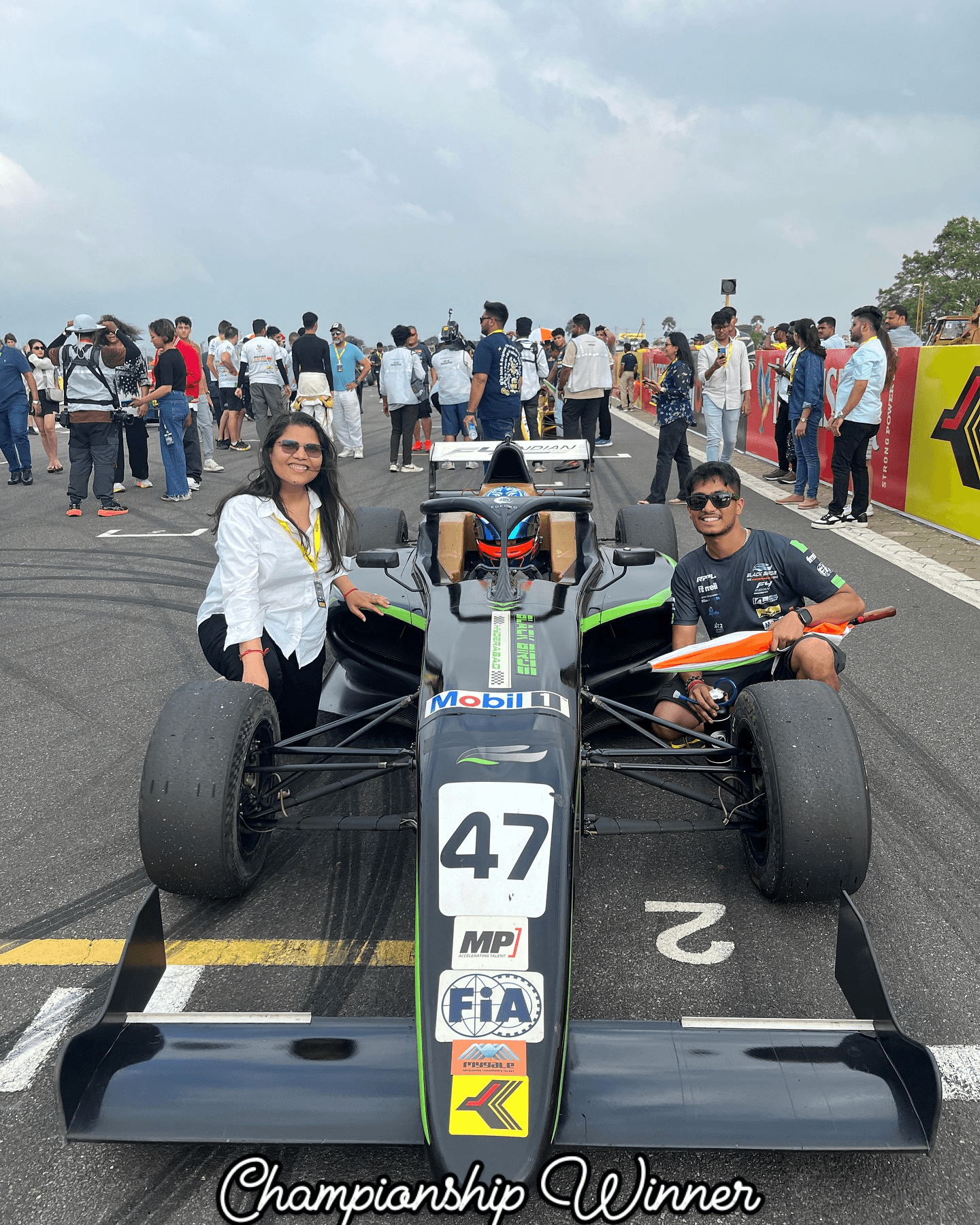
Motorsport is like a closely knit community. … It is welcoming if you show genuine passion and curiosity. There are good people who guide you. You will not get things handed to you, but it is an industry where your efforts are seen and rewarded.
I did BAJA in India during my bachelor’s, then Formula Student in India as well. When I came to Germany for my master’s, I chose the University of Stuttgart because at that time their Formula Student team was ranked number one. I thought I was in a good position because I had already done two or three competitions and knew how things worked. Then I came here, saw what others were doing and was shattered because it was nowhere close. Now I understand why.
At the races I work at now, I see two-or three-year-old kids with their parents at the track. They talk with drivers and ask questions. That gives them an inherent intuition about how things work that I did not have. There were moments where it was very clear I was lacking that context, and it was demotivating to feel that no matter how much work I put in I was not at that level.
Then there was the language. Most teams here are German, often family-oriented teams that work with people they know. They speak in dialects. Getting into that group was a challenge. I had to improve my communication skills.
In India, we focus more on getting the work done. If your work is good, you expect it to be rewarded. In motorsport, presentation matters almost as much as the work. You have to present your findings and make them easy to understand.
Then there are cultural differences. We have a heavy authority culture. That does not exist here in the same way. In the early stages of my career, I was reserved [and] did not voice my opinions confidently. I thought nobody was interested in my findings.
But when I started out as a helper here, I was asked for my opinion. When it was right, I was rewarded, not necessarily in money, but in recognition and better opportunities. That was a breath of fresh air.
HM: What has been your most memorable moment in your career so far?
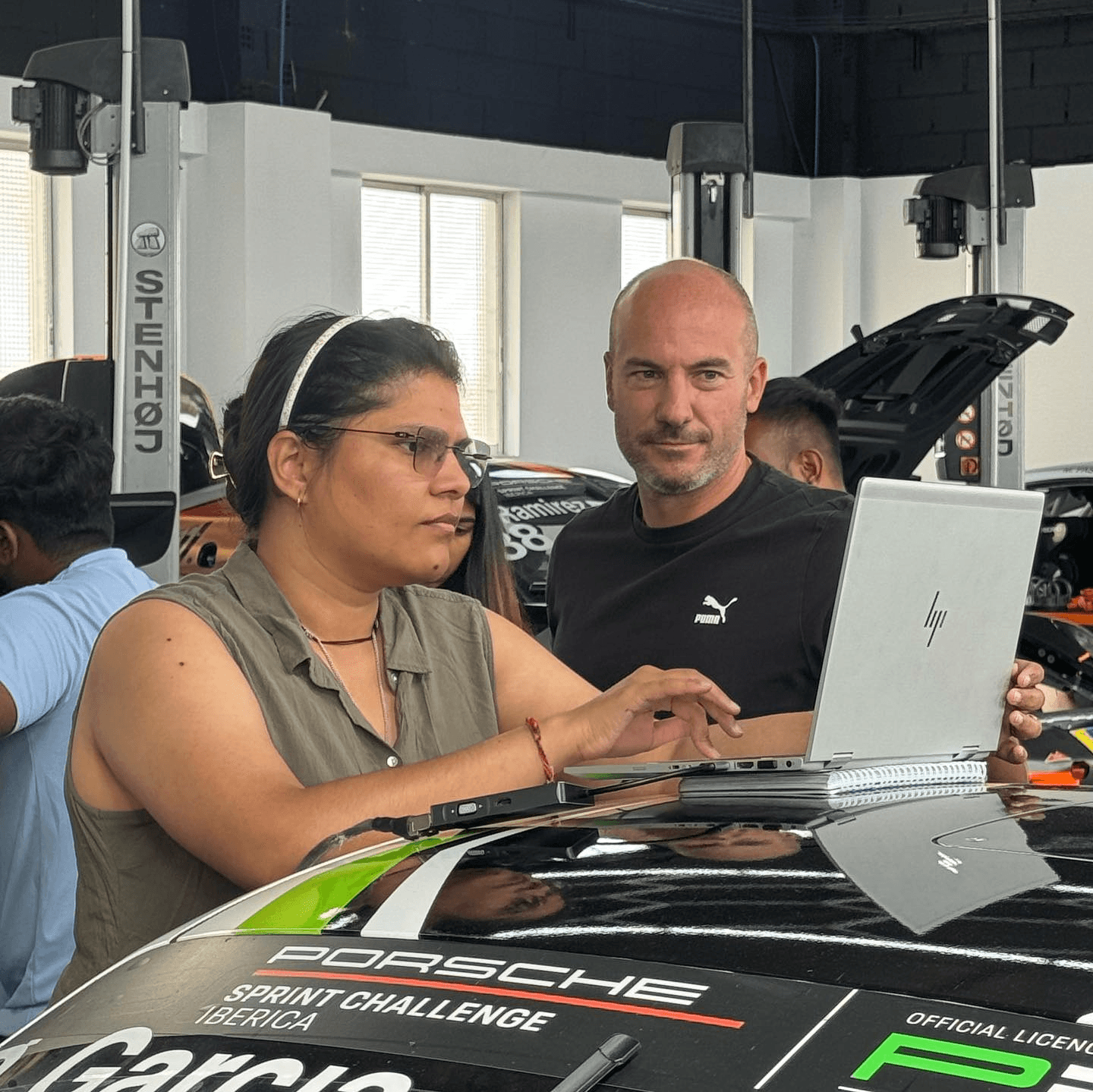
KP: Because I studied in Germany, I also had to deal with visas. I realised quickly that if I relied only on motorsport, I would face a much tougher battle and visa trouble. So I decided to get a pure engineering job and work in motorsport as a hobby.
I took a job as a simulation engineer for a company that develops engines for Mercedes-AMG. I do performance simulations for conventional IC engines, hybrid powertrains and full vehicles on different driving cycles and tracks. A big career moment was getting my first project on AMG engines. That felt like a holy grail.
Only recently I decided to go freelance. That was another major step. Before that, I worked with one team for an entire season and learned a lot. The first team was WS Racing. They have a girls-only project, and I was fascinated by that.
I applied normally with no connections, gave an interview, they liked me and let me join, but they had no position for an engineer. They needed a helper. So I helped them for a couple of races. I learned from the basics and gave my input. I said openly, this is what I want to do next season, and they were welcoming.
After two or three years, I was shadowing the race engineer. One race, she could not make it, and by then I had already been with the team for around three years, had a good rapport, knew all the rules and routines. I was asked to step in as race engineer. That was a very big and career-defining moment. It was my first race as race engineer and I completely botched it. I made a wrong decision.
I owned up to it. I thought my career was over. It felt like the end of the world because it was quite a scary situation. It was that bad.
That is when I realised it is not as easy as the previous engineer made it look, and how much responsibility you really carry. I was always aware of the responsibility, but this moment opened my eyes.
I am very thankful to the team that, even after this chaos, they did not lose hope in me. They sent me to a performance engineering seminar by a very prominent race engineer, and the team sponsored my place. After that, they again entrusted me with the position.
So both those races, the failure and the second chance, were career-defining for me. I learned a lot about managing pressure and stress and about not making bad decisions again.
Later, that team changed ownership, and the same people now run the Polo Cup. They asked me to step in there as well, which was fantastic.
The Polo Cup collaboration is also special because we are bringing more students in as interns to get them started in motorsport. There are many Indian students who do not get the opportunities I got. Maybe I was lucky, but I want to help create those chances.
This year, I have a few Indian students who are already studying in Germany, interning with me on the Polo Cup. I am really looking forward to this collaboration and hope we can expand it next year. It is a great opportunity for people who lack context and connections in motorsport, because unfortunately or fortunately, motorsport is a very connection-based industry.
HM: What is a common misconception about your role that you would like to clarify?
KP: A common misconception is that it is all fun. It is fun, but in a different way. People see Formula 1 movies or documentaries like Road to Le Mans. They are great, but they portray this role as heroic and full of adrenaline 24/7.
In reality, you have to put in a lot of grunt work. The data you get is not always ready to analyse. You have to work on it, filter it, maintain databanks, label things correctly. Races are not won only by a few heroic moments, but by unspectacular work you do day in and day out.
Students often tell me they want to be race engineers. It is not that simple. People make it look very glamorous, and it is at certain moments when you are in the heat of a race. But you can only be spectacular in that moment if you have done the grunt work beforehand and prepared different scenarios and setups to deploy.
Documentation is everything in motorsport. Rules change. You cannot rely on memory because you are dealing with many races, tracks and drivers. Documenting everything rigorously and accurately is one of the best helps you can give yourself.
HM: What advice would you give to aspiring race engineers?
KP: You must be persistent and able to keep going even when everything is falling apart and everyone says it is impossible. If you know something can be done, you work for it, regardless of external factors.
You need to put in hard work and be willing to face the ugly parts. There is a lot of talk now about self worth and not selling yourself short, which I agree with. But when you are starting out in a closed industry, you need to think long term.
You also need to think very technically. Every small thing under your responsibility should be done in a way that helps [the] common goal.
You need to be very team-oriented. You cannot be someone who always needs attention or wants to swoop in and save the day. Races are not won that way. They are won with teamwork where everyone works together like clockwork to bring the car home and place the driver on the podium.
On skills, you need to be good with data. Even if, as a race engineer, you will not always go very deep yourself, having that background helps. Knowing your way around sensors and electronics is a plus.
You also need to know how to stay calm and work under pressure. There is always a deadline. There is always a clock running in your mind and you need to make decisions against it. Not taking a decision is also a decision.
Lastly, you must be resourceful. In motorsport, in any role, you need the mindset to ask, if the thing I need is not available, what is the next best thing and how can I still get the job done. That is what you need.
-
Throughout the conversation, Kajal returned to a simple idea: success in motorsport is built long before the lights go out on race day. Preparation, teamwork, and continuous learning remain at the heart of her multi-faceted work.
Her journey also reflects the growing presence of Indian engineers on the global motorsport stage. By sharing both the successes and setbacks that shaped her career, Kajal offers a realistic picture of what it takes to break into the industry, while demonstrating that persistence, technical curiosity, and a willingness to start from the ground up can create opportunities far beyond the paddock.


