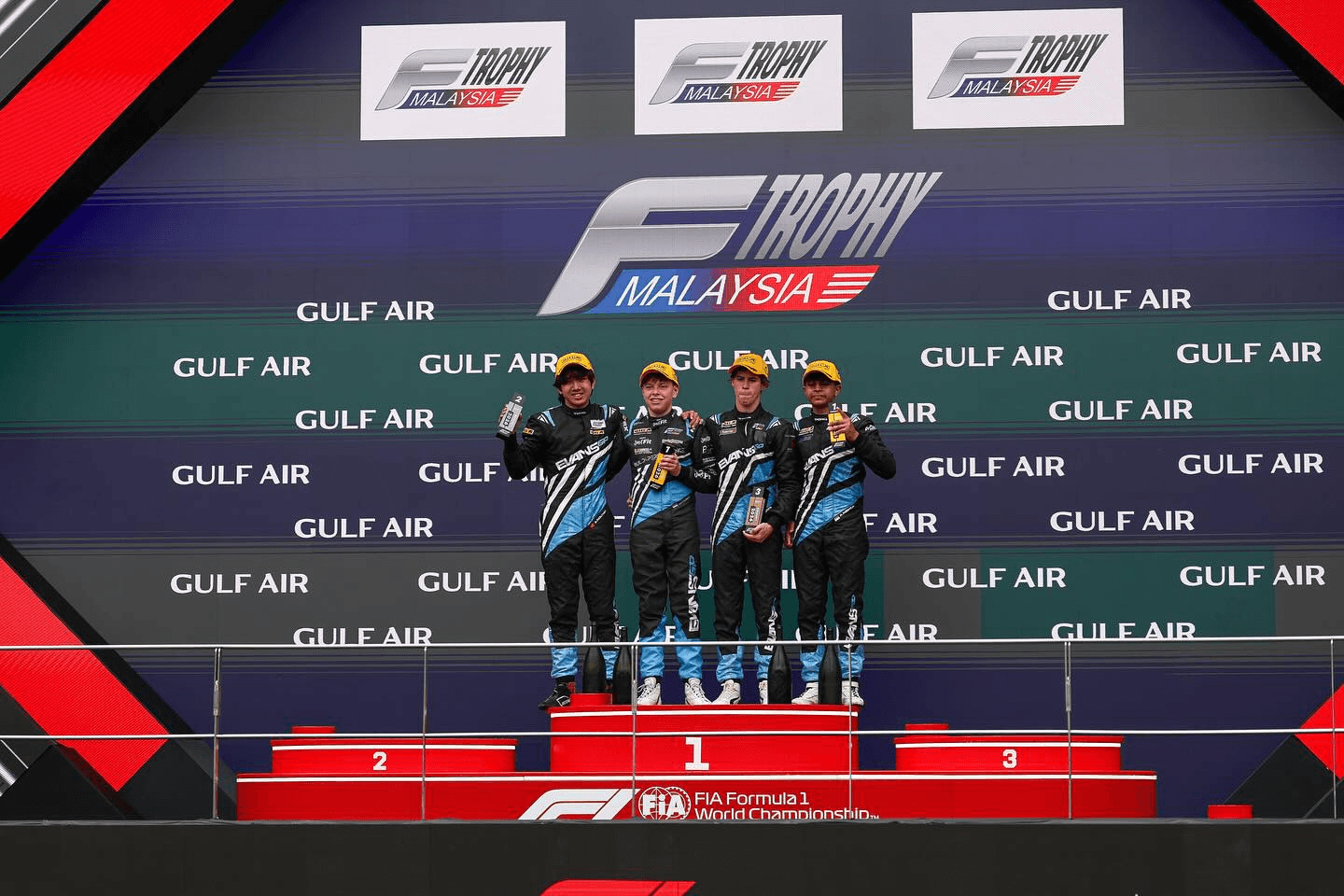
Drivers often receive the spotlight, but the performance required to compete at the highest levels of motorsport is built by an entire support team working behind the scenes. Modern racing demands far more than speed and technical ability. Drivers must withstand sustained G-forces, manage fatigue across long race weekends, recover efficiently between sessions and develop the physical resilience needed to progress through increasingly demanding categories.
As motorsport has become more professional, so too has the science supporting it. Performance coaches now play an increasingly important role alongside engineers, psychologists and driver coaches, helping athletes develop the physical and behavioural foundations that underpin success. Strength and conditioning, nutrition, recovery, injury prevention and goal setting have become essential components of driver development, particularly for young athletes navigating the transition from karting into single-seaters.
Few people have witnessed that evolution across multiple elite sporting environments better than Jasraj Singh Sidhu. Drawing on a clinical background and nearly two decades working across high-performance sports in Australia, Sidhu brought that multidisciplinary experience into motorsport through Hintsa Performance before joining More Than Equal as a performance coach. There, he works closely with young drivers to build the physical capacity, resilience and habits required to compete at the highest level.
Speaking with Hairpin Media, Sidhu discusses why the fundamentals remain the biggest competitive advantage in modern motorsport, how performance coaching extends far beyond the gym, and why building great drivers begins with building better athletes.
HM: Could you tell us about yourself and how you found your way into motorsport performance coaching?
Jasraj Singh Sidhu: In terms of my background, it's been roughly 15 to 20 years of providing a variety of performance services, both domestically here in Australia where I'm based, and also internationally, as a sports physiotherapist, strength and conditioning coach, and rehab specialist. I've held various roles, from Head of Physiotherapy to Head of Medical to performance coach, within various codes here in Australia, from professional soccer to rugby league, and by natural extension, into motorsport.
In motorsport itself, what led me to it was probably about five or six years ago. Having been a fan of motorsport for a very long time, and having grown up in the era of Michael Schumacher, David Coulthard, Raikkonen, and Hakkinen, I was always a fan growing up. I always enjoyed the speed, the power, [and] the skill elements. About five or six years ago, as I was working clinically and in the sporting sector, I came across a company known as Hintsa Performance, and they had a very large performance-oriented presence in motorsport, and they had these individuals called performance coaches.
The more I delved into the company, what they did, and their holistic approach to performance, the overall athlete, and the person behind the athlete, the more I got [into] that as an interest, and later on [pursued it] as a career pathway. It was one that allowed me to get a very in-depth view of the motorsport world.
[That] led me to my relationship now with More Than Equal, which is looking to support females in the motorsport space, from their development to hopefully a professional career pathway, towards one day, hopefully, an F1 champion. It's extremely exciting work and extremely rewarding work.
I get to work with some phenomenal people, both across Hintsa Performance and More Than Equal, and of course the young drivers that we get to help develop and push into the future.
HM: What does your role as a performance coach involve, and what does a typical day look like?
JSS: When people think about a performance coach, the first thing that generally comes to mind is physical preparation. With this cohort of drivers, particularly getting them at the young ages that we get, that is a big pillar of the programme itself.
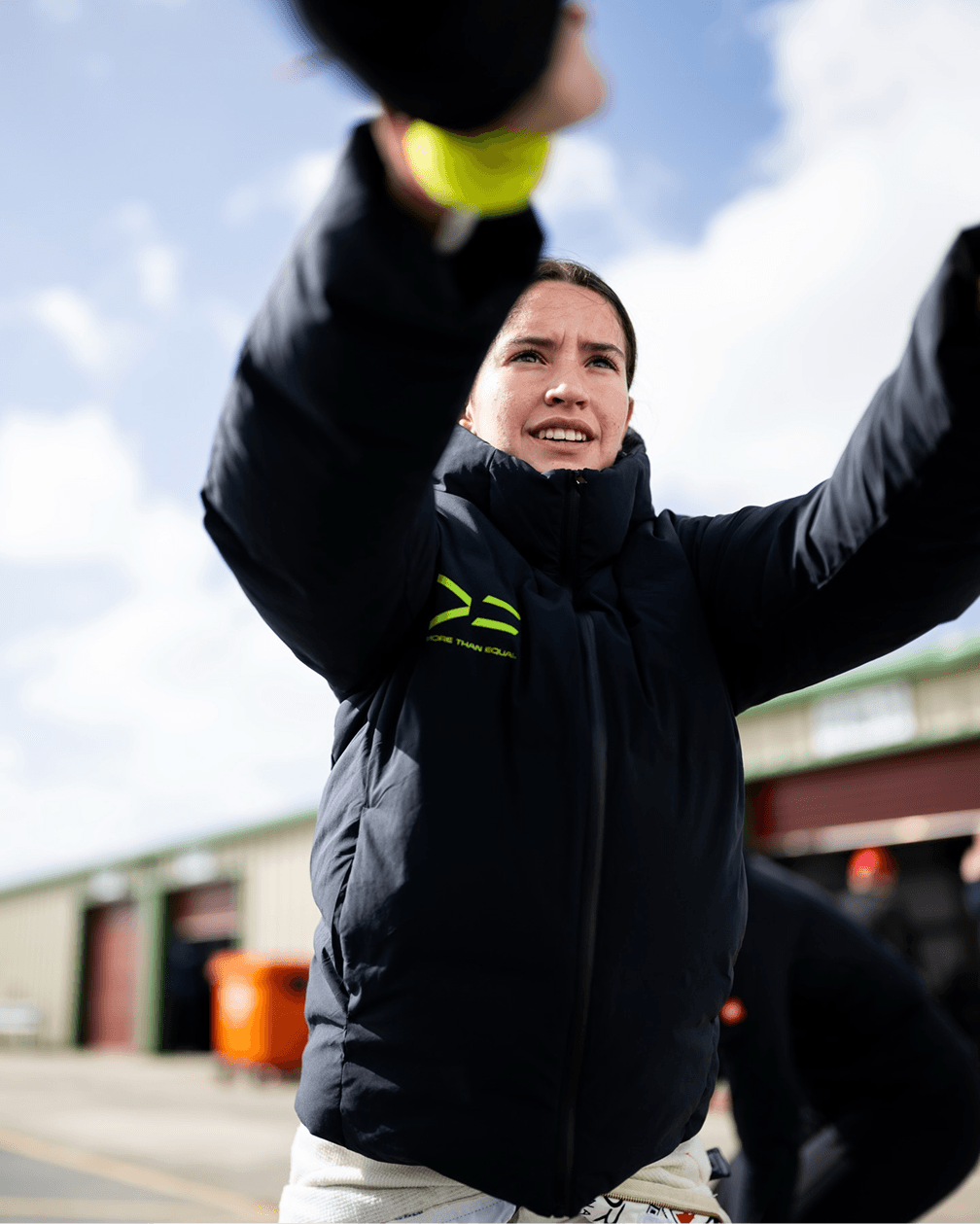
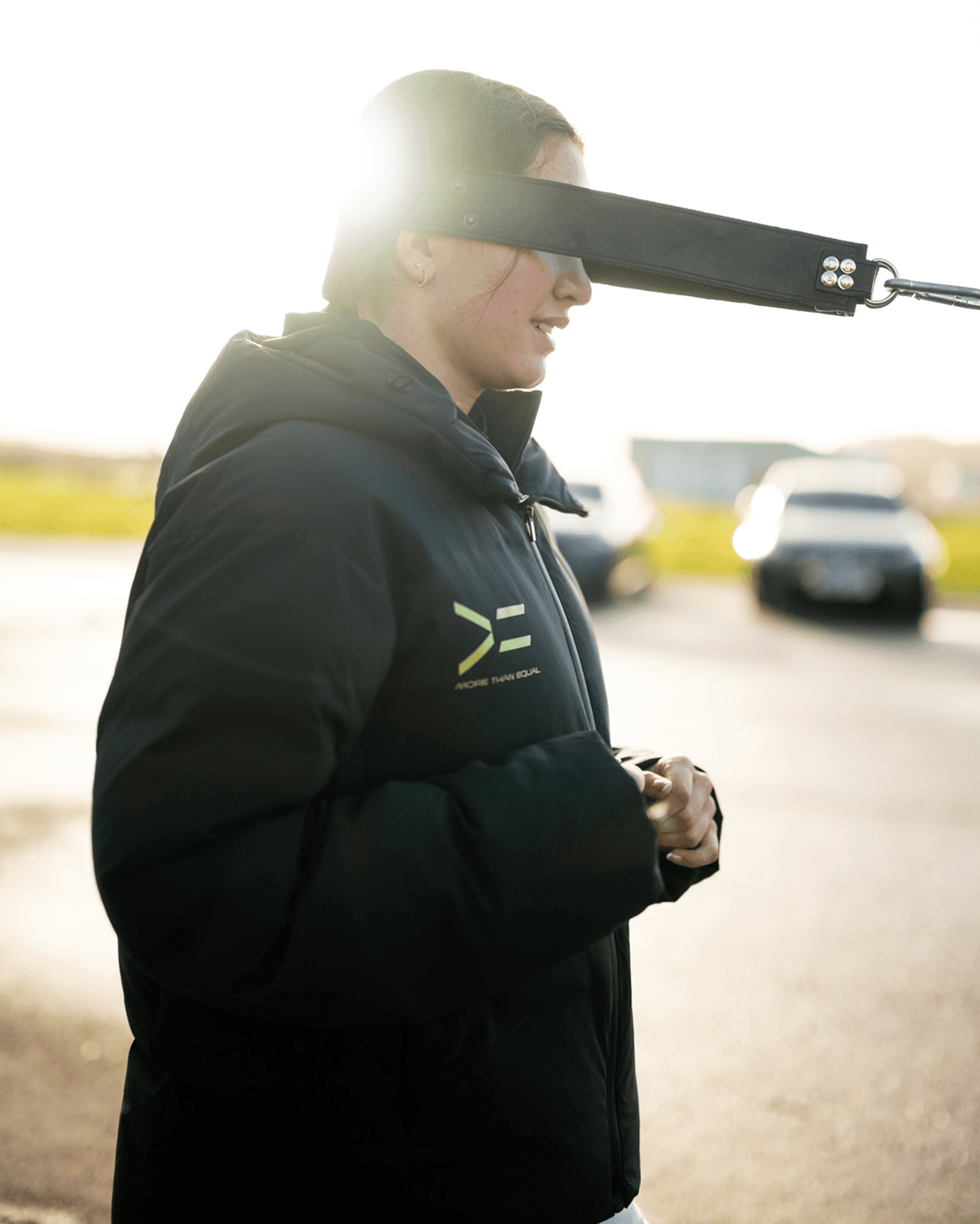
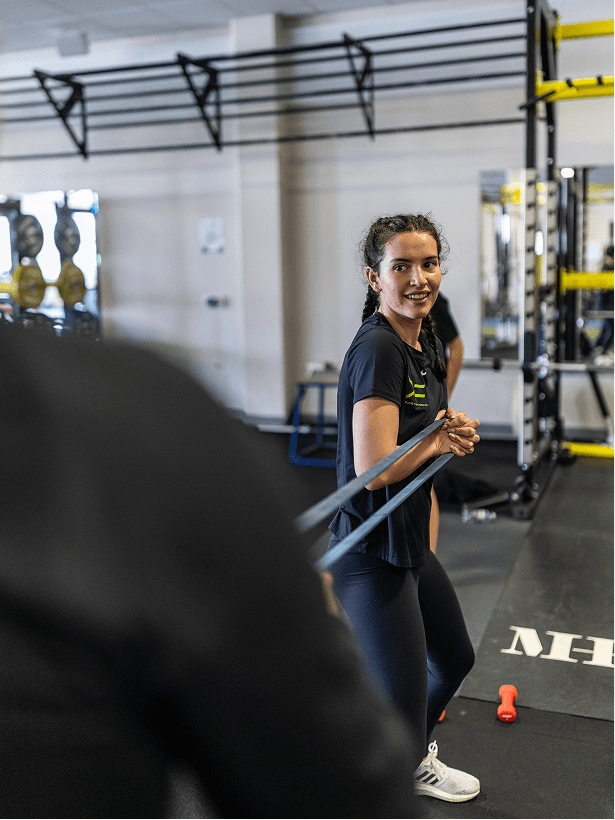
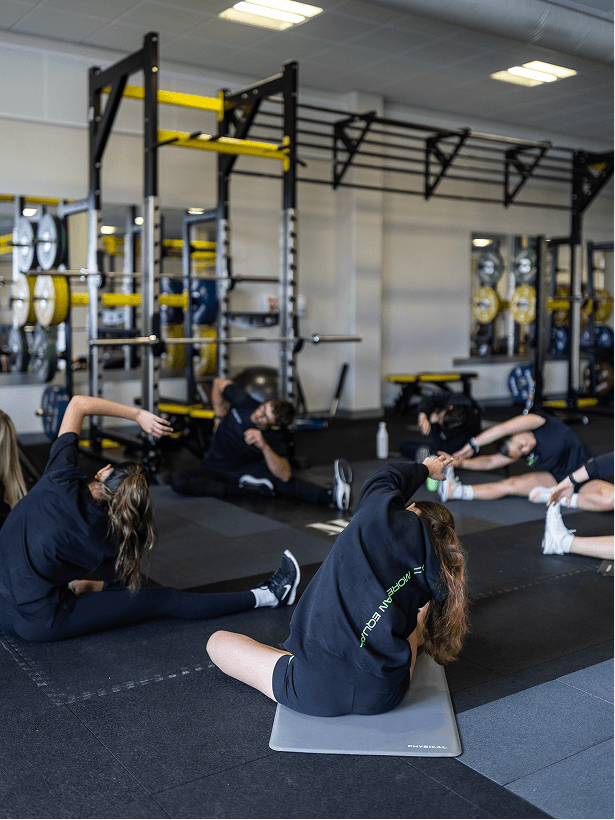
From my side of things, it's the physical preparation in terms of the conditioning, the neck endurance, the cardiovascular capacity, being able to tolerate heat conditions, and sustaining the G-forces that they'll be subjected to as they progress in the sport. That's first and foremost, but along with that, it's a very holistic programme, where as a coach, you're also looking, depending on your background – and myself with a physio-medical background – at things encompassing injury prevention.
Obviously it's a sport that can have a lot of traumatic injuries, but also just the accumulation of what drivers are exposed to on a daily and weekly basis, and through a season. So it's about how to mitigate injuries and manage their load with the driving schedule, depending on how chaotic and how condensed the driving schedule is, and where training outside the car fits into that in various facets.
A lot with that comes into the less glamorous side of things, which is the documentation. It's a very essential part, tracking how the drivers are progressing from a numbers standpoint, from a psychological standpoint, from an emotional standpoint, and goal setting. Through the Hintsa programme and through More Than Equal, we use SMART goal setting, so that the drivers are very clear on what they want to achieve. [That way,] we're clear on how we can best facilitate them achieving those goals.
Along with that would be the obvious race weekend support. This can be anything from preparing the athlete physically for the race that's at hand, helping to manage fatigue, their recovery, their nutrition, and a lot of times, it's a case of just calming the nerves. [The biggest] part of leading into a race weekend, [and] particularly the race weekends themselves, is keeping the drivers relaxed, keeping them calm, and really being there to support them in whichever way needs to be done.
The last part I'd say is the communication and education side of things. When you're working with the drivers, and possibly with their families as well when they're younger, their team at large, and multiple stakeholders, it's important to formulate that communication across the board: being clear, concise, [and] consistent. But with the drivers themselves, it's the large education piece around performance behaviours and habits.
HM: How do you work with More Than Equal, and what does your role look like in supporting its drivers?
JSS: More Than Equal itself is a very unique programme. It's one of the first of its kind in supporting females in a developmental sense, and really giving them the support that females in the industry just haven't had. More importantly, it's the structure in which it's provided. I currently support one of their drivers, Lana Flack, within the development programme. Our objective is not solely to have more females in that space, but ultimately to have a female that's going to win and be successful in that space, and that's the overall vision of everybody involved in the project.
So, my job within that, alluding to the previous question about what I do as a performance coach, is to prepare her within those SMART objectives and the physical development side of things. Within that, producing the training and conditioning components to help her develop physically to tolerate the demands of the sport.
It's not just supporting the physiology, [but] also helping her develop as an individual within the sport, and helping them grow. Because as a performance coach and a driver, you build a very close relationship, and so you become a large outlet. So it's a structured pathway aiming to develop female drivers with genuine top-level potential, considering the sport has historically lacked that.
It's very much, for me, an intersection of my clinical experience working in various professional sporting environments, coaching, and also a lot of the individual consulting work I do, and tying that all together.
HM: Has working with young female drivers changed your approach, or do the fundamentals of coaching stay the same?
JSS: I think the foundational methodology of strength, conditioning, recovery, injury prevention is pretty consistent. Good physical preparation is just good physical preparation. In large part, from other areas that I've worked in, certain components of performance are very [much] bedded into programmes and into the culture and history of the sport.
There's a huge potential to really influence and develop young athletes by implementing some of these processes that have been tried and tested in various other codes and sports. It just comes down to the individualisation of the athlete that's in front of you.
I suppose the large thing, particularly in a development programme like this, is you're getting athletes at such young ages that don't have that training history, [and] you have to account for that. You're really starting at the fundamentals, just like you would for any young individual starting to introduce themselves to training, the gym, strength work, and cardiovascular work.
HM: Are there any unique considerations when coaching female drivers, particularly from a physical performance perspective?
JSS: At the end of the day, there are unique male and female differences in terms of the way you might approach certain things, the language that you might use, the way the communication styles work. Having worked with primarily elite-level male athletes, it was very different when I first met my driver, who was a 13-year-old female, and she's taught me a lot about how to deal with my own daughter, and things I'm probably going to expect as she gets older.
The professional approach doesn't really change, in my opinion, whether it's a male or a female. It's understanding that potentially you have to adapt your communication style, or you have to adapt certain expectations, but not based on gender, more based on personality.
The very unique thing about motorsport is that it's a sport where it's direct competition between males and females, and that's the biggest thing. There's no other sport where I can think of where males and females are basically competing on the same stage, with no separation. When you think about it that way, and about males and females – males generally, just because of physiological and hormonal differences, can go into a gym and start a training programme and their bodies can respond, particularly upper-body wise, of which there's a huge component of strength that you require in motorsport. Not to say that it's easy, but there are certain things with the male gender that facilitate increases and progressions in that area that females take a little bit more time to develop.
Where you need to overcome that is knowing that at the end of the day, they need to be able to compete with their male rivals. In that sense, when you have a female driver, in terms of the exposure that they need – the volume and the intensity of training, the specifics of training – these are all things you need to think about. If you're already starting a little bit behind the eight ball, what can you do to catch up as quickly as you can?
What we find, particularly in my circumstance with my driver, is that with a structured programme, they can get phenomenal increases, to the point where they're very comparable to their male counterparts. [However,] once it reaches a certain point, they sometimes have to do that extra in order to maintain that parity.
HM: How has More Than Equal's research influenced the way you work with drivers in the cohort?
JSS: Interestingly, More Than Equal is doing a lot more research in the area of menstrual cycles, and how that affects things like performance and recovery, and it's actually a research area that's becoming a lot more common in a lot more sports because of the participation of females, not just in motorsport but in a lot of different codes.
It helps us in the end [to] find ways to become more individualised, more specific to the female athletes, so we can help optimise their performance and minimise those gaps as much as possible.
Within the context of motorsport, particularly when you're working as a performance coach, it's not the most comfortable thing for sometimes a 13-, 14-, or 15-year-old female to discuss, particularly with a male coach. But as a coach, it's our responsibility to build a relationship where our female drivers feel comfortable enough, whether the coach is male or female, to discuss those things.
In the context of performance, it's a very real-world thing that when females are going through their menstrual cycle, there is a level of fatigue that can build, there is a level of delayed recovery that can be impacted, and there is a level of injury risk that also presents itself, particularly in contact sports. As a coach, and as a performance coach, these are things you need to be aware of when you're drawing out a training cycle, and planning and periodising your month and your year – [accounting] that this female athlete may be going through this period in the month where these changes might be happening that we have to adapt to. That may mean extra recovery, may mean more of a deload that week, more maintenance.
Particularly in sports where there might be a contact-risk element, there [are] certain things we can do to adapt to that. In certain team sports you can't, because the season and training and games are going. Within the context of motorsport, [we have to think of] ways within the training week we can manage that, to mitigate the symptoms, and then from there, mitigate the risk of something having a longer effect than it should. We work with a team of performance coaches, doctors, and specialists that we can rely on to have these discussions if it's beyond our scope.
HM: What are the biggest mistakes young drivers make when it comes to fitness, recovery, and preparation? What should they be prioritising earlier?
JSS: I think first and foremost, what underlines everything is performance behaviours and performance habits. By no means is perfection ever the goal – I think it's a continuous process of working to improve – but I would start with performance habits and performance behaviours. How you approach your training, within the car and outside the car, how you approach your relationships with your coaches, with your teams, with your family, with stakeholders [matters].
As we know, a lot of motorsport is not just about the results you get in the car, it's about doing every little part as well as you can. When you feel you've done it as well as you can, what can you do to make those improvements, and having a good team of people around you to support that. Solidifying your performance behaviours and habits [is] where everything starts.
What I would guide and advise is, under good supervision and people that have good experience, the appropriate qualifications and know-how, start working through your neck strength [sooner], building that strength and tolerance in a safe and progressive way. That's where I'd put the emphasis. The earlier you can start, the better.
[Also] things like inconsistency with your recovery habits, your sleep, your hydration, and your fuelling. Sometimes I find a lot of young drivers treat their recovery as optional, as opposed to something that's trainable.
I suppose when we're young, we feel like we can get through everything and anything, and we're a bit invincible. The reality is, when we're young, it's the beauty of youth. But if you want to be in the sport for a long time, and you want your body to be able to withstand – particularly in motorsport – the demands of the sport, the sooner you start, the sooner you implement those behaviours and habits from a recovery standpoint, the better it's actually going to serve you over the long run. So it becomes really important.
Nutrition, I've already mentioned – sometimes I've found that can be very much an afterthought, and a lot of these things are just based around education. If you've never been exposed to it, never had the structured education around it, it's really hard for a 12- or 13-year-old to implement these sorts of things. If you're serious about the sport, and you're investing your time, your effort, and your finances in the sport, and particularly for the parents, it's an area that requires just as much attention.
If you're putting low-grade fuel in the car, it's not going to run very well. It's the same thing with the body: if you're putting low-grade fuel in your body, it's not going to run as well as it should.
Another big piece is the reflection piece, drivers actually reflecting on their performances, both in and out of the car, taking the time to document those things. We find that's very much a difficulty for a lot of drivers. They've just never been used to it, from when they're in karting and then transition to single-seaters. Documenting and tracking your progress is really important, just from an objective standpoint, to see where you've come from and where you've gone, because training without clear objectives can sometimes leave you a bit lost in terms of which direction you're going in.
The key thing to really emphasise, whether it's drivers, programmes, or parents, is you can never go wrong with doing the fundamentals well. That's 90 to 95 percent, and then all the other stuff is just the icing on the cake. Taking the time to learn, educating yourself, or finding people who are very well qualified and experienced that can guide you in those areas, is money and time really well spent, particularly in a sport where finding an edge in any area can mean the difference between being on pole or being at the back of the pack.
HM: Looking back on your career, what's been the most rewarding moment as a performance coach?
JSS: I don't think there's a specific moment. I think as a coach, in my opinion, it's just the journey. We're very fortunate to work with some really talented young female drivers. It's just seeing the journey of where they start, and as we piece the puzzle together, how they progress, and how they grow, not just as drivers and athletes, but humans as well.
For me, the rewarding part is developing that relationship with the drivers, with the families, with all the great people that I get to work with on a professional level, and knowing that we're doing something that's really moving the needle. That's not to say that it's not difficult, and there aren't hard times, and there aren't challenges.
That's just a part of it. When you're trying to break a status quo, these are all friction points that you're going to come across. When you believe in the journey and the end points, that in itself is rewarding – seeing these individuals become better versions of themselves, achieve things that they sought out to do, and at times thought weren't possible, and helping them through that. Being part of something like that is a reward in itself.
HM: Finally, what advice would you give to aspiring performance coaches starting their careers?
JSS: That's always a hard one, because everybody's journey – particularly if motorsport is your goal – is a variety of journeys that you can go through. I spent a lot of years working in different areas of physiotherapy [and] sports physiotherapy, in different codes, with a lot of different athletes. I was fortunate enough to have the opportunity to work as a motorsport performance coach, and then my journey with More Than Equal over the last couple of years.
If I were to break it down, keep your options open [and] breadth matters. You take something away from [your own pathway through multiple sports and multiple environments]. Having that experience and exposure is probably the strongest asset. Build that multi-sport foundation rather than specialising too early. I speak to a lot of young coaches, and that's just what they want to do. It's great to have that ambition, but I assure you [diverse experiences] help you in a lot of ways. People that can bring in a variety of experiences, a lot of teams and individuals look at that positively.
Build the business side as well. [Work] on your communication, your documentation, [and] understanding people. Build[ing] relationships is really important, and I'd probably say that's the biggest key thing – understanding people, taking the time, building relationships, and once people know that you've got that care factor, that's a large hurdle you get over.
There's a variety of ways to do it. Bring the ambition, bring the passion, gain as much experience as you can, because it all helps. It's what I've learned over my 20 years working in performance services: every experience helps build you to be a better coach, and you never know what you may need to draw upon, or what experience may help you in a situation.
For Sidhu, elite performance is rarely defined by one breakthrough session or revolutionary training method. It is built through consistent habits, thoughtful preparation and an unwavering commitment to the fundamentals, long before drivers arrive on the grid.
As motorsport continues to adopt the performance systems long established in other elite sports, the role of the performance coach is becoming increasingly central to driver development. Sidhu believes the greatest competitive advantages often come from mastering the basics, reminding young drivers that the pursuit of speed begins not with the car, but with the person preparing to drive it.
All images belong to More Than Equal