Motorsport has never lacked data. Every lap generates thousands of data points, from braking traces and steering inputs to tyre temperatures and aerodynamic performance. Yet when it comes to understanding the drivers themselves, particularly women, the evidence has remained remarkably limited.
Many assumptions about female performance in motorsport have persisted without rigorous scientific validation. Questions surrounding physical benchmarks, cockpit ergonomics, talent identification, and cognitive performance have often been answered through convention rather than research. As conversations around diversity in motorsport continue to grow, so does the need for evidence-based approaches that move beyond anecdote and towards measurable performance gains.
At More Than Equal, research sits at the heart of that ambition. The organisation has built its driver development programme around scientific inquiry, combining partnerships with leading universities, proprietary technology, and performance data to better understand how female drivers develop and how existing systems can be improved. Rather than simply coaching drivers within the current framework, the team is working to generate entirely new knowledge that could reshape the sport.
Leading that effort is Dr Fran Longstaff, Chief Innovation Officer at More Than Equal. With a background spanning academic research, behavioural science, and applied sport psychology, she oversees projects ranging from Formula 4 cockpit optimisation and physiological benchmarking to AI-powered talent identification. In conversation with Hairpin Media, Longstaff explains why meaningful innovation begins with asking better questions, and how research can become one of motorsport's most valuable competitive advantages.
Hairpin Media: Could you introduce yourself and share your journey into sports psychology and More Than Equal?
Dr Fran Longstaff: I started my career in academia, specifically sports psychology. I did a PhD in sports psychology and also trained as a chartered sports psychologist. I'd always straddled that academic and applied world, and I held lecturing positions for about 15 years, which was really good because that involves a lot of research, so you're honing your research skills in that environment. It's all peer-reviewed, so you really get the measure of good research and maybe not-so-good research.
I was also teaching, which was really good because for me personally, a big thing is: research is important, but can you communicate it in a way that people can use? So the teaching really helped with that.
I was always quite interested, when I was working in universities, in consultancy projects, working out in other environments. I worked a lot with rowing, and I was always interested in consultancy and entrepreneurial projects.
Then I think it was 2018, I had the chance to go to a mental health tech company as their head of behavioural science. That was a really interesting role because we did research. We had partnerships with universities and were evaluating the product we were developing. There, I also really got to grips with UX research, rapid research, agile, and that really resonated with me.
But I was always keen to ensure I had that sport connection. Then the More Than Equal role came up, I think I started there in 2023. That really was the dream role for me because it was sport, technology, and operating in a space where not a lot had been done. You can really be like a blank sheet of paper and just go for it. That was the journey.
I think having that grounding in universities and academia is really good, but then going into a company where you have to work really fast has refined that process a little for me.
HM: What does your role as Chief Innovation Officer involve?
Dr Longstaff: I suppose Chief Innovation Officer isn't necessarily a role that people would commonly see. At More Than Equal, we decided that was important because we were operating in such uncharted territory. We knew that if we're going to achieve this goal, we're going to have to do some really trailblazing things to move the needle, move the dial. That's why research and innovation [are] so important for us. We're always looking for those margins of improvement.
In terms of what my role looks like, well, no day's ever the same. Part of what I do is conducting research with partner universities. We have partnerships with Manchester Metropolitan University and the University of Portsmouth, and the projects we do with them are all about how we can enhance female driver performance. Every project we commission has to have that objective of making the car go faster for the drivers we work with, and those projects are really varied. One of them is looking at the effect of ovarian hormones on female driver performance. There's no understanding of that in motorsport, so we're doing that [to] optimise performance.
Another project is defining what "good" looks like at different stages of development, from karting through to F1, from a physical and physiological point of view. Because motorsport in general has very little research on drivers full stop, let alone female drivers. So as we were working with our drivers, we needed to know what the benchmarks were that they needed to be hitting in order to perform well.
In essence, we're laying the road as we're walking it. We test male and female drivers right from karting through to F1 to understand our drivers' trajectory from a physical conditioning point of view, and then we make changes if we need to.
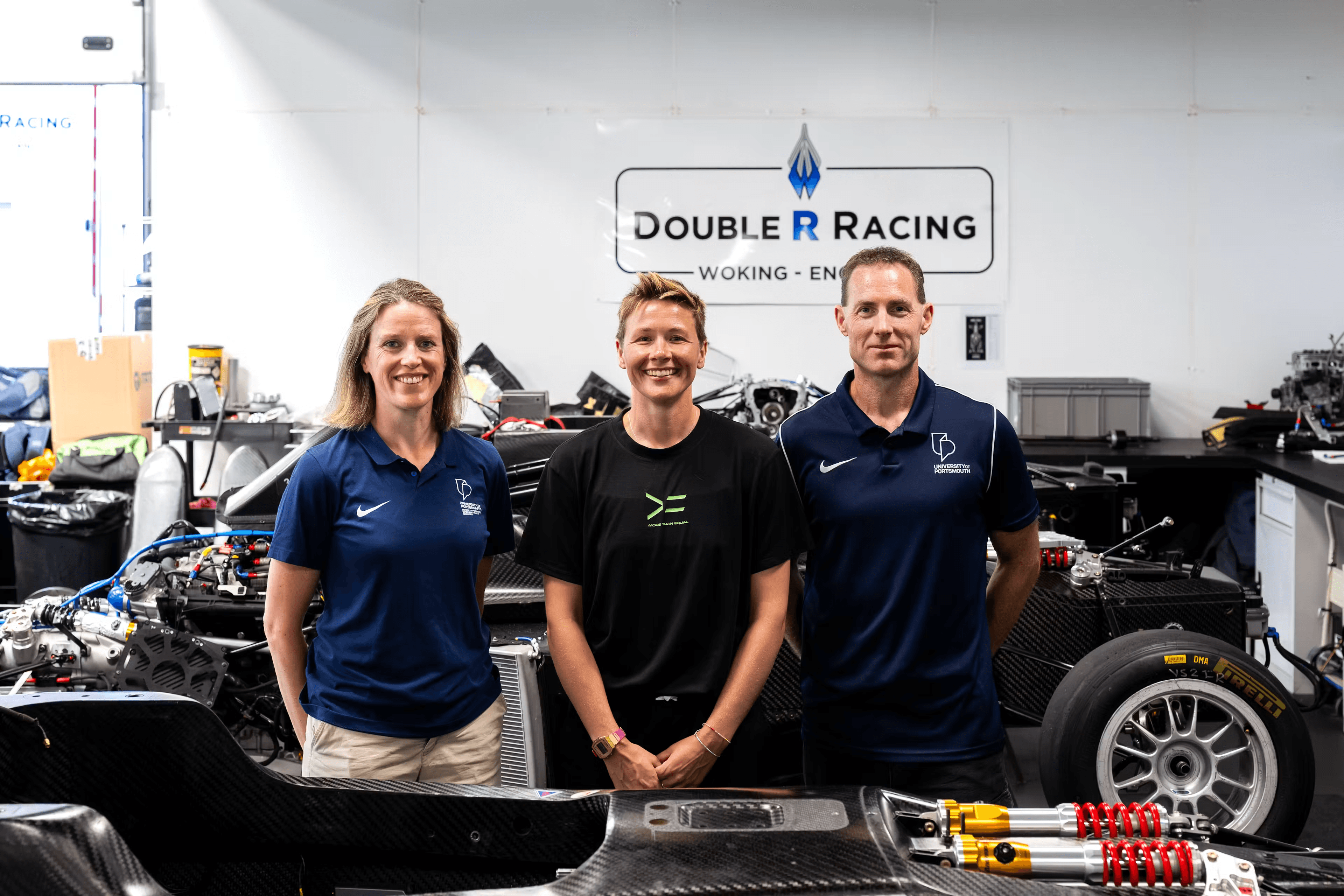
The University of Portsmouth project just kicked off, and that's looking at optimising the setup of Formula 4 cars for female drivers. Anecdotally, from our Inside Track report in 2022, we know that female drivers can have some challenges with the setup of the car. We're developing a mathematical model that runs through hundreds of thousands of iterations of car setup based on female driver anthropometry, and we can work out the optimum setup for the driver.
All of those projects are aimed at making the car go faster. The researchers we work with are really active in that, and I work with them every week, in contact with them one way or another.
We also develop our own in-house products. When I started at More Than Equal, one of the big challenges was actually understanding where the female talent was in karting. There's no central repository of karting race results. They're often in PDF format, spread across lots of different websites, and not gender- or age-marked. So we've developed a central repository, a data lake called FutureLap, that pulls in all of those race results.
We use AI agents to bring in all of those race results. We have multiple data points per race, and we're able to identify where the female talent is. That system also works for male talent. We use it to identify talent, but also to track that talent over time, and we've got customers who use the system as well.
So I suppose my role straddles research, and a big part is also putting in place the proper governance to do research. All of the GDPR, everything, I work closely with our data protection officer to put those structures in place. Because we're a startup, [those data protection measures] didn't exist [and] we had to put those in place. I'm also a product owner for the products we develop.
HM: What does a typical day or week look like in your role?
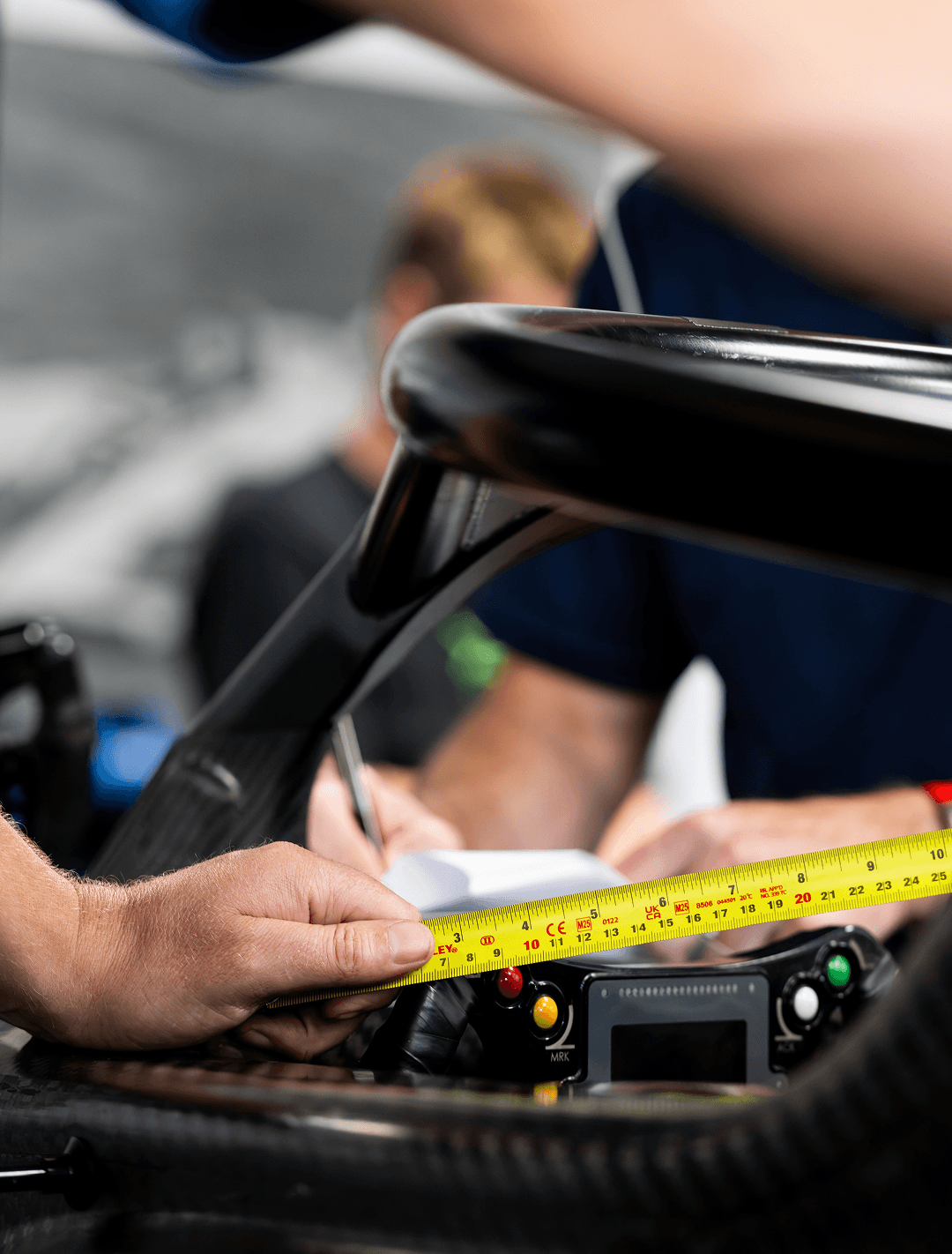
Dr Longstaff: It is a lot of meetings, but for me it's a lot of listening and observing. I think the best research or products come out of really understanding the problem behind the problem. Just last week I was in an F4 garage, measuring the cars and understanding the challenges in setting up drivers in the cars.
I spend a lot of time in product meetings, backlog refinement, grooming over a hundred different tickets at any point and deciding which ones we're going to build into the products. I work very closely with our developers, solution architects, and business analysts to define that.
I'll have regular meetings with our research groups, who are all over the place. And because we're a startup, there's also a lot of hands-on work. A lot of data runs through my hands, [and] I do a lot of analysis as well, because we're not a huge team. I think the beauty of startups, and they're not for everybody because they're constantly changing and evolving, is that you're constantly moving up that ladder between strategy and down into detail.
I really enjoy that, because I think your strategy can only be better if you're still in the weeds. So I spend a lot of time with the data as well [as] reviewing papers.
HM: Why is it so important for research and driver development to happen together, rather than separately?
Dr Longstaff: That's a great question, and it's a good observation that our research and data run right through the driver development programme. One of our philosophies is that every decision we make should have a data point behind it, so we really commit ourselves to that.
I think the benefit of that fully integrated approach is that you come up with better solutions and increase your chance of success. One of my big bugbears, for example, is that people will often jump to solutions before they really understand the problem, and that can be really ineffective and cost time.
If you take a little time at the beginning to understand, and then constantly evaluate and iterate rapidly throughout, you end up with much better solutions as you go on that journey, and you can evolve them. That's always been really important to us, and it's growing. We're seeing that approach get a lot of attention now because it's quite unique. People hadn't really seen it before, and then they see the gains being made.
So you'll have a period where it's relatively quiet while you try to understand, and then all of a sudden there are these really interesting gains being made. That's what we've always tried to do, sort of stealth into activity, and that's the way we work a lot of the time.
HM: What are the biggest research and innovation opportunities in female driver development, from optimising Formula 4 cars to understanding future performance?
Dr Longstaff: Where it started was often where a lot of research projects start. In 2022, as part of More Than Equal's Inside Track report, they wanted to understand what the experience of females in motorsport was. They did 70 interviews with different stakeholders in motorsport, and what they found was that quite a lot of female drivers can struggle a little with the car in terms of optimising the setup: the right belting, seat adjustment, pedal adjustments, steering wheel adjustments.
I was thinking about it for a while, and then, as part of another research project, we had a load of anthropometry data on females, like arm lengths, trunk lengths, leg lengths, and so on. I started to think, you could definitively start to understand where the pain points are if you have a big enough data set and the dimensions of the car.
If we have a population of 50 female drivers, what percentage can fit in the car, and what percentage can operate the car at the optimum level to perform. And then, with hundreds of thousands of iterations, you can understand, if I've got this driver who's this height, how do I need to set up the car for them?
That's where the project came out of, to definitively understand what challenges there might be, in cold hard numbers, and then how we can optimise the setup for the female driver. For us, it's not about suggesting massive changes to the cars – that's not our working area – but the setup of a driver is something we could have an impact on, working with their engineers to use our technology to help with that process. So that was the evolution of the project.
Something interesting about that project was, from the initial research being done to us getting to the point of doing it, that's been a few years of us working around how best to do it. These things can be incubated for a while to make sure that when we're doing it, we're doing it in exactly the right way.
The car has certain dimensions because of the regulations. What we're saying is every driver ultimately needs to be set up in there, so there'll be certain seat fittings, pedal adjustments, steering adjustments. There'll be men out there who struggle with that equally because they don't sit right in the average – they might be at the tail ends. Women tend to be shorter, so they sit more towards that end. That process can actually take hours to set up somebody. We could help do that in minutes, working out exactly what dimensions are needed for a driver to get the best lap time.
HM: What are the biggest opportunities for innovation in female driver development over the next few years?
Dr Longstaff: There's something on my roadmap I'm really interested in. If you see articles on social media about female drivers, you'll inevitably see comments underneath saying things like women don't have the neck strength to reach the top levels, they don't have the aggression, they don't have the risk-taking, and so on. We're already starting to look at the neck strength piece through the PhD that’s looking at the physical benchmark.
What we don't understand particularly well, and this is in motorsport more broadly, is from a cognitive point of view. What defines a good driver, and are there any differences between men and women in that?
The beauty we have in motorsport is that we have really high-end simulators where you can hook up a lot of equipment to begin to understand those things. So we're starting to do a bit of pilot testing, with a view to a bigger project, to understand what characterises good drivers from a technical and cognitive point of view – what part of the track are they looking at, what part of the brain is lighting up. It's going to be really interesting, and [if there] are any gender differences there, and if so, how we work with those.
For me, that's where the big opportunity is now, because we have these unbelievable simulators, and we can layer some additional equipment on to really start to understand the drivers. There may be drivers out there who aren't yet on the podium or hitting the lap time, maybe they haven't had the same amount of time on track, but they actually have the makeup for a really good driver with a bit of intervention. That's where we're headed next.
We're already starting to think about what equipment we'd use: eye tracking has been out there for years, but we're starting to look at fNIRS technology, which is based on MRI technology, so you can see which parts of the brain light up. It's much less prone to noise than EEG measures. When we're thinking about unlocking where the talent is, and how we work with it and improve it, I think that's where the next opportunity is.
HM: How do you ensure research doesn't stay on paper, but becomes something the sport can actually use?
Dr Longstaff: For me, a big part of More Than Equal's legacy is the products and innovations we leave behind. With all the research we do, I'm always thinking about how we productise it now, so the world can benefit from it. There is incredible research out there that never sees the light of day because there isn't necessarily that intersection between product development and research.
All the things I'm talking about – the car setup, the talent ID system, eventually the brain scanning work – we should always be looking to productise these and offer them as services. That's where the world becomes aware of it and can take the knowledge we've developed on the journey and pass it on to the next stage.
It's a great point. I think the average academic paper gets something like seven reads. Some get hundreds of thousands, maybe millions, but some never get any airtime. So I always think about how we can avoid that, and FutureLap is our [way] of productising these things. That's how we're doing it.
HM: Looking back on your career, what has been your most memorable or defining project?
Dr Longstaff: For me, a lot of the things that happened previously were building towards the More Than Equal role, if I'm really honest. All the things I've learned along the way have now enabled me to put in place a system for doing research and building products that's really efficient.
When I first came out of academia, the way of communicating in academia is actually quite different [from] how you communicate in other organisations outside of it. I had to learn that quickly, the way of communicating when there are differences of opinion. It took a while to get there, and now I'd say I'm in a position where I'm able to do that quite well.
That's led to the project I'm proudest of is definitely FutureLap, the talent intelligence platform we've built, because it's been a really difficult project. Every week there's a new challenge. You'll be looking at a race booklet, think you've got your AI agent set up, and then you see a slight variation and have to keep iterating and evolving it.
Starting to see other people use it and value it, and the potential it has for a young driver who might never have traditionally been picked up, for me that's exactly what I always wanted to happen. [It] would increase opportunity for people outside of those marquee events, like the FIA Euro Karting Championships [and others]. You could have a driver in a karting series in Middle America, for example, who might never have had that opportunity, and [now you're getting] to a point where that's possible. So for me, that's the proudest achievement, both because of the technical complexity and the greater good it does for the sport.
For Longstaff, research is only valuable if it changes outcomes. Whether identifying overlooked talent, optimising a Formula 4 cockpit or developing new ways to understand driver performance, the objective is always the same: turn evidence into practical tools that improve opportunity and performance.
As motorsport searches for new competitive advantages, the next breakthrough may not come from the car alone, but from a deeper understanding of the person behind the wheel. By combining scientific research with real-world application, More Than Equal is demonstrating that innovation in driver development is more about asking the right questions, challenging long-held assumptions and building a stronger foundation for the future of the sport than simply gathering data.
All images belong to More Than Equal