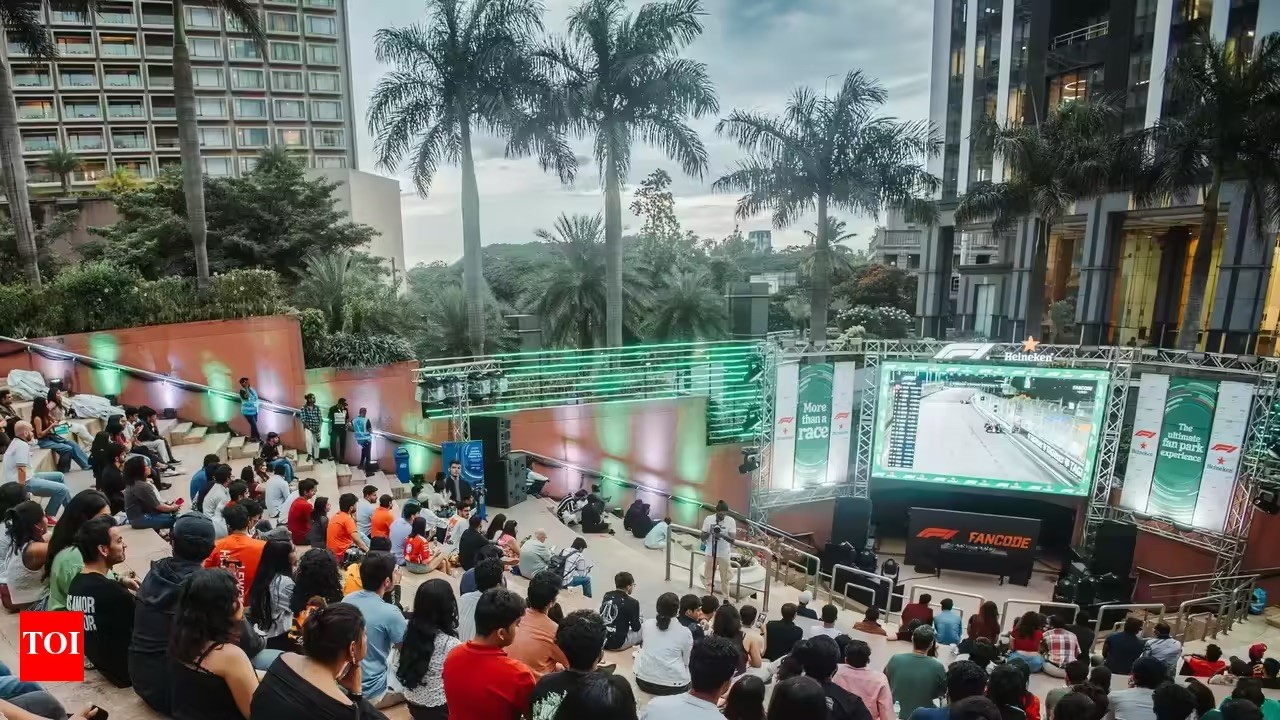
Founded in 2019 by Yannick Colaco and Prasana Krishnan, and now boasting over 220 million users, FanCode has used digital-first infrastructure and flexible pricing to turn niche fandoms into durable audiences.
Motorsport sits at the heart of that story. Through multi-year agreements to broadcast Formula 1 in India, alongside coverage of series like DTM and MotoGP, FanCode has effectively become a primary destination for motorsport fans in a country where the sport once struggled for a stable home.
In conversation with Hairpin Media, co-founder Yannick Colaco discussed the origins of FanCode, the logic of building a sports-only digital platform, the responsibilities and limits of media in growing motorsport in India and Asia, and the advice he would offer to young people looking to work at the intersection of sport, media and technology.
Hairpin Media: Could you introduce yourself and share what led you to co-found FanCode?
Yannick Colaco: Yeah, sure. Thank you for having me and initiating this conversation. I’m a massive sports fan. I grew up watching sport and playing sport, and I’ve been fortunate enough that my entire professional career has been in the media and sports space.
In my last role, when I was working with the NBA as part of the international leadership team, one of the things that I was always keen on, and I saw, was that sports fandom in [India] is growing immensely. But the platforms or the ability to serve these sports fans, this growing fandom, the amount of innovation required [or] access required was something that I felt was happening at a very slow pace.
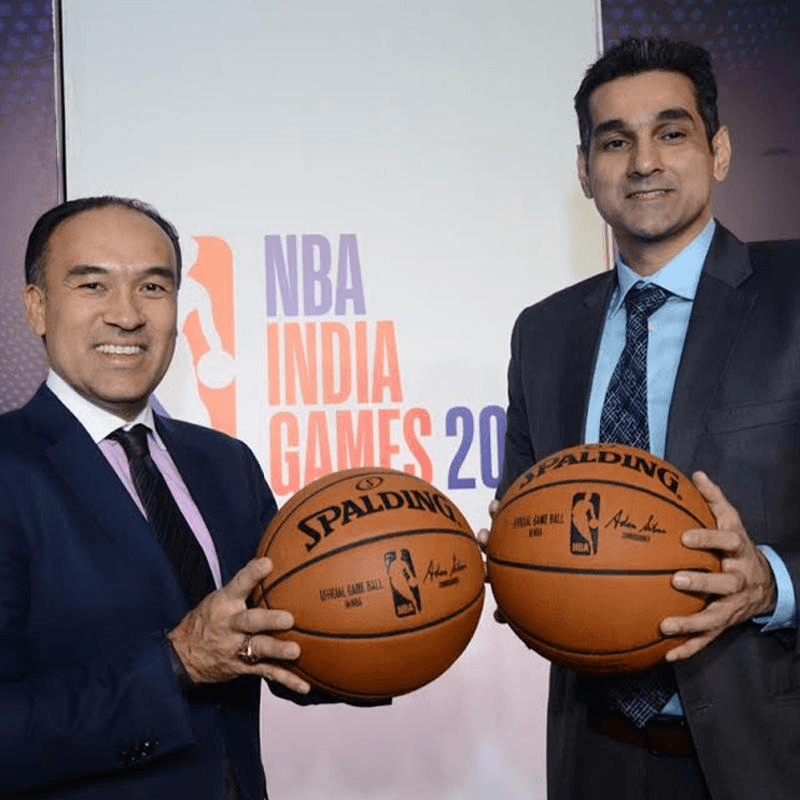
So I thought this was an opportunity for me to combine that passion, to try and solve sports fan problems, and work with a bunch of people who have a similar passion to build. That’s how we decided to build FanCode. As you know, it’s a digital-first, sports-only platform. It kind of zigs on the trend, or zags on the trend, where everyone’s trying to build entertainment platforms and bouquets of content. We basically wanted to build something for sports fans and by sports fans. Everyone in the organization is a passionate sports fan themselves.
The other thing was [that] we wanted to use technology and be a digital-first platform to be able to solve the problem that we were trying to solve. That’s really the history or the genesis of how or why we started FanCode. We’re obviously extremely fortunate and thrilled that we’ve been able to grow to where we have, both from a product and consumer base, as well as from a team which is extremely passionate and enjoys doing what we do in the realm of sports.
HM: At what point did you realise the traditional sports broadcasting model wasn't the right approach, and that FanCode needed to do something different?
YC: I don’t think there’s a right or wrong. It’s just that in building what we were building, we were very clear that we wanted to build something which catered to unmet needs of sports fans.
And the only way was basically access. How do you access content across the spectrum of sports? How is your experience deeper? How are you innovating in terms of how you watch, how you listen, how you follow sport?
What’s very clear is that for us to be able to provide solutions on this, we had to be digital-first. Because there are restrictions in terms of how you can actually utilize linear technology. Linear television technology is constrained by two major things. One is it is linear by definition, so it’s a one-way kind of communication. And the second is that it is bandwidth restricted. If you want to show one game and you have one channel, that’s it. If you want to show a second game, you need a second channel. You want to show a third game, you need a third channel.
We envisioned this platform which would basically be showing hundreds of games a day, which is what we kind of built it for. And for us it was very clear that digital was the only way to be able to actually achieve that, along with all the innovations that we wanted to build around it.

HM: FanCode covers a wide range of sports. How do you keep fans engaged without losing the depth of their experience?
YC: I think that when you look at sport as an entertainment piece in time, a lot of platforms, not just in India, worldwide, look at a sports event as part of your weekly or annual entertainment consumption. They target the audience, and they’ve been very successful in doing what they’re doing, so kudos to them.
But they look at, “okay, on Sunday evening there’s a game, Monday evening I’ll put a show out, Tuesday evening there’s something else.” It’s basically [about how] you keep an audience with myriad interests entertained on a platform.
We’ve gone the other way, which basically says we just want to build for sports fans. And I think the way we address that is that with the technology we build. The personalization engines that we’ve built, we want to make sure that sports fans who come onto the platform get onto the content that they love as soon as possible, but also start discovering other content that they may like.
I’ll give you an example. On a weekend in Formula One, at the same time of the race, we had cricket going on, we had some football international friendlies, we had MotoGP a few hours around it.
The idea is that the consumer who actually comes in to watch that Formula One race or qualifying wants that content as quickly as possible. So there’s obviously a lot of content on the platform at that time. We use personalization, and the technology and the software that we have built allows us to personalize experiences. Whereas if [one person] comes for a cricket game, [another] comes for a Formula One race, and someone else comes for a kabaddi game going on at the same time, the reality is that the experience that each of us gets is unique [and] different, because it helps us achieve what we’ve come to the platform for.
That’s what we’ve invested a lot in, in the past with machine learning and now obviously with AI: to be able to personalize experiences. One is to get to the content that you want if you’re high intent. And the second is also to allow you to discover more.
A lot of our Formula One users, we also expose them to Formula Two, Formula Three. We also expose them to some MotoGP to say, “Hey, this is something that you may like.” We are able to do that through the fact that we are a digital-first platform and we use technology as the platform to be able to communicate with audiences.
I actually think that most of our audiences are segregated by sport. A lot of our audiences who come only for Formula One kind of stick to motorsport most of the time. So you can get them to discover a little bit more around motorsport. Very rarely am I going to be interested in showing that Formula One viewer a kabaddi event.
So technology and what we’ve invested in our product allows us to be able to give all our users unique and customized experiences. And I think today, with the rapid adoption of AI and even on our platform, we’re really steering towards being an AI-native platform rather than being an AI-augmented platform. I just think that we add so much more value to users, to be able to go really in depth into what they love and discover some other things that they may like.
HM: What lessons from building audiences for sports like the NBA have influenced how you approach growing Formula 1 and other motorsports in India?
YC: I just think that with all sports, people genuinely have in the past underestimated the amount of core sports fandom that exists in this country. [Maybe not as much now, but] I think the challenge is, given the vastness of this country and the density of the population across the country, finding these niches or finding these groups of people is not easy.
That’s what again technology helps you with, because you’re able to market, you’re able to target, you’re able to re-engage with customers who actually show you some level of interest. You’re able to do a bunch of research to be able to build products for them. So I think we’ve leaned into that and taken it more as our calling. We exist for sports fans, so we’re going to constantly try to figure out how we get more sports fans on our platform.
That’s essentially the core thing about doing that, being able to get content which is relevant to them or may become relevant to them. The second is how we constantly innovate, how we constantly build a better experience so that consumers or sports fans who come onto our platform just get more and more reasons to watch games.
When we started La Liga last year, one of the big challenges we always had was [the timing of the games.] How do you get consumers to actually watch? And I’ve always believed it’s not about La Liga changing the timing, it’s about us giving fans a reason to watch.

Some of it you can’t control, because you can’t control what happens on the pitch, right? That’s the beauty of sport. You can control narratives, you can create storylines, you can create notifications, you can do a bunch of things, create communities around it. So that’s really our role.
Sports federations globally, all of them are invested in building their sports in India. Our role is to work with them to amplify that and bring the information that we have from our local knowledge base with customers, to be able to say, “Hey, this is how we can actually build together.”
HM: Where do you see the next phase of growth for motorsport in the Indian market?
YC: As I said, motorsport is very, very aspirational. It’s brought in a lot of young audiences. I love the fact that we do a lot of work in communities, especially in all sports: in football, cricket, tennis, golf, and obviously in motorsport. I have never seen the level of female fan participation in motorsport across any other sport.
That’s really, really encouraging. And I think that just gives you double the audience, to be able to build on. And again, that’s something that Formula One has contributed a lot to. We’ve got to keep helping that to grow.
Working on making the communities more accessible, bringing more people into the motorsports community, whatever we can do to help, is important. I genuinely believe that for everything we do on digital, getting more offline activations together and getting fans to come together to watch and have those conversations is something that, despite being a digital platform, we are trying to help with.
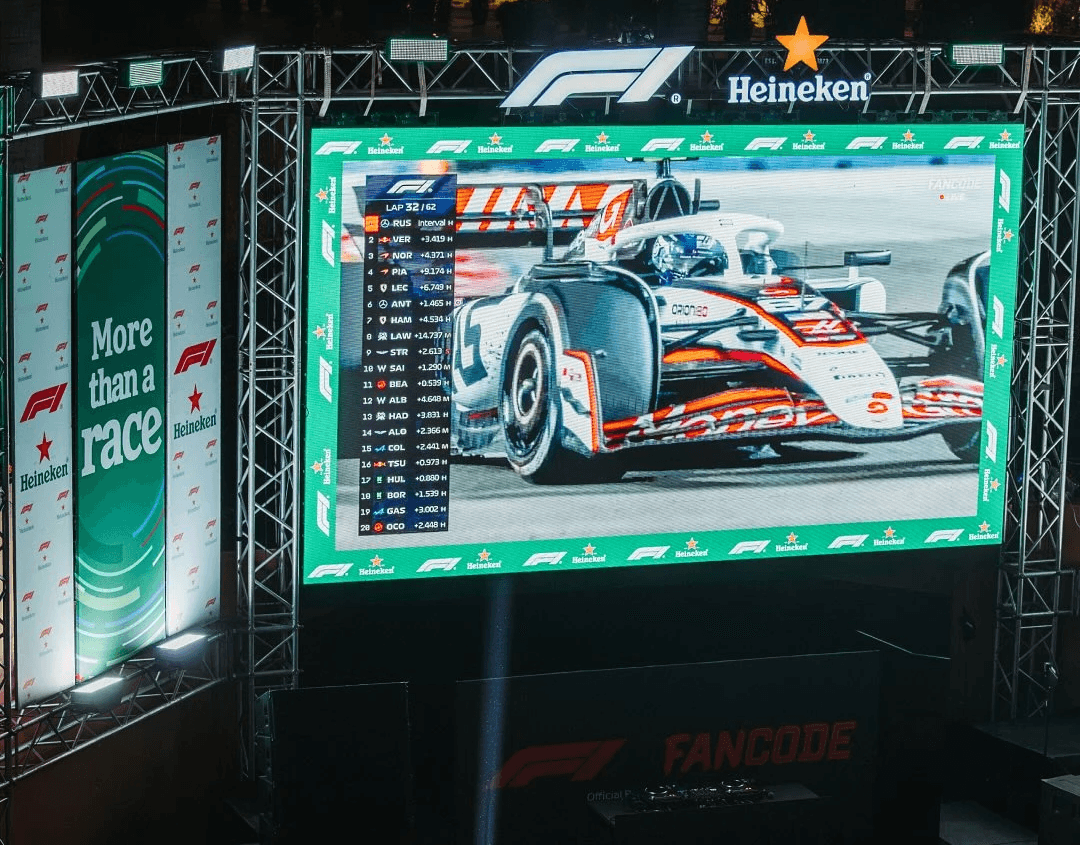
We do screenings across the country [and] work with community fan clubs. So it’s about trying to create more accessibility [and] great environments for more fans to come and sample. Then figure out how you can actually help them graduate into the system.
The reason we did Hindi and Tamil commentary was essentially to try and simplify the understanding for people whose first language is not English, but who are kind of getting to experience Formula One for the first time.
Let’s be honest, most Formula One fans want the global feed with commentary, but there are a lot of people who want to sample Formula One. For them that global feed is too overwhelming. It’s too technical, [there’s] too much happening. So we’re trying to simplify that.
We’re trying to do other innovation initiatives, including watch-alongs, to simplify it for audiences. And when you talk about our role in growing the ecosystem, it’s a very important balance that we have to make sure that while we are expanding the base, we do it in a very responsible way for the sport.
I don’t believe in making it frivolous, which some people do, in the sense that you have to respect what your core fans are in for. So we have to make it fun but not frivolous. We have to make it easy to access, but not cheap in the way it’s positioned. That’s something that we have to constantly balance. Being true to the sport, being true to what the core fans kind of build and what they’re passionate about, is something that we constantly remind ourselves of.
HM: Have you noticed any differences in how motorsport fans consume content compared to fans of other sports?
YC: It’s interesting. I think it’s in degrees, but in terms of general behavior, if you were to look at it on an average, the most important thing is that there are lots of commonalities.
The most important commonality is everyone wants to be a part of that tribe. You want to know that there are other people who follow what you follow, and you want to be able to have those conversations with people.
The other thing is that everyone wants to be heard. That’s a really interesting kind of observation across communities. There’s a lot of pride in terms of following a team [or] a sport. And there’s a lot of desire, because you’re so passionate about it, to have your opinion heard and to have a platform to talk about your opinions.
There are lots of commonalities, obviously in terms of the types of audiences. For example, [in] cricket, most of our consumption is on mobile devices. In Formula One and football, a large double-digit percentage of our consumption is on connected TVs. So how you consume [the sport] differs. But we’re building and trying to figure that out as we go along.
HM: What advice would you give to someone looking to build a career in sport, media, and technology? And in the generation of AI and potential AGI, what do you think gets wiped away?
YC: So I think what compounds is learning, right? When people talk about technology and media and sports, whatever you learn, you don’t have to learn it in sport, you don’t have to learn it in technology, you can learn it across various things.
The fact that you’re able to learn more, you’re curious and you want to take information, I think that’s really something that is also critical. The fact that you constantly challenge yourself to learn more.
In the era of social media and the era of potentially AI, [that’s also] becoming more and more important to sieve out, because you have so much bombarding you. You need to figure out time where you are able to focus on learning. Earlier you had to go searching for learning. Now you have to actually say, “Hey, I only have so much time, so how do I actually compartmentalize and make sure that what I’m learning is valuable?” How do you not get lost in this?
I think that’s the one challenge that anyone who wants a career in the business side or in any part of sport, needs to keep in mind. In this country, in the next decade, the opportunity [of] what we can actually build both on the participation [and] education side, as well as the consumption side is a significant opportunity.
I’ve always believed that sport is one of the under-indexed industries in terms of investment in this country. But that’s changing a lot. So I think in the next decade, the opportunity [of] what we can actually build is huge. And any young entrepreneur, I would encourage you to try and get in that space and contribute.
—
Throughout the conversation, Colaco repeatedly returned to the idea that building a sports ecosystem is a collective effort. While FanCode's role is to make motorsport in India more accessible through technology, storytelling, and community, he believes lasting growth depends on collaboration across broadcasters, rights holders, teams, governing bodies, sponsors, and grassroots programmes. For Colaco, success is not just about attracting more viewers, but about creating meaningful experiences that turn casual audiences into lifelong fans while staying true to the sport itself.


