He took over a team that was struggling and set about rebuilding it from the organisation upward, refocusing people on their own roles, importing processes from the sport’s biggest operations, and insisting on what he calls clinical execution. This season, Mahindra finished third in the Teams’ World Championship in Season 12 on 252 points, matching the team’s best-ever finish, first achieved in 2016/17. On track, its drivers took two wins, seven podiums and five poles, including the team’s first victory since 2021, in Monaco.
In this edition of Business of Motorsport, Fred Bertrand reflects on the difference between regulating and competing, the first changes he made at Mahindra, what he looks for when hiring, the track-to-road business case for Formula E, and why he wants to get a new generation of Indian fans addicted to the sport.

Image: Mahindra Racing
Hairpin Media: Fred, you’ve seen the sport from both sides: years at Renault and the FIA, building Formula E as a director, and now as a team principal. What perspective changed when you moved to the team side, and what did you bring with you from the FIA?
Fred Bertrand: Having spent years on the regulating side, it is interesting now to be on the other side of it. But in general, in motorsport you finally have two types of roles. You have the roles where you organise, and the roles where you participate. In terms of the energy, and in terms of what you get out of the sport, the two are quite different.
When you are part of organising the regulatory system, what matters to you is that the event goes well. Whoever wins is not your issue. You want things to run smoothly, no injuries, good racing, a good crowd, a good event. The moment you move to the other side, it is totally different, because you don’t really care whether things go well in general, only whether they go well for you. You want a good result for your team.
There is a second difference. When you are organising, and even more when you are regulating on the FIA side, you never win. Whatever decision you make is good for someone, but someone else will feel it is against them. So you are always losing and never really winning. Where you participate, you win and you lose, but when you win, you win. There is no discussion.
So having both sides is interesting. When you start to regulate or organise, if you have a background in participating, you can bring some things that mattered from that world, and that is what I did. And when you move to participating, you understand a bit better why decisions are made in a certain way to make the organisation smoother. One important part of the switch was changing my own mind, from thinking a good event is one that runs smoothly, to a mindset where a good event is one where we have the advantage and we win.

Image: Mahindra Racing
HM: You’ve talked about shifting the mentality from participation to winning. That takes organisational change, and Mahindra was struggling before you joined. What was the first thing you changed when you took over? Toto Wolff once said he personally went to check the hospitality lavatories to make sure guests had a good experience. Did you have to do anything that drastic?
FB: That interview is something I have used too. I also had the chance to work with someone called Jean Todt, and it was the same. One common point among all those people is probably that they like things to be clinical. Not even outstanding, but clinical. The processes behind everything are set up so that you obtain the same result every time. It is not by luck.
That was one of the things I had to change at Mahindra Racing. There were a lot of good assets, but you need to make sure all of them are doing what they have to do. Once they are, that they do it well, systematically. You need to put processes in place and bring the level of execution to a clinical standard. It is like going for surgery. You want everything to be perfect so there is no risk of a problem.
One thing I realised, going through people one after the other, was interesting. For many of them, the first comment was, “here and there, they are not doing what is necessary, so I have to do it and help.” And then I would ask, “but then who is doing what you had to do? Because if you do the things the others should have done, who is doing your task?” And they would say, “of course, I’m doing it.” But when you met the person beside them, he would tell you that because that first person was not doing their job, he was doing it for them.
So everybody was more or less doing what the others should have done, and no longer what they themselves had to do. That refocusing phase was very important. Bring people back to where they belong, where their maximum impact is, and make sure they don’t spend their time trying to save the world and fix everyone else’s problems before delivering their own part. That was important at the beginning, and it then guided a lot of the restructuring.
Once people were back in the right place and focused on their own job first, we capitalised on the ones we had. And where we were missing talent, we brought in new people with additional skills and views from other teams, some with a higher palmarès than Mahindra had. You mentioned Toto. I took a lot of people from Mercedes Formula E at the time, some from Maserati and Venturi, and they brought the processes that the big teams had. Refocusing people, and making sure we deliver something clinical, was definitely part of the game.

Image: Mahindra Racing
HM: You once compared the driver to the cherry and the organisation to the cake. Why focus on the organisation first?
FB: I think we have the right drivers. But when you choose people, the drivers are the ones everyone sees, so there is a lot of attention on them. What you also need is people on board who share the same values and the same goal. We were not looking for people who want to shine and be the stars. We needed workers who wanted to be part of the team and make the whole organisation shine. If the full organisation is shining, then they will shine too. That is a consequence, it cannot be the goal.
I also believe a lot in consistency. You need to be consistent in the way you deal with the effort. Sometimes it is easy to feel that because we have good results, we can slow down a little on investing, working, and pushing. No. The moment you stop moving and stop pushing, you go backward in motorsport, because everybody else is pushing so hard. The moment you stand still, you are already going backward. It is not even slowing down. They just overtake you.
So everybody in the company needs this approach. Having consistency in people, having the right ones on board and keeping them, is a gain, because you don’t lose time again training new people and getting them to the level. You just need small additions, not a full reassessment of the organisation. Up to now, that is something we have managed quite well. We kept the right people. Around 90% of the organisation is stable right now, including the drivers. That makes the system much stronger, because you don’t lose time explaining everything again. People are already on board, so each year you capitalise on what was done the previous year and push for the next.
The only thing that is dangerous is slipping into a comfort zone. We have to be very careful that, because people stay, they don’t start to get into habits that are no longer enough of a challenge, and then they get a bit slower. That is where bringing in some new people here and there helps, because it pushes everyone a little. And it is my role to be behind the team and make sure that whatever the result was, we know every new season and every new race starts from scratch again. We cannot sleep on what we did, otherwise the siesta will be too long. We need to be pushing all the time.
HM: When you hire someone, or bring a driver into the team, what are you looking for? How would you define the Mahindra DNA?

Image: Mahindra Racing
FB: First of all, we look for people with credibility in what they have done, which means good track records. I get a lot of students and people writing to us, even through LinkedIn, saying they would like to join the team. The moment you ask them how they built their credibility, and how consistent that was, you learn a lot. I fully understand that when you are a student looking for your first job, I cannot ask you to have ten years of experience in motorsport. That is not the request. The request is more this: during your studies, did you go to the right projects within the school? Did you choose the right school to get the right skills and learnings? Is it consistent with what you want to do? You need that consistency from the beginning.
For people coming from other teams or structures, it is a little easier, because you know what they did. Then what you validate is more the spirit. You need people able to fit the values we have, which are mostly rigour, agility and curiosity. First, how much can they bring. Then, can they go a bit out of the box, propose things, and not only wait for orders or instructions. They can come with their own ideas and push them. And then you need team spirit. There is a time for discussion and pushing, and a time for execution. What we don’t like are people who won’t accept that a decision has been made. At one moment we have to make decisions, because no decision is the worst thing we can do. Once the decision is made, you have to follow it.
So there are three steps. The capacity to deliver what is expected with your skills. The capacity to push and propose new ideas, even without being asked, out of your own curiosity. And then, once the decision is made, you move into the application world, where you need excellence in deployment and execution. That is very important. Sometimes you have people who are very strong on creativity but never able to switch to excellence in execution, because they still want to create. But once you come to the racetrack, you need to make sure the car is running. You cannot start developing new software there. It is too late. You need to stick to the processes.
And the last part, which I believe in a lot, is that you need people you feel will learn quickly and push their own boundaries. The worst are people who come with the idea that they already know, when potentially they don’t know everything. If they are not able to change their mindset, accept that they will learn, and from that become better, take ideas from others and build new things, that is difficult. We need people with a high level of volonté, of willpower, a high level of commitment, but not too much certainty that what they know is the truth.

Image credits: Evo India
HM: Mahindra runs a race team, but also treats Formula E as a place to develop and test technologies relevant to electric road cars. What is the business case for Formula E? How much of the return comes from winning races, and how much from road-relevant technology?
FB: That is a good question. Winning is definitely better, because it gives you more credibility, and the moment you have more credibility, you can push your ideas further and more people start to open their ears and their minds. So it is easier when you win or when you are successful. But what we see in Formula E right now is that the content, technically and technologically, makes a lot of sense for the development of the cars coming onto the streets in the coming years.
Everything we are developing right now feeds into that, whether it is the reliability of parts that you push very far in terms of temperature and RPM, or efficiency. Efficiency is still an area where we can improve, and it gives additional range to drivers. Range anxiety used to be a topic for electric cars, and it has mostly disappeared now, because you can find cars with 600, 800, even 1,000 kilometres of range, which is better than any combustion car. A lot of those ideas come from Formula E.
Then there is connectivity: how to learn from what is happening in the car live, and how to treat problems, so that this can be adapted to the car you are driving in the street. If you face an issue, it can be treated remotely because you have the learning from the data.
Data management is huge, and that is probably the new door opening with AI. There is so much data coming out of the car that, with AI, you can access it at a higher frequency, and with more data you get more information. Then you need the right people to treat that information. Collecting and analysing the data is one thing; making the right calls with it is the next. We are developing Rubicon, our race-intelligence project with Tech Mahindra, to help us make those calls, and that is the step we are working on right now.
All these areas make so much sense for the cars a manufacturer like Mahindra produces day to day, so the track-to-road story is quite easy to explain. And it will become more and more obvious. The next car we are developing is the GEN4, which is four-wheel drive, with even more power. It is a big step in performance, and will probably impress people more than ever with what you can get from electric cars.
And that is the last element: excitement. I believe a lot in the emotional link to automotive. I was raised as a kid with rally cars. I always loved motorsport because I saw those rally cars passing close to my house in the south of France, and that created an emotional link with a few brands. For me, that is part of the dream. If we can create that emotional link for the next generations, even for kids who are three, four, five years old right now, then when they come to a track and see these cars, that will be their reference.
Their reference will be a car showing performance, linked to a brand they like, a brand they will want to own a car from one day. That is what makes us proudest. If we can develop that link to racing, to automotive, and to the brands building the right products, not only in the head but in the heart, that is the real cherry on the cake.
HM: Mahindra has committed to Formula E as a manufacturer through the GEN4 era, until at least 2030. There has been a narrative about brands leaving the championship. What does success look like for you by the end of that period, and is there a set goal?

Image credits: Mahindra
FB: I don’t really know where this focus on brands leaving comes from, because nobody is leaving right now. There are more coming than leaving. I think people are still working off old ideas. After London [ePrix,] there was an article mentioning brands that left even before GEN3, four years ago. The championship is quite stable now and attracting new brands. Opel is coming in, which is a very important European brand. Citroën, another very important brand. Porsche is staying, Jaguar is there, Nissan is there, and us, for sure. So the stability is quite high, with a lot of manufacturers and brands involved.
For us, what success means is quite simple. We needed to show that we could perform and bring the team back to the right level, because the pride around performance, showing the brand at its best, matters. Even though, on our side, we know that being P10, P6 or P1 in this championship is a matter of very small differences, from the outside it is easier to get enthusiastic about someone winning races than someone not winning. So we needed to show that, and now we have shown we can do it.
Now we need to develop a new car, which is very ambitious and challenging, because the technology is very different and much more F1-performance oriented than before. That is a huge step, and we will have to learn. The good thing about a long-term programme is that we don’t have to put the pressure on ourselves to perform from day one with everything we have to learn. Of course, we are pushing to be competitive from race one and to fight for the win straight away. But having a long-term or mid-term horizon, and four years is kind of long term in motorsport, is good, because we can build step by step. We have a roadmap where we keep pushing our own knowledge of the car, challenging ourselves on the results we can get, learning and improving.
Our simulation work began months before the car first ran. Where we started later than some rivals was on track, which is difficult to compensate for, but we are now testing intensively so we are as ready as we can be for race one. I think the first season with the new GEN4 car will see us improve all the way through, a bit like Season 11 two years ago, where we had a completely new car and learned a lot by racing, because testing is limited. So we will have that learning journey through the first season, Season 13, which opens in Jeddah on 18 and 19 December 2026 and runs to mid-2027. That year will be challenging, with a lot of pressure, because we don’t want to look bad. But we know it is tough, so we want it to be a year where we can learn, and because we have a long-term programme, we know we will be able to show the performance again afterwards.
HM: Congratulations on third in the Teams’ World Championship this season, equalling the team’s best-ever finish from 2016/17. Between that and the BE 6 Formula E Edition, a lot of Indian F1 fans have started following Formula E. From a fan and national-support standpoint, what would you like to see more of? Are you feeling the love?
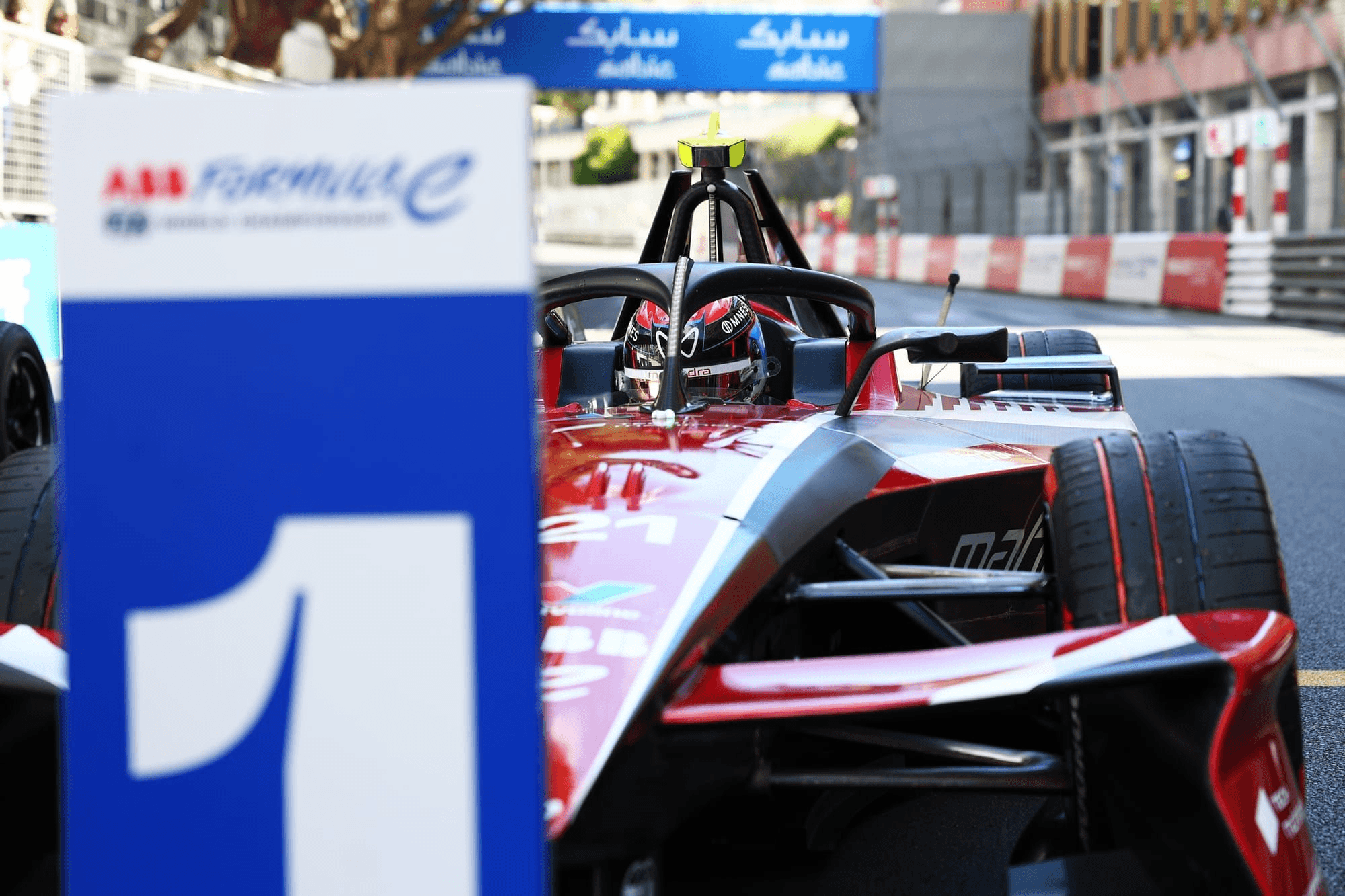
Image: The Race
FB: Feeling the love, yes, because we see a few indicators. On social media, we have more followers and more comments, so people are starting to get interested. What I would love is more opportunity to explain the sport to people, because Formula E can be a bit complex to understand at first. Once you scratch the surface, and it is not a lot, people will always say it is not a V8, it is not the sound. But if you like racing, you like Formula E, because the racing level is crazy. From a competitor’s point of view, almost too high, because it is so tough to perform consistently. But it is exciting, because you can also recover. The racing is very close, and it is very difficult to predict who will win. That makes it exciting.
So what I would love is for people to give Formula E a chance. Take away the few preconceptions, watch it properly, and start to enjoy the sport itself. If you like racing, overtakes, big fights between drivers, and the whole Drive to Survive approach of Formula One, you will like the same in Formula E, because it is the same. And what will hopefully make a difference is that, on top of all the broadcasting we had before, there is now a big deal with Disney+ coming in for streaming. I hope that gives people easier access to watch Formula E and really experience it.
The last thing is that I hope one day we will manage to bring the championship back to India, with racing here, so people can come, experience it, and feel the energy. Once you come and watch it and experience it, especially if you follow our team, because you will develop that pride between the country and a company from the country, then you get addicted. I am a hundred percent sure. So what I would like is for people to give it the chance to get them addicted.
Throughout the conversation, Bertrand returned repeatedly to the idea of building an organisation before chasing results. Whether talking about refocusing people on their own roles, importing processes from the sport’s biggest teams, insisting on clinical execution, or guarding against the comfort zone, his focus stayed on the cake rather than the cherry: a team that performs consistently because the structure underneath it is sound, not because of luck or a single star.
It is a philosophy already showing on track, with Mahindra’s third place in the Teams’ World Championship, equalling their best-ever finish, marking a clear step back toward the front. But Bertrand’s ambitions reach further than the standings. With a radically new car in development, a commitment to Formula E as a manufacturer through the GEN4 era until at least 2030, and a growing base of Indian fans discovering the championship, his bigger goal is an emotional one: to turn curiosity into loyalty, and one day bring racing back to India so a new generation can feel it first-hand. As he puts it, give the sport a real chance, and you will get addicted.